answer.
Ask question
Login Signup
Ask question
All categories
  • English
  • Mathematics
  • Social Studies
  • Business
  • History
  • Health
  • Geography
  • Biology
  • Physics
  • Chemistry
  • Computers and Technology
  • Arts
  • World Languages
  • Spanish
  • French
  • German
  • Advanced Placement (AP)
  • SAT
  • Medicine
  • Law
  • Engineering
DIA [1.3K]
2 years ago
9

if 20.g of a radioactive isotope are present at 1:00 pm and 5.0g remain at 2:00 pm, what is the half life of the isotope?

Chemistry
1 answer:
VikaD [51]2 years ago
4 0
The  half  life  of   the  isotope  is  calculated  as  follows

    the  time  difference  =  2.00- 1.00 =  1 hour(60min)

if  20  g  decay  in  1 hour (60min)  and  5  grams  remains  then the  mass  that  decay  =  20-5 = 15   grams

  the  half  life  is  time  required  for  a quantity  to  reduce  to  half  its  initial  value

and  if the  initial   concentration  = 20g then  the   half  =  20/2  =  10g

then  time  =    10g   x  60min/15g  = 40 min


You might be interested in
The volume of distilled water that should be added to 10.0 mL of 6.00 M HCl(aq) in order to prepare a 0.500 M HCl(aq) solution i
bija089 [108]

Answer:

110ml

Explanation:

<em>Using the dilution equation, C1V1 = C2V2</em>

<em>Where C1 is the initial concentration of solution</em>

<em>C2 is final concentration of solution</em>

<em>V1 is intital volume of solution</em>

<em>V2 is final volume of solution.</em>

From the question , C1=6M, C2=0.5M, V1=10ml, V2=?

V2 =\frac{C1V1}{C2}

V2 =\frac{10*6}{0.5}

V2 =120ml

volume of water added = final volume -initial volume

                                    = 120-10

                                   =110ml

3 0
2 years ago
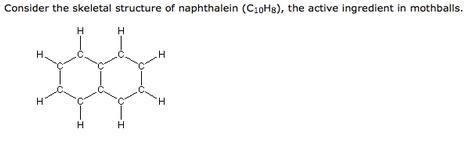
Consider the skeletal structure of naphthalein (C10H8), the active ingredient in mothballs. How many double bonds must be added
Greeley [361]

Answer:

four (4)

Explanation:

Naphthalein is an organic compound with formula C 10H 8. It is the simplest polycyclic aromatic hydrocarbon, and is a white crystalline solid with a characteristic odor that is detectable at concentrations as low as 0.08 ppm by mass. As an aromatic hydrocarbon, naphthalene's structure consists of a fused pair of benzene rings. It is best known as the main ingredient of traditional mothballs.

The molecule is planar, like benzene. Unlike benzene, the carbon–carbon bonds in naphthalene are not of the same length. The bonds C1−C2, C3−C4, C5−C6 and C7−C8 are about 1.37 Å (137 pm) in length, whereas the other carbon–carbon bonds are about 1.42 Å (142 pm) long. This difference, established by X-ray diffraction is consistent with the valence bond model in naphthalene and in particular, with the theorem of cross-conjugation. This theorem would describe naphthalene as an aromatic benzene unit bonded to a diene but not extensively conjugated to it (at least in the ground state), which is consistent with two of its three resonance structures.

Because of this resonance, the molecule has bilateral symmetry across the plane of the shared carbon pair, as well as across the plane that bisects bonds C2-C3 and C6-C7, and across the plane of the carbon atoms. Thus there are two sets of equivalent hydrogen atoms: the alpha positions, numbered 1, 4, 5, and 8, and the beta positions, 2, 3, 6, and 7. Two isomers are then possible for mono-substituted naphthalenes, corresponding to substitution at an alpha or beta position. Bicyclo[6.2.0]decapentaene is a structural isomer with a fused 4–8 ring system.

Therefore four (4) double bonds will be added to give each carbon atom an octet structure.

8 0
2 years ago
What does it mean for a backyard ecosystem to have a low diversity
pantera1 [17]
It means there is a lot of the same thing and not many others
3 0
2 years ago
An unknown salt is either NaF, NaCl, or NaOCl. When 0.050 mol of the salt is dissolved in water to form 0.500 L of solution, the
victus00 [196]

<u>Answer:</u> The unknown salt is NaF

<u>Explanation:</u>

To calculate the molarity of solution, we use the equation:

\text{Molarity of the solution}=\frac{\text{Moles of solute}}{\text{Volume of solution (in L)}}

Moles of salt = 0.050 moles

Volume of solution = 0.500 L

Putting values in above equation, we get:

\text{Molarity of salt}=\frac{0.050mol}{0.500L}\\\\\text{Molarity of salt}=0.1M

  • To calculate the hydroxide ion concentration, we first calculate pOH of the solution, which is:

pH + pOH = 14

We are given:

pH = 8.08

pOH=14-8.08=5.92

  • To calculate pOH of the solution, we use the equation:

pOH=-\log[OH^-]

Putting values in above equation, we get:

5.92=-\log[OH^-]

[OH^-]=10^{-5.92}=1.202\times 10^{-6}M

The unknown salt given are formed by the combination of weak acid and strong acid which is NaOH

The chemical equation for the hydrolysis of X^- ions follows:

                    X^-(aq.)+H_2O(l)\rightleftharpoons HX(aq.)+OH^-(aq.);K_b

<u>Initial:</u>              0.1

<u>At eqllm:</u>        0.1-x                           x              x

Concentration of OH^-=x=1.202\times 10^{-6}M

The expression of K_b for above equation follows:

K_b=\frac{[OH^-][HX]}{[X^-]}

Putting values in above expression, we get:

K_b=\frac{(1.202\times 10^{-6})\times (1.202\times 10^{-6})}{(1-(1.202\times 10^{-6}))}\\\\K_b=1.445\times 10^{-11}M

  • To calculate the acid dissociation constant for the given base dissociation constant, we use the equation:  

K_w=K_b\times K_a

where,

K_w = Ionic product of water = 10^{-14}

K_a = Acid dissociation constant

K_b = Base dissociation constant = 1.445\times 10^{-11}

Putting values in above equation, we get:

10^{-14}=1.445\times 10^{-11}\times K_a\\\\K_a=\frac{10^{-14}}{1.445\times 10^{-11}}=6.92\times 10^{-4}

We know that:

K_a\text{ for HF}=6.8\times 10^{-6}

K_a\text{ for HCl}=1.3\times 10^{6}

K_a\text{ for HClO}=3.0\times 10^{-8}

So, the calculated K_a is approximately equal to the K_a of HF

Hence, the unknown salt is NaF
6 0
2 years ago
1.000 mile is equal to 1609 meters. A truck is traveling at 42.00 km/h. What is the speed of the truck in miles per hour?
bija089 [108]

Around 24.85 miles per hour

, divide the length value by 1.60

3 0
2 years ago
Read 2 more answers
Other questions:
  • Which factors affect the flow of electric charge? Check all that apply.
    9·2 answers
  • Which isolated gaseous atom has a total of five electrons occupying spherically shaped orbitals?
    7·1 answer
  • Aluminum oxide has a composition of 52.9% aluminum and 47.1% oxygen by mass. if 16.4 g of aluminum reacts with oxygen to form al
    14·1 answer
  • A sample of ch4o with a mass of 32.0 g contains ________ molecules of ch4o.
    7·1 answer
  • 50 POINTSSSSS PLZ HELPPPPPP NEED TO SHOW WORK!!!!
    5·1 answer
  • Write the formulas for the following ionic compounds: (a) copper bromide (containing the Cu+ ion), (b) manganese oxide (containi
    5·1 answer
  • For the Bradford assay, the instructor will make a Bradford reagent dye by mixing 50 ml of 95% v/v ethanol with 100 mg of Coomas
    6·1 answer
  • Plasmid DNA and a gene of interest are cut with the enzyme PpuMI. Write a possible sequence of bases for the sticky end of the g
    7·1 answer
  • Which equation represents a reduction half-reaction?
    12·1 answer
  • 7. You are about to perform some intricate electrical studies on single skeletal muscle fibers from a gastronemius muscle. But f
    15·1 answer
Add answer
Login
Not registered? Fast signup
Signup
Login Signup
Ask question!
