answer.
Ask question
Login Signup
Ask question
All categories
  • English
  • Mathematics
  • Social Studies
  • Business
  • History
  • Health
  • Geography
  • Biology
  • Physics
  • Chemistry
  • Computers and Technology
  • Arts
  • World Languages
  • Spanish
  • French
  • German
  • Advanced Placement (AP)
  • SAT
  • Medicine
  • Law
  • Engineering
mestny [16]
2 years ago
7

A solution with 117 grams of lithium hydroxide and another with 141 grams of hydrogen bromide are combined. They react according

to this equation: LiOH + HBr → LiBr + H2O. What is the theoretical yield of lithium bromide? Use the periodic table and polyatomic ion resource. A. 117 g B. 141 g C. 151 g D. 258 g E. 424 g
Chemistry
1 answer:
svp [43]2 years ago
4 0

Answer:- C. 151 g

Solution:- The given balanced equation is:

LiOH+HBr\rightarrow LiBr+H_2O

From this equation, there is 1:1 mol ratio between all of them. We have been given with 117 grams of LIOH and 141 grams of HBr and asked to calculate the theoretical yield of LiBr.

let's convert the grams of each reactant to moles and see which one has limited moles as the theoretical yield is dependent on limiting reactant.

Molar mass of LiOH = 6.94 + 15.999 + 1.008 = 23.947 gram per mol

molar mass of HBr = 1.008 + 79.904 = 80.912 gram per mol

To get the moles of each reactant we divide it's grams by it's molar mass.

moles of LiOH = 117gLiOH(\frac{1mol}{23.947})  = 4.89 mol

moles of HBr = 141gHBr(\frac{1mol}{80.912g})  = 1.74 mol

Moles of HBr are less means it is limiting reactant. There is 1:1 mol ratio between HBr and LiBr, so 1.74 moles of LiBr would form.

Molar mass of LiBr = 6.94 + 79.904 = 86.844 gram per mol

Mass of LiBr formed = 1.74molLiBr(\frac{86.844g}{1mol})  = 151 g LiBr

From calculations, theoretically 151 g of LiBr would form and so the correct choice is C.


You might be interested in
If 350.0 grams of Cr2O3 are reacted with 235.0 grams of elemental silicon, 213.2 grams of chromium metal are recovered. What is
bulgar [2K]
We calculate for the amount of chromium metal in the reactant by,
                            = 350 x (mass of Cr2/mass of Cr2O3) 
                                 = 350 x (104/152) 
                                   = 239.47 grams
The amount of Cr metal in the product is only 213.2 grams. Thus, the percent yield.
                        percent yield = (213.2 grams/239.47) x 100%
                                             = 89%

4 0
2 years ago
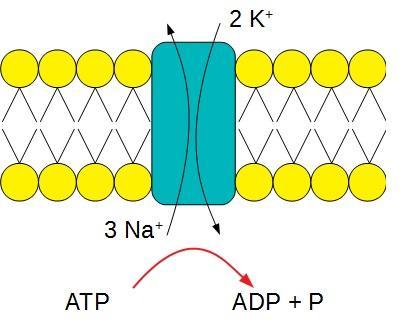
One ATP molecule's hydrolysis releases 7.3 kcal/mol of energy (∆G = −7.3 kcal/mol of energy). If it takes 2.1 kcal/mol of energy
Oxana [17]

Answer:

One ATP molecule's hydrolysis can move 3 ions of Sodium (Na+) across the menbrane.

Explanation:

As you can see, the energy provided by ATP is enough for moving 3 ions of Na+. Each ion needs +2.1 kcal/mol of energy.

If we multiply by 3 the energy for moving across the membrane= +6.3 kcal/mol

By adding the energy from ATP:

ΔGTotal=6.3-7.3= -1 kcal/mol

7 0
2 years ago
Which will not appear in the equilibrium constant expression for the reaction below?
n200080 [17]

Answer:

[C] carbon solid

Explanation:

Pure solids and liquids are never included in the equilibrium constant expression because they do not affect the reactant amount at equilibrium in the reaction, thus since your equation has [C] as solid it will not be part of the equlibrium equation.

5 0
2 years ago
Which part of experimental design is most important to a scientist when replicating an experiment? Having exactly the same data
yarga [219]

Answer:

The answer to your question is below:

Explanation:

Having exactly the same data as the previous experiment I think that having the same data as the previous experiment is extremely important but not the most important, for me is the second most important.

Using the same procedure and variables as the previous experiment For me, this is the most importan thing when a scientist is designing an experiment, because if he or she follow exactly the same procedure and variables, then the results will be very close.

Conducting an experiment similar to the previous experiment  This characteristic is important but not the most important.

Using the same laboratory that was used in the previous experiment It is not important the laboratory, if the procedure and variables are the same, your experiment must give the same results in whatever laboratory.

5 0
2 years ago
Read 2 more answers
The reaction SO2(g)+2H2S(g)←→3S(s)+2H2O(g) is the basis of a suggested method for removal of SO2 from power-plant stack gases. T
kifflom [539]

Answer : The equilibrium SO_2 pressure is, 3.93\times 10^{-5}torr

Explanation :

The given balanced chemical reaction is,

SO_2(g)+2H_2S(g)\rightleftharpoons 3S(s)+2H_2O(g)

First we have to calculate the standard free energy of reaction (\Delta G^o).

\Delta G^o=G_f_{product}-G_f_{reactant}

\Delta G^o=[n_{S(s)}\times \Delta G_f^0_{(S(s))}+n_{H_2O(g)}\times \Delta G_f^0_{(H_2O(g))}]-[n_{SO_2(g)}\times \Delta G_f^0_{(SO_2(g))}+n_{H_2S(g)}\times \Delta G_f^0_{(H_2S(g))}]

where,

\Delta G^o = standard free energy of reaction = ?

n = number of moles

Now put all the given values in this expression, we get:

\Delta G^o=[3mole\times (0kJ/mol)+2mole\times (-228.57kJ/mol)]-[1mole\times (-300.4kJ/mol)+2mole\times (-33.01kJ/mol)]

\Delta G^o=-90.72kJ/mol

Now we have to calculate the value of K_p

\Delta G^o=-RT\ln K_p

where,

\Delta G_^o =  standard Gibbs free energy  = -90.72 kJ/mol

R = gas constant = 8.314 J/mole.K

T = temperature = 298 K

K_p = equilibrium constant  = ?

Now put all the given values in this expression, we get:

-90.72kJ/mol=-(8.314J/mol.K)\times (298K) \ln K_p

K_p=7.98\times 10^{15}

Now we have to calculate the value of K_p.

The given balanced chemical reaction is,

SO_2(g)+2H_2S(g)\rightleftharpoons 3S(s)+2H_2O(g)

The expression for equilibrium constant will be :

K_p=\frac{(p_{H_2O})^2}{(p_{H_2S})^2\times (p_{SO_2})}

In this expression, only gaseous or aqueous states are includes and pure liquid or solid states are omitted.

Let the equilibrium SO_2 pressure be, x

Pressure of SO_2 = Pressure of H_2S = x

Now put all the given values in this expression, we get

7.98\times 10^{15}=\frac{(22)^2}{(x)^2\times (x)}

x=3.93\times 10^{-5}torr

Thus, the equilibrium SO_2 pressure is, 3.93\times 10^{-5}torr

4 0
2 years ago
Other questions:
  • heated blocks of iron used to be warm bed. A 1600g brick of iron heated to 155c would release how many joules of heat energy as
    15·1 answer
  • A student made the Lewis dot diagram of a compound as shown. Mg is written with two dots shown on its top. Cl is written on the
    8·2 answers
  • What pressure would a gas mixture in a 10.0 l tank exert if it were composed of 48.5 g he and 94.6 g co2 at 398 k?
    5·2 answers
  • A compound that contains only carbon, hydrogen, and oxygen is 48.64% C and 8.16% H by mass. What is the empirical formula of thi
    5·1 answer
  • A 10.0 g sample of LiOH is dissolved in 120.00 g of water at 23.0°C in a coffee-cup calorimeter with a heat capacity of 100 J/Â
    9·1 answer
  • For this question, the "entropy term" refers to "-TΔS". Addition reactions are generally favorable at low temperatures because _
    6·1 answer
  • A 0.944 M solution of glucose, C6H12O6, in water has a density of 1.0624 g/mL at 20∘C. What is the concentration of this solutio
    10·1 answer
  • A compound with the molecular formula C10H10O4 produces a 1H NMR spectrum that exhibits only two signals, both singlets. One sig
    15·1 answer
  • What is the IUPAC name of the following compound?
    13·1 answer
  • Which natural polymers are involved with making clothing?
    9·2 answers
Add answer
Login
Not registered? Fast signup
Signup
Login Signup
Ask question!