answer.
Ask question
Login Signup
Ask question
All categories
  • English
  • Mathematics
  • Social Studies
  • Business
  • History
  • Health
  • Geography
  • Biology
  • Physics
  • Chemistry
  • Computers and Technology
  • Arts
  • World Languages
  • Spanish
  • French
  • German
  • Advanced Placement (AP)
  • SAT
  • Medicine
  • Law
  • Engineering
Anvisha [2.4K]
2 years ago
3

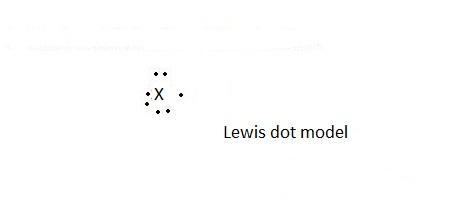
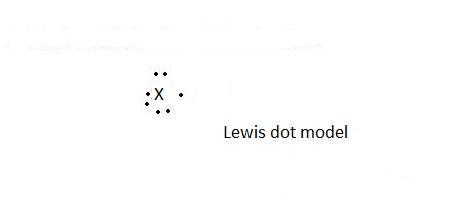
The Lewis dot model of an atom has seven dots. Which of the following is true about the atom?

Chemistry
2 answers:
Ugo [173]2 years ago
6 0

Answer: It requires one electron to complete its octet.

Explanation:

Lewis-dot model shows the valence  electrons present in the atom by the help of dots.

Valency of an element is defined as the electrons gained or lost in order to attain stable electronic configuration.

Thus an atom with 7 valence electrons must be an element of group 17 or halogens and will all gain 1 electron to attain stable noble gas configuration or complete its octet.

alexandr402 [8]2 years ago
3 0

It requires one electron to complete its octet.

You might be interested in
If a concentration of 10 fluorescent molecules per μm2of cell membrane is needed to visualize a cell under the microscope, how m
lara [203]

Answer : Total molecules that will be needed to visualize a single egg will be 78500 molecules of dye.

Explanation : As a single egg cell has an approximately diameter of 100 μm.

We can use this formula to calculate area of the cell membrane;

A = π (100)^{2} / 4;  

We can take π as 3.14 and we get;

A = 3.14 X (100)^{2} / 4  

Soving we get;

A =  7850 μm^{2}  

Here we have to calculate the amount of dye molecules which will be needed for 10 fluorescent molecules / μm^{2}  but;

here 1 μm^{2} = 7850 μm^{2} dye molecules.

Therefore, 10 fluorescent molecules will need;  

7850 X 10 = 78500 molecules of dye.

Therefore, the answer is 78500 molecules of dye.

6 0
2 years ago
The four rows of data below show the boiling points for a solution with no solute, sucrose (C12H22O11), sodium chloride (NaCl),
skad [1K]
The following are the answers to the different questions: 
<span>The four rows of data below show the boiling points for a solution with no solute, sucrose (C12H22O11), sodium chloride (NaCl), and calcium chloride (CaCl2) (not in that order). Which boiling point corresponds to calcium chloride?

A. 101.53° C

Which of the following solutions will have the lowest freezing point?

D. 1.0 mol/kg magnesium fluoride (MgF2)


Which of the following compounds will be most effective in melting the ice on the roads when the air temperature is below zero?

A. sodium iodide (NaI)


Four different solutions have the following vapor pressures at 100°C. Which solution will have the greatest boiling point?

B. 96.3 kPa


Four different solutions have the following boiling points. Which boiling point corresponds to a solution with the lowest freezing point?

D. 108.1°C</span>
4 0
2 years ago
Read 2 more answers
Which statement accurately describes dark matter?
Mandarinka [93]

Answer:

C. It does not emit electromagnetic radiation.

Explanation:

Right now, Dark Matter is only a theory. Scientist proposed this to counter some of the strange phenomenon with matter in space.

Scientists know little about dark matter. Some say it's one of the driving forces of the universe. Currently, scientists have no way of measuring or identifying dark matter.

5 0
2 years ago
Read 2 more answers
Which of the following type of protons are chemically equivalent? A) homotopic B) enantiotopic C) diastereotopic A &amp; B B &am
Rina8888 [55]

Answer:

A) homotopic and B) enantiotopic

Explanation:

Protons chemically equivalent are those that have the same chemical shift, also if they are interchangeable by some symmetry operation or by a rapid chemical process.

The existence of symmetry axes, Cn, that relate to the protons results in the protons being homotopic, that is chemically equivalent in both chiral and aquiral environments.

The existence of a plane of symmetry, σ, makes the protons related by it, are enantiotopic and these protons will only be equivalent in an aquiral medium; if the medium is chiral both protons will be chemically NOT equivalent. The existence of a center of symmetry, i, in the molecule makes the related protons through it enantiotopic and therefore chemically only in the aquiral medium.

Diastereotopic protons cannot be interconverted by any symmetry operation and they are different, with different chemical displacement.

6 0
2 years ago
Why are salt and sugar both able to dissolve in water, even though the solutes have different types of chemical bonding?
Serjik [45]

Answer:Water is polar molecule, ionic compound dissolves in it as like dissolves like.

there is ionic interaction between a salt and water

Sugar has hydroxyl group in it. These hydroxyl group are able to form hydrogen bond with water molecule.

[Hydrogen bond : the interaction between a hydrogen, bonded with a highly electro-negative element (F,O,N) and other highly electro-negative element (F,O,N)]

Thus due to hydrogen bond sugar is soluble in water.

Explanation:The water molecules, , are polar, with positive partial charges on the hydrogen and a negative partial charge on the oxygen. This makes it possible to interact with ionic compounds such as salt (NaCl). This interaction occurs through the partially positive and negative ends of the water, so that the positive charges attract the negative ones. The NaCl salt in water dissociates (separates) into  and  ions. ions are surrounded by negative partial charges of water oxygen, while  ions are surrounded by hydrogen ends with positive partial charge. In this way the salt is dissolved in water.

Sugar is a molecular compound formed by covalent bonds. In a polar covalent bond, electrons are shared unevenly. This creates a slightly negatively charged end and a slightly positively charged end. This is what happens with sugar. These extremes are those that interact with the positive and negative extremes of water, mentioned previously. Then it is possible to say that sugar dissolves in water because both substances are polar substances.

In short, water dissolves most of the substances that are polar or ionic, as in the case of sugar and salt.
6 0
2 years ago
Read 2 more answers
Other questions:
  • Seven vans each hold 6 passengers. Each passenger is carrying 20 candies divided equally among 5 small boxes. How many candies a
    5·1 answer
  • Two sets of flasks are connected by a hollow copper pipe, as shown. Which set will change the temperature most quickly?
    11·2 answers
  • Four balloons, each with a mass of 10.0 g, are inflated to a volume of 20.0 L, each with a different gas: helium, neon, carbon m
    12·2 answers
  • The bond enthalpy of the C―N bond in the amide group of proteins can be treated as an average of C―N (276 kJ/mol) and C═N (615 k
    14·1 answer
  • How much maleic anhydride would you need to react 178 mg of anthracene? Assume 1:1 ratio from maleic anhydride to anthracene.
    14·1 answer
  • Cobalt-60 is a radioactive isotope used to treat cancers. A gamma ray emitted by this isotope has an energy of 1.33 MeV (million
    15·1 answer
  • Wet steam at 1100 kPa expands at constant enthalpy (as in a throttling process) to 101.33 kPa, where its temperature is 105°C. W
    8·2 answers
  • It is often necessary to prepare a dilute solution from a more concentrated solution rather than starting from a solid and just
    13·1 answer
  • When a known quantity of compound, at a known concentration, is added to a known volume of another compound to determine the con
    13·1 answer
  • A rigid, 28-L steam cooker is arranged with a pressure relief valve set to release vapor and maintain the pressure once the pres
    15·1 answer
Add answer
Login
Not registered? Fast signup
Signup
Login Signup
Ask question!
