answer.
Ask question
Login Signup
Ask question
All categories
  • English
  • Mathematics
  • Social Studies
  • Business
  • History
  • Health
  • Geography
  • Biology
  • Physics
  • Chemistry
  • Computers and Technology
  • Arts
  • World Languages
  • Spanish
  • French
  • German
  • Advanced Placement (AP)
  • SAT
  • Medicine
  • Law
  • Engineering
qaws [65]
2 years ago
12

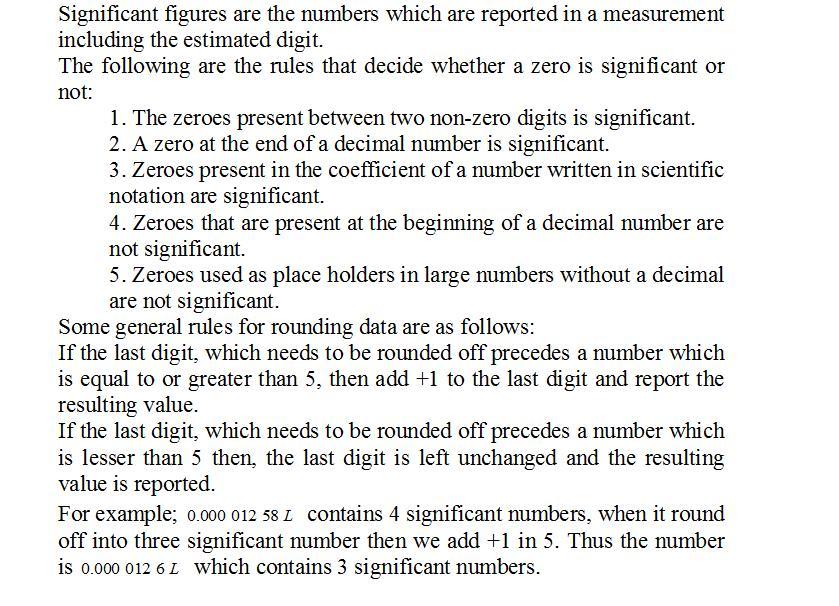
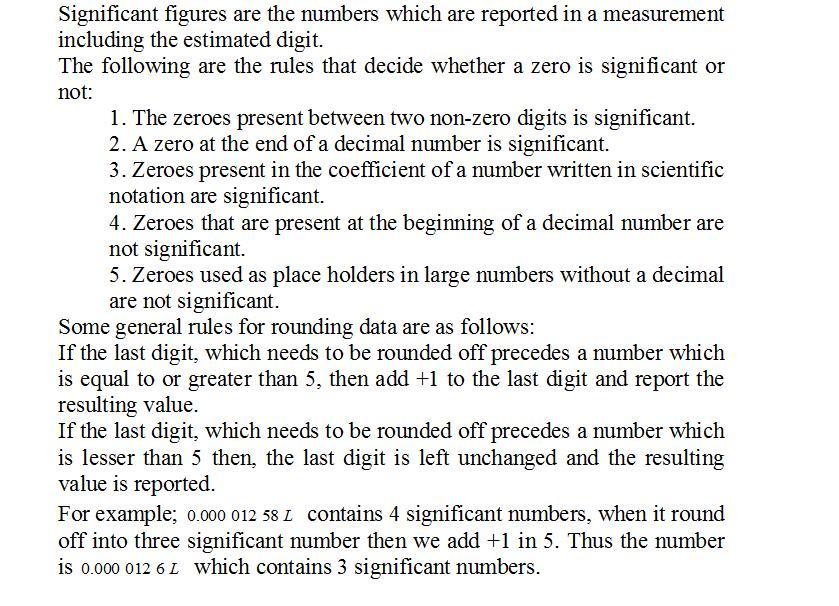
A pound is approximately 0.45 kilogram. A person weighs 87 kilograms. What is the person’s weight, in pounds, when expressed to

the correct number of significant figures?
A. 190 lb
B. 180 lb
C. 52 lb
D. 39 lb

Chemistry
2 answers:
Vinvika [58]2 years ago
6 0

Answer:

190 pounds  

Explanation:

Given that  

A pound is approximately 0.45 kilogram

A person weighs 87 kilograms

Now change the unit form kilogram to pounds as follows:


1 pound / 0.45 kilogram * 87 kilograms

= 193.3 pounds

Now expressed to the correct number of significant figures

193.3 pound = 190 pounds  

Sauron [17]2 years ago
4 0

Answer:

87 kilograms =191.8 pounds

You might be interested in
A person loses 2.70 lbs in two weeks how many grams did he lose?
Evgesh-ka [11]
He person lost 1224.7 grams.
6 0
3 years ago
Read 2 more answers
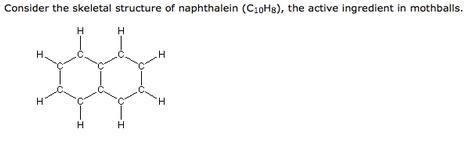
Consider the skeletal structure of naphthalein (C10H8), the active ingredient in mothballs. How many double bonds must be added
Greeley [361]

Answer:

four (4)

Explanation:

Naphthalein is an organic compound with formula C 10H 8. It is the simplest polycyclic aromatic hydrocarbon, and is a white crystalline solid with a characteristic odor that is detectable at concentrations as low as 0.08 ppm by mass. As an aromatic hydrocarbon, naphthalene's structure consists of a fused pair of benzene rings. It is best known as the main ingredient of traditional mothballs.

The molecule is planar, like benzene. Unlike benzene, the carbon–carbon bonds in naphthalene are not of the same length. The bonds C1−C2, C3−C4, C5−C6 and C7−C8 are about 1.37 Å (137 pm) in length, whereas the other carbon–carbon bonds are about 1.42 Å (142 pm) long. This difference, established by X-ray diffraction is consistent with the valence bond model in naphthalene and in particular, with the theorem of cross-conjugation. This theorem would describe naphthalene as an aromatic benzene unit bonded to a diene but not extensively conjugated to it (at least in the ground state), which is consistent with two of its three resonance structures.

Because of this resonance, the molecule has bilateral symmetry across the plane of the shared carbon pair, as well as across the plane that bisects bonds C2-C3 and C6-C7, and across the plane of the carbon atoms. Thus there are two sets of equivalent hydrogen atoms: the alpha positions, numbered 1, 4, 5, and 8, and the beta positions, 2, 3, 6, and 7. Two isomers are then possible for mono-substituted naphthalenes, corresponding to substitution at an alpha or beta position. Bicyclo[6.2.0]decapentaene is a structural isomer with a fused 4–8 ring system.

Therefore four (4) double bonds will be added to give each carbon atom an octet structure.

8 0
2 years ago
If you fill up a balloon with a small amount of air, then set it in direct sunlight, you will see that the balloon expands. This
almond37 [142]
I just did guessed on the question and got it right. The answer is kinetic energy.
6 0
2 years ago
Read 2 more answers
Chlorine is used to disinfect swimming pools. the accepted concentration for this purpose is 1.00 ppm chlorine, or 1.00 g of chl
frez [133]

The accepted concentration of chlorine is 1.00 ppm that is 1 gram of chlorine per million of water.

The volume of water is 2.29\times 10^{4} gal.

Since, 1 gal= 3785.41 mL

Thus, 2.29\times 10^{4} gal=2.29\times 10^{4}\times 3785.41 mL=8.66\times 10^{7}mL

Density of water is 1 g/mL thus, mass of water will be 8.66\times 10^{7}g.

Since, 1 grams of chlorine →10^{6} grams of water.

1 g of water →10^{-6} g of chlorine and,

8.66\times 10^{7}g of water →86.6 g of chlorine

Since, the solution is 9% chlorine by mass, the volume of solution will be:

V=\frac{100}{9}\times 86.6 mL=9.62\times 10^{2} mL

Thus, volume of chlorine solution is 9.62\times 10^{2} mL.

6 0
2 years ago
If 3.491 grams of the precipitate was formed, how many moles of strontium bromide were reacted
AVprozaik [17]
The balanced chemical equation that represents the reaction is as follows:
 <span>SrBr2(aq) + 2AgNO3(aq) → Sr(NO3)2(aq) + 2AgBr(s) 
</span>
From the periodic table:
mass of silver = 108 grams
mass of bromine = 80 grams

molar mass of silver bromide = 108 + 80 = 188 grams

number of moles = mass / molar mass
number of moles of produced precipitate = 3.491/188 = 0.018 moles

From the balanced equation:
1 mole of  strontium bromide produces 2 moles of silver bromide. Therefore, to calculate the number of moles of <span>strontium bromide that produces 0.018 moles of silver bromide, you will just do a cross multiplication as follows:
amount of </span><span>strontium bromide = (0.018x1) / 2 = 9.28 x 10^-3 moles</span>

4 0
2 years ago
Other questions:
  • Enter the symbol of a sodium ion, Na+, followed by the formula of a sulfate ion, SO42−. Separate the ions with a comma only—spac
    15·2 answers
  • A 103.8g sample of nitric acid solution that is 70.0% HNO3 contains by mass
    8·1 answer
  • You are given three bottles labeled a, b, and
    10·1 answer
  • (a) The mass density of a gaseous compound was found to be 1.23 kg m^−3 at 330 K and 20 kPa. What is the molar mass of the compo
    8·1 answer
  • Acid deposition would most likely result in_________
    8·1 answer
  • How many moles are 25.0 mL of benzene (density 0.876 g/mL)?
    6·1 answer
  • Marcie is hiking in the mountains and she discovers an interesting shiny rock.As she picks it up she wonders whether it could be
    5·1 answer
  • A sample of chlorine gas is held at a pressure of 1023.6 Pa. When the pressure is decreased to 811.4 Pa the volume is 25.6 L. Wh
    12·1 answer
  • The value of resistance r was determined by measuring current I flowing through the resistance with an error E1=±1.5% and power
    13·1 answer
  • During a process called photoact, ________ give up an electron as a part of the light-dependent reactions.
    6·1 answer
Add answer
Login
Not registered? Fast signup
Signup
Login Signup
Ask question!