answer.
Ask question
Login Signup
Ask question
All categories
  • English
  • Mathematics
  • Social Studies
  • Business
  • History
  • Health
  • Geography
  • Biology
  • Physics
  • Chemistry
  • Computers and Technology
  • Arts
  • World Languages
  • Spanish
  • French
  • German
  • Advanced Placement (AP)
  • SAT
  • Medicine
  • Law
  • Engineering
Zinaida [17]
2 years ago
9

Gravity causes objects to be attracted to one another. This attraction keeps our feet firmly planted on the ground and causes th

e moon to orbit the earth. The force of gravitational attraction is represented by the equation
F=Gm1m2r2
where F is the magnitude of the gravitational attraction on either body, m1 and m2 are the masses of the bodies, r is the distance between them, and G is the gravitational constant. In SI units, the units of force are kg⋅m/s2, the units of mass are kg, and the units of distance are m. For this equation to have consistent units, the units of G must be which of the following?
Gravity causes objects to be attracted to one another. This attraction keeps our feet firmly planted on the ground and causes the moon to orbit the earth. The force of gravitational attraction is represented by the equation
,
where is the magnitude of the gravitational attraction on either body, and are the masses of the bodies, is the distance between them, and is the gravitational constant. In SI units, the units of force are , the units of mass are , and the units of distance are . For this equation to have consistent units, the units of must be which of the following?
A. kg3m⋅s2
B. kg⋅s2m3
C. m3kg⋅s2
D. mkg⋅s2

Physics
2 answers:
faltersainse [42]2 years ago
8 0

The unit of the gravitational constant is \boxed{{{{{\text{m}}^{\text{3}}}} \mathord{\left/{\vphantom {{{{\text{m}}^{\text{3}}}} {{\text{kg}} \cdot {{\text{s}}^{\text{2}}}}}} \right.\kern-\nulldelimiterspace} {{\text{kg}} \cdot {{\text{s}}^{\text{2}}}}}}.

Further Explanation:

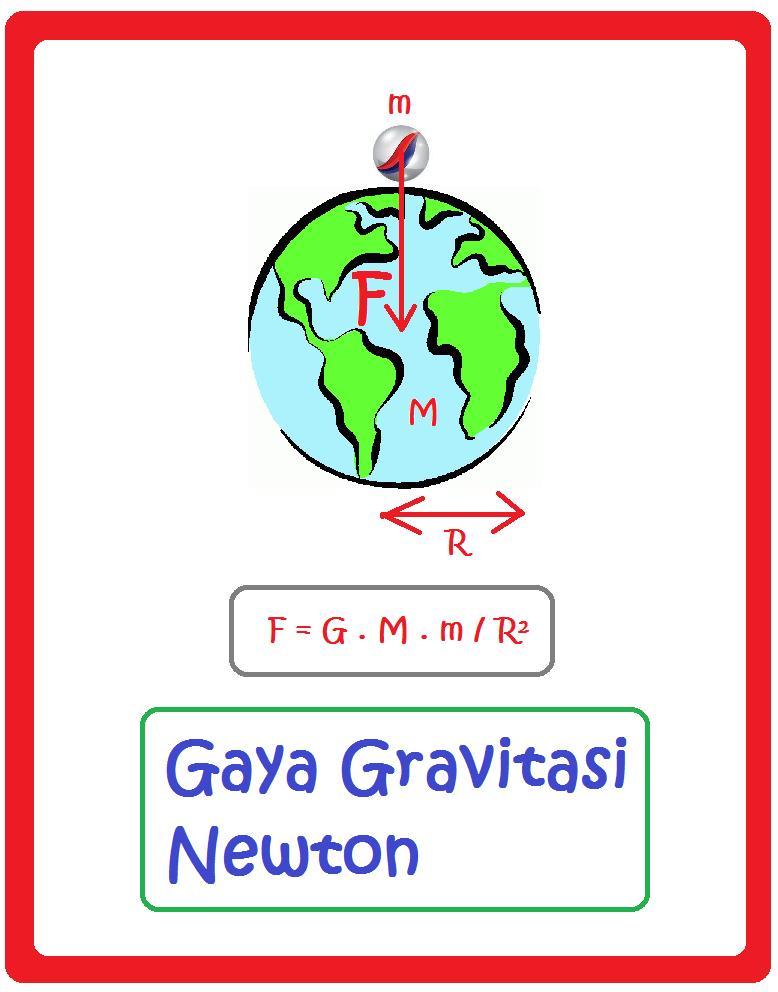
The Newton’s law of gravitation states that the force of attraction experienced by two bodies is directly proportional to the product of their mass and inversely proportional to the square of the distance between the two bodies.

The mathematical expression for the Newton’s law of gravitation is as shown below.

F = \dfrac{{G{m_1}{m_2}}}{{{r^2}}}  

Here, G is the gravitational constant, {m_1}\& {m_2} are the mass of two bodies and r is the distance of the bodies.

Simplify the expression for the gravitational constant G.

G = \dfrac{{F{r^2}}}{{{m_1}{m_2}}}

The SI unit of force is {{{\text{kg}} \cdot {\text{m}}} \mathord{\left/{\vphantom {{{\text{kg}} \cdot {\text{m}}} {{{\text{s}}^{\text{2}}}}}} \right.\kern-\nulldelimiterspace} {{{\text{s}}^{\text{2}}}}}, the unit of distance is  and the unit of mass is {\text{kg}}.

Substitute the SI units of force, distance and mass in the above expression.

\begin{aligned}G&=\dfrac{(\text{kg}\cdot\text{m/s}^2)(\text{m})^2}{(\text{kg})(\text{kg})}\\&=\frac{\text{m}^2}{\text{kg}\cdot\text{s}^2}\\&=\text{m}^3/\text{kg}\cdot\text{s}^2\end{aligned}  

Thus, the unit of the gravitational constant is  \boxed{{{{{\text{m}}^{\text{3}}}} \mathord{\left/{\vphantom {{{{\text{m}}^{\text{3}}}} {{\text{kg}} \cdot {{\text{s}}^{\text{2}}}}}} \right.\kern-\nulldelimiterspace} {{\text{kg}} \cdot {{\text{s}}^{\text{2}}}}}}.

Learn More:

  1. The amount of kinetic energy an object has depends on its brainly.com/question/137098
  2. Which of the following are units for expressing rotational velocity, commonly denoted by ω brainly.com/question/2887706
  3. A 50-kg meteorite moving at 1000 m/s strikes earth. Assume the velocity is along the line joining earth's center of mass and the meteor's center of mass brainly.com/question/6536722

Answer Details:

Grade: High School

Chapter: Gravitation

Subject: Physics

Keywords: Gravity, attracts, SI units, two bodies, one another, force, masses of the body, magnitude of force, gravitational constant, distance, units.
melomori [17]2 years ago
5 0

The units of G must be C. m³ / ( kg s² )

<h3>Further explanation</h3>

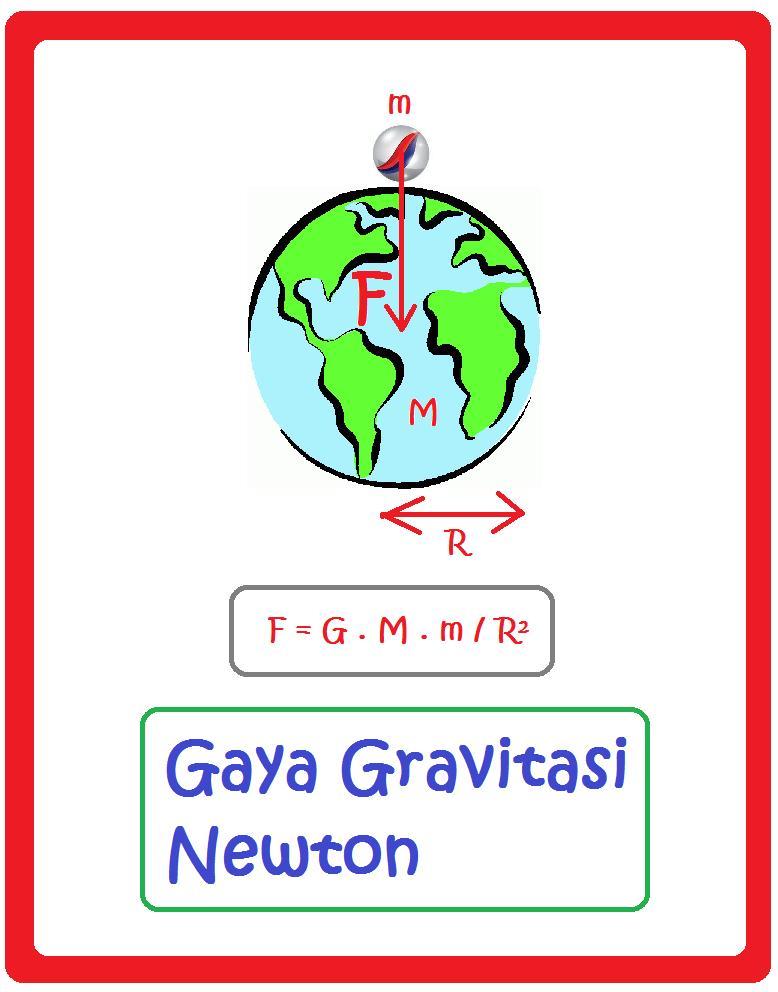
Newton's gravitational law states that the force of attraction between two objects can be formulated as follows:

\large {\boxed {F = G \frac{m_1 ~ m_2}{R^2}} }

<em>F = Gravitational Force ( Newton )</em>

<em>G = Gravitational Constant ( 6.67 × 10⁻¹¹ Nm² / kg² )</em>

<em>m = Object's Mass ( kg )</em>

<em>R = Distance Between Objects ( m )</em>

Let us now tackle the problem !

To find unit of Gravitational Constant can be carried out in the following way:

F = G \frac{m_1 ~ m_2}{R^2}

{[N]}= G\frac{{[kg]}{[kg]}}{{[m^2]}}

{[kg ~ m / s^2]}= G \frac{{[kg^2]}}{{[m^2]}}

G = \frac{{[kg ~ m / s^2]}{[m^2]}} {{[kg^2]} }

G = \frac{{[kg ~ m^3 / s^2]}} {{[kg^2]} }

G = \frac{{[m^3 / s^2]}} {{[kg]} }

\boxed {G = \frac{{[m^3]}} {{[kg ~ s^2]} }}

The unit of G must be \large {\boxed {\frac{m^3} {kg ~ s^2 }}}

<h3>Learn more</h3>
  • Impacts of Gravity : brainly.com/question/5330244
  • Effect of Earth’s Gravity on Objects : brainly.com/question/8844454
  • The Acceleration Due To Gravity : brainly.com/question/4189441

<h3>Answer details</h3>

Grade: High School

Subject: Physics

Chapter: Gravitational Fields

Keywords: Gravity , Unit , Magnitude , Attraction , Distance , Mass , Newton , Law , Gravitational , Constant

You might be interested in
A certain fuse "blows" if the current in it exceeds 1.0 A, at which instant the fuse melts with a current density of What is the
Alborosie

Answer:

<em>0.45 mm</em>

Explanation:

The complete question is

a certain fuse "blows" if the current in it exceeds 1.0 A, at which instant the fuse melts with a current density of 620 A/ cm^2. What is the diameter of the wire in the fuse?

A) 0.45 mm

B) 0.63 mm

C.) 0.68 mm

D) 0.91 mm

Current in the fuse is 1.0 A

Current density of the fuse when it melts is 620 A/cm^2

Area of the wire in the fuse = I/ρ

Where I is the current through the fuse

ρ is the current density of the fuse

Area = 1/620 = 1.613 x 10^-3 cm^2

We know that 10000 cm^2 = 1 m^2, therefore,

1.613 x 10^-3 cm^2 = 1.613 x 10^-7 m^2

Recall that this area of this wire is gotten as

A = \frac{\pi d^{2} }{4}

where d is the diameter of the wire

1.613 x 10^-7 = \frac{3.142* d^{2} }{4}

6.448 x 10^-7 = 3.142 x d^{2}

d^{2} =\sqrt{ 2.05*10^-7}

d = 4.5 x 10^-4 m = <em>0.45 mm</em>

8 0
2 years ago
Determine the torque applied to the shaft of a car that transmits 225 hp
Arisa [49]

Incomplete question.The complete question is here

Determine the torque applied to the shaft of a car that transmits 225 hp and rotates at a rate of 3000 rpm.

Answer:

Torque=0.51 Btu

Explanation:

Given Data

Power=225 hp

Revolutions =3000 rpm

To find

T( torque )=?

Solution

As

T(Torque)=\frac{W(Work)}{2\pi n(Revolutions) }

As force moves an object through a distance, work is done on the object. Likewise, when a torque rotates an object through an angle, work is done.

So

T=\frac{225*42.207}{2\pi 3000}\\ T=0.51 Btu

8 0
2 years ago
A 13,000-N vehicle is to be lifted by a 25-cm diameter hydraulic piston. What force needs to be applied to a 5.0 cm diameter pis
MaRussiya [10]

Answer:

Explanation:

We shall apply Pascal's Law in fluid mechanics

According to it , pressure is transmitted in liquid from one point to another without any change .

25 cm diameter = 12.5 x 10⁻² m radius

Area = 3.14 x (12.5 x 10⁻²)²

= 490.625 x 10⁻⁴ m²

Pressure by vehicle

Force / area

13000 / 490.625 x 10⁻⁴

= 26.497 x 10⁴ Pa

5 cm diameter = 2.5 x 10⁻² radius

area = 3.14 x (2.5 x 10⁻²)²

= 19.625 x 10⁻⁴ m²

If we assume required force F on this area

Pressure = F / 19.625 x 10⁻⁴ Pa

According to Pascal Law

F / 19.625 x 10⁻⁴  = 26.497 x 10⁴

F = 19.625 x 26.497

= 520 N

4 0
2 years ago
Determine the force P required to maintain the 200-kg engine in the position for which θ = 30°. The diameter of the pulley at B
gregori [183]

Answer:

The force P required  is 1759.22 N

Explanation:

The missing diagram is seen in the first image below.

From the second image, we can see the schematic diagram of the engine hanging over the pulley.

To start with determining the value of the angle ∝;

tan \ \alpha = \dfrac{CD}{BD}

where;

BD = AB-AD

Then;

tan \ \alpha = \dfrac{CD}{AB-AD}

\alpha = tan^{-1} \bigg(\dfrac{CD}{AB-AD} \bigg )

replacing their respective values, where;

CD = 2 sin 30° m,  AB = 2m and AD = 2 cos 30° m

\alpha = tan^{-1} \bigg(\dfrac{2 \ sin \ 30^0}{2-2 \ cos \ 30^0} \bigg )

\alpha = tan^{-1} \bigg(\dfrac{1}{2-1.732} \bigg )

\alpha = tan^{-1} \bigg(\dfrac{1}{0.268} \bigg )

\alpha = tan^{-1} \bigg(3.73\bigg )

\alpha \simeq 75^0

From the third diagram attached below:

The tension occurring in the thread BC is equal to force P

T_{BC} = P

Using the force equilibrium expression along the horizontal direction.

\sum F_x = 0\\\\ -T_{AC} \ cos \ 30^0 + Pcos \alpha = 0

replacing the value of \alpha \simeq 75^0

-T_{AC} \  cos 30^0 + P cos 75^0  = 0

P \ cos \ 75^0 = T_{AC} \ cos \ 30^0

P  =\dfrac{ T_{AC} \ cos \ 30^0}{\ cos \ 75^0} \ \ \ - - -  (1)

Along the vertical direction, the force equilibrium equation can be expressed as:

\sum F_y =0

-W + P \ sin \alpha + T_{AC} \ sin \ 30^0  = 0

W = P \ sin \ \alpha + T_{AC} \ sin \ 30^0

replacing \alpha \simeq 75^0 and P  =\dfrac{ T_{AC} \ cos \ 30^0}{\ cos \ 75^0}

W =\dfrac{T_{AC} \ cos \ 30^0}{cos \ 75^0}\times sin \ 75^0 + T_{AC} \ sin \ 30^0

Also, replacing W for (200 × 9.81) N

200 \times 9.81 =\dfrac{T_{AC} \ cos \ 30^0}{cos \ 75^0}\times sin \ 75^0 + T_{AC} \ sin \ 30^0

200 \times 9.81 = T_{AC} \ cos \ 30^0 \ tan \ 75^0 + T_{AC} \ sin \ 30^0

1962= T_{AC} \ ( cos \ 30^0 \ tan \ 75^0 + \ sin \ 30^0)

1962= T_{AC} \ (0.8660\times 3.732 + 0.5)

1962= T_{AC} \ (3.231912 + 0.5)

1962= T_{AC} \ (3.731912)

T_{AC}  = \dfrac{1962}{ \ (3.731912)}

T_{AC}  = 525.736 \ N

From P  =\dfrac{ T_{AC} \ cos \ 30^0}{\ cos \ 75^0}

P =\dfrac{ 525.736 \ cos \ 30^0}{\ cos \ 75^0}

P =\dfrac{ 525.736 \times0.866}{0.2588}

P = 1759.22 N

Thus, the force P required  is 1759.22 N

6 0
1 year ago
Suppose a rectangular piece of aluminum has a length D, and its square cross section has the dimensions W XW, where D (W x W) to
Ludmilka [50]

Answer:

R₂ / R₁ = D / L

Explanation:

The resistance of a metal is

        R = ρ L / A

Where ρ is the resistivity of aluminum, L is the length of the resistance and A its cross section

We apply this formal to both configurations

Small face measurements (W W)

The length is

         L = W

Area  

         A = W W = W²

        R₁ = ρ W / W² = ρ / W

Large face measurements (D L)

       Length L = D= 2W

       Area     A = W L

     R₂ = ρ D / WL = ρ 2W / W L = 2 ρ/L

The relationship is

    R₂ / R₁ = 2W²/L

6 0
2 years ago
Other questions:
  • Current X is 2.5 A and runs for 39 seconds. Current Y is 3.8 A and runs for 24 seconds. Which current delivered more charge, and
    15·1 answer
  • The heater element of a particular 120-V toaster is a 8.9-m length of nichrome wire, whose diameter is 0.86 mm. The resistivity
    5·1 answer
  • A 100.0 mL sample of 1.020 M HCl is mixed with a 50.0 mL sample of 2.040 M NaOH in a Styrofoam cup. If both solutions were initi
    7·1 answer
  • When you skid to a stop on your bike, you can significantly heat the small patch of tire that rubs against the road surface. Sup
    9·1 answer
  • "An empty cylindrical barrel is open at one end and rolls without slipping straight down a hill. The barrel has a mass of 19.0 k
    15·1 answer
  • in a race, Usain Bolt accelerates at 1.99m/s^2 for the first 60.0m, then decelerates at -0.266m/s^2 for the final 40.0m. what wa
    13·1 answer
  • A Honda Civic travels in a straight line along a road. The car’s distance x from a stop sign is given as a function of time t by
    7·1 answer
  • How does the sun transfer energy to Earth?
    12·2 answers
  • An insurance company hired your group to help investigate an insurance claim following a car accident. In the accident, two cars
    5·2 answers
  • The period of an ocean wave is 5 seconds. What is the wave's frequency?
    15·1 answer
Add answer
Login
Not registered? Fast signup
Signup
Login Signup
Ask question!
