answer.
Ask question
Login Signup
Ask question
All categories
  • English
  • Mathematics
  • Social Studies
  • Business
  • History
  • Health
  • Geography
  • Biology
  • Physics
  • Chemistry
  • Computers and Technology
  • Arts
  • World Languages
  • Spanish
  • French
  • German
  • Advanced Placement (AP)
  • SAT
  • Medicine
  • Law
  • Engineering
8_murik_8 [283]
2 years ago
5

SnO2 is reduced by carbon according to this reaction: SnO2 + C ???? Sn + CO2. How many liters of CO2 are produced if 300.0 grams

of tin are produced at STP? How many grams of SnO2 are required to produce 1800.0 grams of tin? How much tin is produced per 100.0 grams of carbon used?
Chemistry
1 answer:
andrew-mc [135]2 years ago
8 0

Explanation:

The given reaction is as follows.

         SnO_{2} + C \rightarrow Sn + O_{2}

a).   Molar mass of SnO_{2} is [(mass of Sn) + (2 × mass of O)].

Therefore, molar mass of SnO_{2} = (118.7 + 2 × 16) g/mol = 150.7 g/mol

Since, it is known that number of moles equal mass divided by molar mass. So, moles of Sn will be calculated as follows.

               No. of moles = \frac{mass}{molar mass of SnO_{2}}

                                      = \frac{300 g}{150.7 g/mol}

                                      = 2.53 mol

As it is given that 1 mole of SnO_{2} produces 1 moles of Sn and 1 moles of CO_{2}. Hence, 2.53 moles of SnO_{2} will also produce 2.53 moles of Sn and 2.53 moles of CO_{2}.

Volume of 1 mole of CO_{2} at STP is 22.4 L. Therefore, volume of 2.53 moles of CO_{2} will be calculated as follows.

                  2.53 × 22.5 L = 56.67 L

Hence, 56.67 L of CO_{2} are produced if 300.0 grams of tin are produced at STP.

b).  Mass of tin is given as 1800.0 g. So, number of moles will be calculated as follows.

               No. of moles = \frac{mass}{molar mass of tin}

                                      = \frac{1800.0 g}{118.7 g/mol}

                                      = 15.2 moles

As 15.2 moles of SnO_{2} produces 15.2 moles of Sn. Therefore, weight of SnO_{2} will be calculated as follows.

                   Mass = no. of moles × molar mass of SnO_{2}

                             = 15.2 moles × 150.7 g/mol

                             = 2290.64 g

Hence, 2290.64 grams of SnO_{2} are required to produce 1800.0 grams of tin.

c).   Mass of carbon given is 100.0 grams.

             No. of moles = \frac{mass}{molar mass of carbon}

                                    = \frac{100 g}{12 g/mol}

                                      = 8.33 moles

As, 1 mole of carbon is produced by 1 mole of tin. So, 8.33 mole of carbon will be produced by 8.33 moles of tin.

Therefore, calculate mass of tin produced as follows.

                        Mass = no. of moles × molar mass of Sn

                             = 8.33 moles × 118.7 g/mol

                             = 988.8 g

Hence, 988.8 grams of tin will be produced per 100 grams of carbon used.

You might be interested in
Which term names the metamorphic change to a rock that results mainly from the heat energy of nearby magma? A. local metamorphis
marshall27 [118]
The answer to this question would be: <span>thermal metamorphism
</span>
Metamorphism is a change in the mineral texture without causing the rock to become liquid/magma. In this case, the metamorphic change to the rock is caused by the heat energy or thermal energy of the magma. This kind of mechanism is also called contact mechanism as the thermal energy is transferred by contact so this question option is a bit ambiguous.
8 0
2 years ago
Read 2 more answers
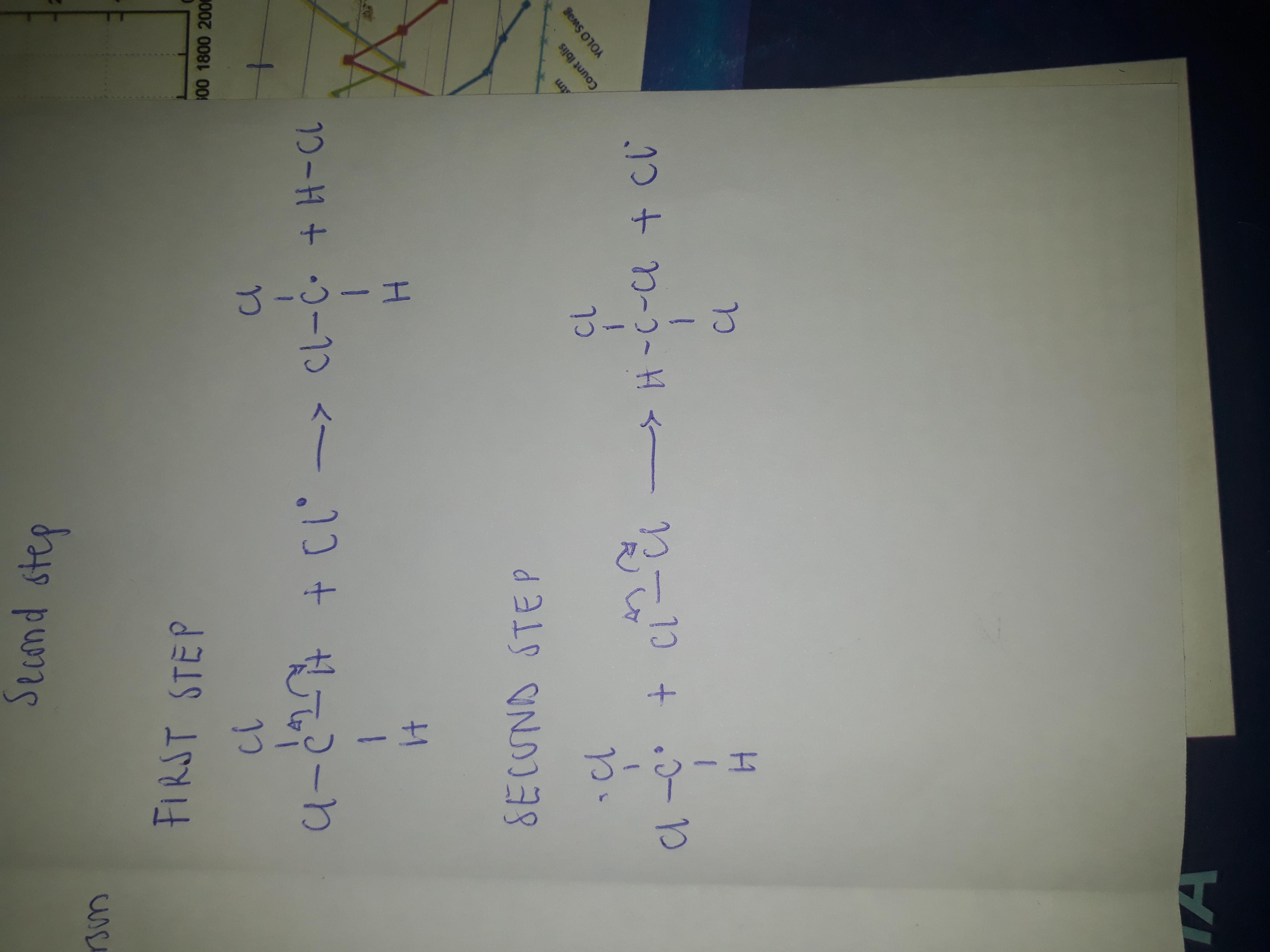
Which of the following represents a propagation step in the monochlorination of methylene chloride (CH2Cl2)?a. CHCl3 + Cl. Right
svetlana [45]

Answer:

B = CHCl2 + Cl2 --> CHCl3 + Cl

Explanation:

Free radical halogenation is a chlorination reaction on Alkane hydrocarbons. This involves the splitting of molecules into radicals/ unstable molecules in the presence of sunlight/ U.V light which ensures bonding of the molecules.

Free radical chlorination is divided into 3 steps which are:

The initiation step

The propagation step

The termination step

So in reference to the question, propagation step involves two steps.

The first step is where the molecule in this case the methylene chloride(CH2Cl2) loses a hydrogen atom and then bond with a chlorine atom radical to give a nethylwnw chloride radical and HCl.

The second step involves the reaction of this methylene chloride got in the first step with chlorine molecule to form trichloride methane and a chlorine radical.

You would find in the attachment the 2 step mechanism.

3 0
2 years ago
The metallic radius of a lithium atom is 152 pm. What is the volume of a lithium atom in cubic meters?
Anuta_ua [19.1K]

Answer:

Volume of lithium atom is found to be 1.47 X 10⁻²⁹ m³

Explanation:

Let us consider the volume of atom as a sphere (but it is little complex than that). This volume is mathematically expressed as,

V=\frac{4}{3}\pi  R^{3}----------------------------------------------------------------------------------------(Eq. 1)

Here, R is the radius of lithium atom. The radius is given in picometers, so firstly let us convert it into meters

R=(152pm )(1X10^{-12}\frac{m}{pm})

R = 1.52 X 10^{-10}m

placing this value in Eq.1 the required result is achieved

V=\frac{4}{3}\pi  {1.52X10^{-10}}^{3}

V= 1.47 X 10⁻²⁹ m³

8 0
2 years ago
Which statements are true of the electron cloud model? Check all that apply. It is also known as the planetary model. It is cons
barxatty [35]

Answer:

-It is considered the modern atomic model.

-It describes the probable locations of the electrons

Explanation:

edge 2020

8 0
2 years ago
Read 2 more answers
Hafnium has six naturally occurring isotopes: 0.16% of 174Hf, with an atomic weight of 173.940 amu; 5.26% of 176Hf, with an atom
ser-zykov [4K]

Answer:

177.277amu

Explanation:

the total occuring isotopes for Hafnium is =6.

First isotope had an atomic weight of 173.940amu

Second isotope =175.941amu

Third isotope =176.943amu

Fourth isotope=177.944amu

Fifth isotope. =178.946amu

sixth isotope .179.947amu

<em>Avera</em><em>ge</em><em> </em><em>ato</em><em>mic</em><em> </em><em>wei</em><em>ght</em><em> </em><em>of</em><em> </em><em>Haf</em><em>nium</em><em>=</em><em> </em><em>sum</em><em> </em><em>of</em><em> </em><em>all</em><em> </em><em>the </em><em>atomi</em><em>c</em><em> </em><em>weights</em><em> </em><em>of</em><em> </em><em>the</em><em> </em><em>iso</em><em>topes</em><em>/</em><em> </em><em>Tota</em><em>l</em><em> </em><em>occu</em><em>ring</em><em> </em><em>isotopes</em>

Thus, 173.940amu+175.941amu+176.943amu+177.944amu+178.946amu+179.947amu.= 1063.661amu

Average atomic weight= 1063.661amu /6 = 177.2768333amu

= 177.277amu to 3 decimal places.

6 0
2 years ago
Other questions:
  • How can you tell if a sample contains baking soda and cornstarch or baking powder?
    6·2 answers
  • How many grams of iki would it take to obtain a 100 ml solution of 0.300 m iki? how many grams of iki would it take to create a
    13·1 answer
  • Write one scientific question about the organism in the photo
    8·2 answers
  • When potassium bromate (kbro3 ) is heated, it decomposes into potassium bromide and a gas that supports the combustion of a glow
    8·1 answer
  • The identity of an element depends on the number of
    10·2 answers
  • In a hexagonal-close-pack (hcp) unit cell, the ratio of lattice points to octahedral holes to tetrahedral holes is 1:1:2. What i
    12·1 answer
  • What is the simplest formula of a compound if a sample of the compound contains 0.221 mol X, 0.442 mol Y, and 0.884 mol Z? chemP
    9·2 answers
  • What conclusion can you draw from the experiment about the components of the black ink
    10·1 answer
  • Label each statement with its corresponding type of scientific knowledge. law theory fact hypothesis The melting point of ice is
    5·1 answer
  • Calcite is mineral that is found in limestone and marble. A model of the extended structure of calcite is
    5·1 answer
Add answer
Login
Not registered? Fast signup
Signup
Login Signup
Ask question!