answer.
Ask question
Login Signup
Ask question
All categories
  • English
  • Mathematics
  • Social Studies
  • Business
  • History
  • Health
  • Geography
  • Biology
  • Physics
  • Chemistry
  • Computers and Technology
  • Arts
  • World Languages
  • Spanish
  • French
  • German
  • Advanced Placement (AP)
  • SAT
  • Medicine
  • Law
  • Engineering
VMariaS [17]
2 years ago
6

Glycolic acid, which is a monoprotic acid and a constituent in sugar cane, has a pKa of 3.9. A 25.0 mL solution of glycolic acid

is titrated to the equivalence point with 35.8 mL of 0.020 M sodium hydroxide solution. What is the pH of the resulting solution at the equivalence point?
Chemistry
1 answer:
Phoenix [80]2 years ago
7 0

Answer:

pH = 8.0

Explanation:

First, we have to calculate the moles of NaOH.

35.8 \times 10^{-3}L.\frac{0.020mol}{L} =7.2\times 10^{-4}mol

Let's consider the balanced equation.

C₂H₄O₃ + NaOH ⇒ C₂H₃O₃Na + H₂O

The molar ratio C₂H₄O₃: NaOH: C₂H₃O₃Na is 1: 1: 1. So, when 7.2 × 10⁻⁴ moles of NaOH react completely with 7.2 × 10⁻⁴ moles of C₂H₄O₃ they form 7.2 × 10⁻⁴ moles of C₂H₃O₃Na.

The concentration of C₂H₃O₃Na is:

\frac{7.2\times 10^{-4}mol}{60.8 \times 10^{-3}L} =0.012M

C₂H₃O₃Na dissociates according to the following equation:

C₂H₃O₃Na(aq) ⇒ C₂H₃O₃⁻(aq) + Na⁺(aq)

C₂H₃O₃⁻ comes from a weak acid so it undergoes basic hydrolisis.

C₂H₃O₃⁻ + H₂O ⇄ C₂H₄O₃ + OH⁻

If we know that pKa for C₂H₄O₃ is 3.9, we can calculate pKb for C₂H₃O₃⁻ using the following expression:

pKa + pKb = 14

pKb = 14 -3.9 = 10.1

10.1 = -log Kb

Kb = 7.9 × 10⁻¹¹

We can calculate [OH⁻] using the following expression:

[OH⁻] = √(Kb.Cb)               <em>where Cb is the initial concentration of the base</em>

[OH⁻] = √(7.9 × 10⁻¹¹ × 0.012M) = 9.7 × 10⁻⁷ M

Now, we can calculate pOH and pH.

pOH = -log [OH⁻] = -log (9.7 × 10⁻⁷) = 6.0

pH + pOH = 14

pH = 14 - pOH = 14 - 6.0 = 8.0

You might be interested in
An irregularly shaped solid which has a mass of 10.283g was placed in a graduated cylinder containing an inert liquid. The initi
Gwar [14]
Liquid  + Solid = 8.89 mL
V ( Solid ) = 8.89 mL - 6.26 mL = 2.63 mL
The density of the solid = m / V = 10.283 g / 2.63 mL =
= 3.9 g/mL = 3.9 g / cm³
3 0
2 years ago
Assume the weight of an average adult is 70. kg, and that 420. kJ of heat are evolved per mole of oxygen consumed as a result of
seraphim [82]

Answer:

The temperature difference of the body after 3 hours = 5.16 K

Explanation:

we know that the number of moles of O₂ inhaled are 0.02 mole/min⁻¹

                                   or, 1.2 mole.h⁻¹

The average heat evolved by the oxidation of foodstuffs is then:

⇒          Q avg =\frac{1.2 X 420 X 10^{3} }{70} = 7.2 kj.h⁻¹.Kg⁻¹

the heat produced after 3 h would be:

                 =    7.2 kj. h⁻¹.Kg⁻¹ x 3 h

                 = 21.6 kj. kg⁻¹

                 = 21.6 x 10³ j kg⁻¹

We know Qp = Cp x ΔT

Assume the heat capacity of the body is 4.18 J g⁻¹K⁻¹

⇒ ΔT = \frac{Qp}{Cp}

⇒ ΔT = \frac{(21.6 X 10^{3} j.kg^{-1} ) }{(4.18 j k^{-1}g^{-1})   X (1000g.kg^{-1} )}

⇒ ΔT = 5.16 K

6 0
2 years ago
Before raw data can be used as scientific evidence, it must be analyzed and summarized. One way of summarizing data is to find t
Nikitich [7]
The mean is simply the arithmetic average of all your raw data. This can be solved methodically by summing up all of the raw data points that you have. Take note how many raw data points you used, because this will be used to divide the sum. You will obtain the mean.
6 0
2 years ago
A cylindrical glass bottle 21.5 cm in length is filled with cooking oil of density 0.953 g/mL. If the mass of the oil needed to
jeka57 [31]

Answer:inner Diameter =9.19cm

Explanation:

Density is calculated as Mass/ Volume

therefore

Volume= Mass/ Density = 1360g/ 0.953g/ml=1,427 ml

1ml = 1cm³

1,427ml = 1,427cm³

Also We know that Volume of a cylinder = πr²h or  πr²l

1,427cm³ = 3.142 x r² x 21.5 cm

 r² =  1,427cm³/ (3.142 x 21.5cm)

r² =21.124cm²

\sqrt{21.124}= r²

r= 4.596cm

Diameter=  2 x radius

=2 x 4.596

=9.19cm

7 0
2 years ago
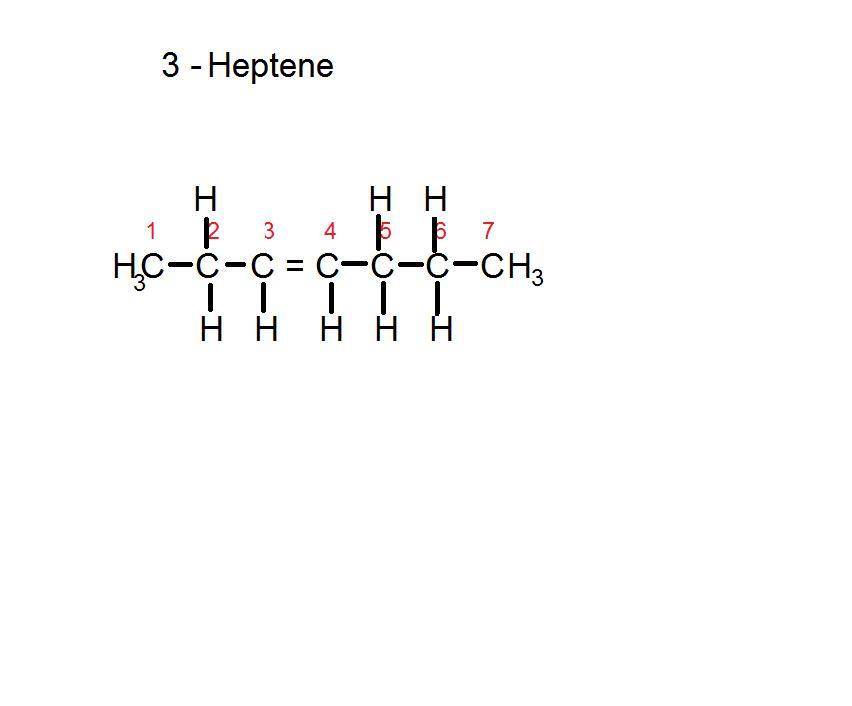
A hydrocarbon molecule has seven carbon
Damm [24]

Answer: Option (3) is the correct answer.

Explanation:

When a linear chain of carbon and hydrogen atoms is attached by single bonds only then it is known as alkane.

When  a linear chain of carbon and hydrogen atoms contains a double bond then it is known as alkene.

When  a linear chain of carbon and hydrogen atoms contains a triple bond then it is known as alkyne.

Therefore, in the given description there is a double bond between third and fourth carbon. Hence, the IUPAC name of given compound is 3-heptene.

8 0
2 years ago
Other questions:
  • a 16.0g sample of iron was heated from 0 degrees Celsius o 35.0 degrees Celsius.the iron absorbed 246.4J of energy as heat. what
    11·2 answers
  • Adhesion describes water's attraction to _____. other water molecules other substances hydrogen molecules acids and bases
    5·2 answers
  • A chemist mixes 75.0 g of an unknown substance at 96.5C w/ 1,150 g of water at 25.0C . if the final temperature of the system is
    12·1 answer
  • Put the list in chronological order (1–5).
    7·2 answers
  • Which species has the smaller bond angle, h3o+ or h2o?
    15·1 answer
  • A sample of gas has a volume of 215 cm3 at 23.5 degrees Celsius and 84.6kPa what volume will the gas occupy at stp
    13·2 answers
  • What would the pOH of a solution that causes the cyanidin indicator to turn purple be?
    11·1 answer
  • Glycolic acid, which is a monoprotic acid and a constituent in sugar cane, has a pKa of 3.9. A 25.0 mL solution of glycolic acid
    6·1 answer
  • How many molecules of sulfur trioxide would react with 68.9 L of water at STP to produce sulfuric acid? SO3 + H2O H2(SO4)
    11·1 answer
  • What is the mass of 1.82 moles of lithium carbonate?
    13·2 answers
Add answer
Login
Not registered? Fast signup
Signup
Login Signup
Ask question!