answer.
Ask question
Login Signup
Ask question
All categories
  • English
  • Mathematics
  • Social Studies
  • Business
  • History
  • Health
  • Geography
  • Biology
  • Physics
  • Chemistry
  • Computers and Technology
  • Arts
  • World Languages
  • Spanish
  • French
  • German
  • Advanced Placement (AP)
  • SAT
  • Medicine
  • Law
  • Engineering
Agata [3.3K]
2 years ago
7

If a person burns 2171 Cal each day, how much energy (kJ) does she burn in 2 days??

Chemistry
1 answer:
Nataly_w [17]2 years ago
7 0

As 1 calorie = 4.184 jouls

Or

<span>1 calorie = 0.004184 kilojouls</span>

Total calories for two days = 2171 x 2 = 4342 calories

<span>Hence the energy in kj = 4342 x 0.004184 = 18.16 kj </span>

You might be interested in
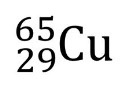
Give the nuclide symbol for an atom that has<br> mass number 64 and 35 neutrons.
azamat
The mass number represents the summation of the number of protons and the number of neutrons in the nucleus of an atom.
We are given that the mass number is 64 and that the number of neutrons is 35. Therefore:
number of protons = 64 - 35 = 29 protons

In ground state, number of protons in an atom is equal to the number of electrons. Therefore,
number of electrons = 29 electron

Using the periodic table, we will find that the element that has 29 electrons in ground state is copper.
The nuclide symbol of copper is shown in the attached image.

5 0
2 years ago
A 150 W electric heater operates for 12.0 min to heat an ideal gas in a cylinder. During this time, the gas expands from 3.00 L
Brut [27]

<u>Answer:</u> The change in internal energy of the gas is 108.835 kJ

<u>Explanation:</u>

To calculate the work done for reversible expansion process, we use the equation:

W=P\Delta V=-P(V_2-V_1)

where,

W = work done

P = pressure = 1.03 atm

V_1 = initial volume = 3.00 L

V_2 = final volume = 11.0 L

Putting values in above equation, we get:

W=-(1.03)\times (11.0-3.00)=8.24L.atm=834.9J=0.835kJ     (Conversion factor:  1 L. atm = 101.325 J)

Calculating the heat from power:

Q=P\times t

where,

Q = heat required

P = power = 150 W

t =  time = 12 min = 720 s       (Conversion factor:  1 min = 60 s)

Putting values in above equation:

Q=150\times 720=108000J=108kJ

The equation for first law of thermodynamics follows:

Q=dU+W

where,

Q = total amount of heat required = 108 kJ

dU = Change in internal energy = ?

W = work done  = -0.835 kJ

Putting values in above equation, we get:

108kJ=dU+(-0.835)\\\\dU=(108+0.835)=108.835kJ

Hence, the change in internal energy of the gas is 108.835 kJ

7 0
2 years ago
A student noticed a yellow, solid substance was formed when mixing two clear liquids during a lab. What term describes this yell
givi [52]

Answer:

D

Explanation:

a precipitate is formed from a solution

5 0
2 years ago
What is the name of the compound CuCO³?
Tems11 [23]
Basic copper carbonate
3 0
2 years ago
Read 2 more answers
C5H12, pentane, is a liquid at room temperature.
Art [367]

Answer:

C)We cannot be sure unless we find out its boiling point.

Explanation:

It is necessary to clearly explain here that simply observing two compounds of the same homologous series irrespective of how close they may be in the series will not give us the faintest idea regarding which one will be a liquid, solid or gas at room temperature.

However, to determine whether an unknown substance will be a liquid at room temperature, then its important to measure its boiling point. If the boiling point is above room temperature, and the melting point is below room temperature, the compound is a liquid. If the boiling point of the unknown substance is below room temperature, it is a gas.

It is now safe to conclude that cannot decide on the state of matter in which a compound exists unless we know something about its boiling point, not merely looking closely at the properties of its neighbouring compounds in the same homologous series

8 0
2 years ago
Other questions:
  • A chemist in an imaginary universe, where electrons have a different charge than they do in our universe, performs the millikan
    6·1 answer
  • What are the missing coefficients for the skeleton equation below? cr(s) + fe(no3)2(aq) → fe(s) + cr(no3)3(aq)?
    9·1 answer
  • Which of the following elements will gain electrons to form an
    5·1 answer
  • Draw the Lewis structure (including resonance structures) for diazomethane (CH2N2)(CH2N2). For each resonance structure, assign
    15·1 answer
  • ) The only noble gas without eight valence electrons is __________. A) Ar B) Ne C) Kr D) He E) All noble gases have eight valenc
    13·1 answer
  • what would the total pressure of a mixture of fluorine, chlorine, and bromine gases be if the partial pressure are 2.20 atm, 6.7
    11·1 answer
  • A 1.45 g sample of an iron ore is dissolved in acid and the iron obtained is Fe2+(aq). To titrate the solution, 21.6 mL of 0.102
    8·2 answers
  • 1. How many moles of tin are needed to react with 3.5 moles of hydrogen fluoride?
    15·1 answer
  • In the same condition, what happens to the net force acting on the rope?
    7·1 answer
  • When the following equation is balanced, the coefficients are __________. Al(NO3)3 + Na2S → Al2S3 + Na(NO3)
    11·1 answer
Add answer
Login
Not registered? Fast signup
Signup
Login Signup
Ask question!