answer.
Ask question
Login Signup
Ask question
All categories
  • English
  • Mathematics
  • Social Studies
  • Business
  • History
  • Health
  • Geography
  • Biology
  • Physics
  • Chemistry
  • Computers and Technology
  • Arts
  • World Languages
  • Spanish
  • French
  • German
  • Advanced Placement (AP)
  • SAT
  • Medicine
  • Law
  • Engineering
Marianna [84]
2 years ago
15

A student prepares a solution by dissolving 60.00 g of glucose (molar mass 180.2 g mol-1) in enough distilled water to make 250.

0 mL of solution. The molarity of the solution should be reported as
a. 12.01 M
b. 12.0 M
c. 1.332 M
d. 1.33 M
e. 1.3 M
Chemistry
1 answer:
anyanavicka [17]2 years ago
4 0

Answer:

1.332 Molar is the molarity of the glucose solution.

Explanation:

Molarity of the solution is the moles of compound in 1 Liter solutions.

Molarity=\frac{\text{Mass of compound}}{\text{Molar mas of compound}\times Volume (L)}

Mass of glucose = 60.00 g

Molar mass of glucose = 180.2 g/mol

Volume of the solution = V = 250.0 mL = 0.250 L

(1 mL  = 0.001 L)

Molarity=\frac{60.00 g}{180.2 g/mol\times 0.250 L}=1.332 mol/L

1.332 Molar is the molarity of the glucose solution.

You might be interested in
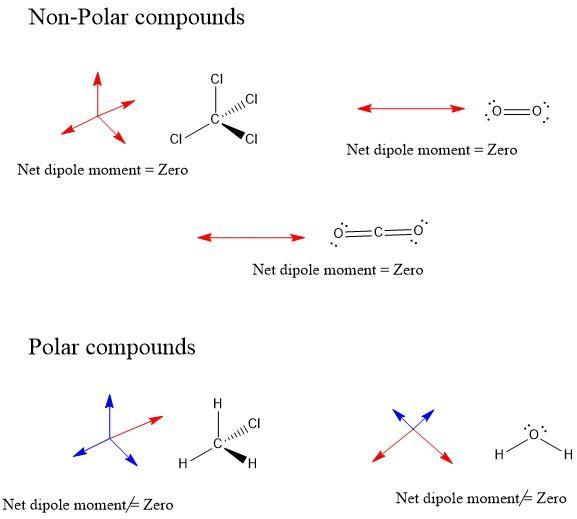
Given six molecules, identify the molecules with polar bonds and the molecules that are polar.CCl4, CH3Cl, H20, CO2, O2
Nikitich [7]

Answer:

Non-polar compounds: CCl_4, O_2, CO_2

Polar compounds: CH_3Cl, H_2O

Explanation:

For this question, we must start with the <u>Lewis structure</u> for each molecule and then we can do their respective analysis:

-) CCl_4

In this case, we have 4 equal atoms attached to the central atom. Therefore, we have the <u>same magnitude</u> of electronegativity. Chlorine atoms have <u>different and opposite directions.</u> Therefore due to the orientation the dipole moments cancel and the <u>net dipole moment will be zero</u> and the molecule will be non-polar.

-) O_2

In this case, we have a linear structure in which the magnitude of the dipole moment is the same, but the direction is the <u>opposite</u>. Therefore the dipole moments are canceled and the molecule will be <u>non-polar</u>.

-) CO_2

In this case, we also have a linear structure in which the magnitude of the dipole moment is the same, but the direction is the <u>opposite</u>. Therefore the dipole moments are canceled and the molecule will be <u>non-polar</u>.

-) CH_3Cl

For this molecule, we have a <u>different atom</u>. The hydrogen atom, therefore the magnitude of one of the atoms attached to the central atom is different and the magnitude of the <u>net dipole moment will be different from zero</u> and the molecule will be <u>polar</u>.

-) H_2O

For this molecule, due to the structure of the molecule, the dipole moments of oxygens <u>will not have a totally opposite configuration</u>. Therefore, the net dipole moment will be different from zero and the molecule will be <u>polar</u>.

See figure 1 to further explanations

I hope it helps!

5 0
2 years ago
You will be using the observations given in the scenarios i - vi below to determine which of the following is true for G (a - c)
WITCHER [35]

Answer:

A spontaneous reaction is taking place in a flask. When you touch the flask, it feels cold and gets colder as the reaction progresses........(c,f,g)

A spontaneous reaction is taking place in a flask as evidenced by the formation of gas bubbles. When you touch the flask, it feels hot and gets hotter as the reaction progresses.... (c,d,h)

A spontaneous reaction is taking place in a flask. When you touch the flask, it feels hot and gets hotter as the reaction progresses....(c,f,h)

A spontaneous reaction is taking place in a flask. You notice the formation of gas bubbles intensifies as the reaction progresses....(c,d,I)

A solid in a closed flask begins to melt. (You can consider this a phase change.)....(b,d,g)

A liquid begins to appear on the inside of a closed flask. At first glance before the liquid began to appear, you might have thought the flask was empty. (You can consider this a phase change.)....(a,e,h)

Explanation:

Now it is necessary here to state the equation for ∆G

∆G= ∆H-T∆S

The values of ∆G depends on the relative values of ∆H, T and ∆S.

When heat is evolved by a system, ∆H is negative, when heat is absorbed by a system, ∆H is positive.

When gases are evolved, ∆S is positive, when gases turn to liquids or solids ∆S is negative.

Let us also recall that, for the melting process ∆S positive ( solid changes to liquid), ∆H is positive(energy is absorbed) and T increases( the substance is heated). Hence ∆G is negative

For the condensation process; ∆H is negative (heat is evolved), ∆S is negative (gas changes to liquid) and T is decreased hence ∆G is positive.


5 0
2 years ago
If a dozen clementine oranges have a mass of 744g, what will be the mass of 15 Clementines?
natka813 [3]
930 g for 15 clementines
5 0
2 years ago
Read 2 more answers
Magnesium reacts with a certain element to form a compound with the general formula MgX. What would the most likely formula be f
Rama09 [41]

Answer:

K2X

Explanation:

Valency can be defined as the combining power of an element. It is the valency that dictates the value an element will have when writing a chemical formula for its compound.

MgX is a compound of magnesium and an element X. The valency of magnesium in most of its compound is +2. Now for the 2 to have been absent in the chemical formula, this shows that the element X itself have a valency if -2 for the valencies of both to have canceled out.

Now considering the element potassium, it is an alkaline metal belonging to group 1 of the periodic table. Hence, it is expected that it has a valency of +1

Forming a compound with element X means there would be an exchange of valencies between the two. We have established that x has a valency of -2. The formula of the compound thus formed by exchanging the valencies of both element would be K2X

4 0
2 years ago
**PLATO QUESTION, PLEASE ANSWER CORRECTLY, THANK YOU**
Nata [24]
The answers are the following that can be answered using the chart:

A. Which type of hurricane is expected to strike more frequently this century?
Category 4 + 5C. In general, will hurricanes likely become stronger or weaker this century?
Stronger, because there are more stronger ones thant he weaker ones that can result to hurricane.

E. Which types of hurricanes are expected to drop in frequency by more than 25% this century?
Categories 1, 2, 3


4 0
2 years ago
Other questions:
  • Consider the reaction cacn2 3 h2o → caco3 2 nh3 . how much nh3 is produced if 187 g of caco3 are produced?
    9·1 answer
  • Rank the size of a change in temperature of one degree Fahrenheit, one degree Celsius, and one kelvin. In other words, if a ther
    6·1 answer
  • How many molecules of ascorbic acid (vitamin c, c6h8o6) are in a 500 mg tablet?
    14·2 answers
  • What is the empirical formula? A compound is used to treat iron deficiency in people. It contains 36.76% iron, 21.11% sulfur, an
    9·2 answers
  • En un depósito hay 800 litros de agua. Por la parte superior un tubo vierte en el depósito 25 litros por minuto, y por la parte
    8·1 answer
  • . A mixture of methane and air is capable of being ignited only if the mole percent of methane is between 5% and 15%. A mixture
    13·1 answer
  • Lisa’s book measures 40 cm x 10 cm x 2 cm. What is the volume of her book
    7·2 answers
  • Which best protects animal species that are endangered due to overhunting?
    7·2 answers
  • Copper atoms are heavier than magnesium atoms. So, although each atom of magnesium can produce one atom of copper, the masses wo
    13·1 answer
  • It take 38.70cm³ of 1.90m NaoH to neutralize 10.30cm³ of H2so4 in a battery, calculate the molar concentration of H2so4
    7·1 answer
Add answer
Login
Not registered? Fast signup
Signup
Login Signup
Ask question!