answer.
Ask question
Login Signup
Ask question
All categories
  • English
  • Mathematics
  • Social Studies
  • Business
  • History
  • Health
  • Geography
  • Biology
  • Physics
  • Chemistry
  • Computers and Technology
  • Arts
  • World Languages
  • Spanish
  • French
  • German
  • Advanced Placement (AP)
  • SAT
  • Medicine
  • Law
  • Engineering
baherus [9]
2 years ago
5

A thick steel sheet of area 100 in.2 is exposed to air near the ocean. After a one-year period it was found to experience a weig

ht loss of 485 g due to corrosion. To what rate of corrosion, in both mpy and mm/yr, does this correspond
Physics
1 answer:
vladimir1956 [14]2 years ago
3 0

Answer:

Therefore the rate of corrosion 37.4 mpy and 0.952 mm/yr.

Explanation:

The corrosion rate is the rate of material remove.The formula for calculating CPR or corrosion penetration rate is

CPR=\frac{KW}{DAT}

K= constant depends on the system of units used.

W= weight =485 g

D= density =7.9 g/cm³

A = exposed specimen area =100 in² =6.452 cm²

K=534 to give CPR in mpy

K=87.6  to give CPR in mm/yr

mpy

CPR=\frac{KW}{DAT}

        =\frac{534\times( 485g)\times( 10^3mg/g)}{(7.9g/cm^3) \times (100in^2)\times (24h/day)\times (365day/yr)\times 1yr}

        =37.4mpy

mm/yr

CPR=\frac{KW}{DAT}

        =\frac{87.6\times (485g)\times (10^3 mg/g)}{(7.9g/cm^3)\times (100in^2)\times(2.54cm/in)^2\times (24h/day)\times (365day/yr)\times 1yr}

       =0.952 mm/yr

Therefore the rate of corrosion 37.4 mpy and 0.952 mm/yr.

You might be interested in
Which of the following represents a convex lens?<br> A. +f<br> B. -di<br> C. -f<br> D. +di
Aleonysh [2.5K]
F is the focal length of the lens. A positive f indicates a converging optical device, like a convex lens or a concave mirror.

Choice A
7 0
2 years ago
Read 3 more answers
A point charge Q = -400 nC and two unknown point charges, q1 and q2, are placed as shown. Point charge q1 is located 1.3 meters
nalin [4]
120 nC is the answer


Sorry if I’m wrong
6 0
2 years ago
The equation for the change in the position of a train (measured in units of length) is given by the following expression: x = ½
mel-nik [20]

Answer:

(B) (length)/(time³)

Explanation

The equation x = ½ at² + bt³ has to be dimensionally correct. In other words the term bt³ and ½ at² must have units of change of position = length.

We solve in order to find the dimension of b:

[x]=[b]*[t]³

length=[b]*time³

[b]=length/time³

6 0
2 years ago
Read 2 more answers
A 6-in-wide polyamide F-1 flat belt is used to connect a 2-in-diameter pulley to drive a larger pulley with an angular velocity
Likurg_2 [28]

Answer:

a) Fc = 4.15 N, Fi = 435.65 N, (F1)a = 640 N, and F2  = 239.6 N,

b) Ha = 1863.75 N, nfs = 1 , length = 11.8 mm

Explanation:

Given that:

γ= 9.5 kN/m³ = 9500N/m3

b = 6 inches = 0.1524 m

t = 0.0013 mm

d = 2 inches  = 0.0508 m

n = 1750 rpm

H_{nom}=2hp=1491.4W

L = 9 ft = 2.7432 m

Ks = 1.25

g = 9.81 m/s²

a)

w=\gamma b t = 9500* 0.1524*0.0013=1.88N/m

V=\frac{\pi d n}{60} =\pi *0.0508*1750/60=4.65 m/s

F_c=\frac{wV^2}{g}=1.88*4.65^2/9.81=4.15N

(F_1)_a=bF_aC_pC_v=0.1524*6000*0.7*1=640N

T=\frac{H_{nom}n_dK_s}{2\pi n}= \frac{1491*1.25*1}{2*\pi*1750/60}=10.17Nm

F_2=(F_1)_a-\frac{2T}{D}= 640-\frac{2*10.17}{0.0508} =239.6N

F_i=\frac{(F_1)_a+F_2}{2} -F_c=435.65N

b)

H_a=1491*1.25=1863.75W

n_f_s=\frac{H_a}{H_{nom}K_S }=1

dip = \frac{L^2w}{8F_i} =\frac{2.7432*1.88}{435.65}=11.8mm

7 0
2 years ago
Sebanyak 0,2 mol gas ideal berada dalam wadah yang volumenya 10 liter dan tekanan 1 atm . berapakah suhu gas tersebut
tamaranim1 [39]

The temperature of the gas is about 600 K

\texttt{ }

<h3>Further explanation</h3>

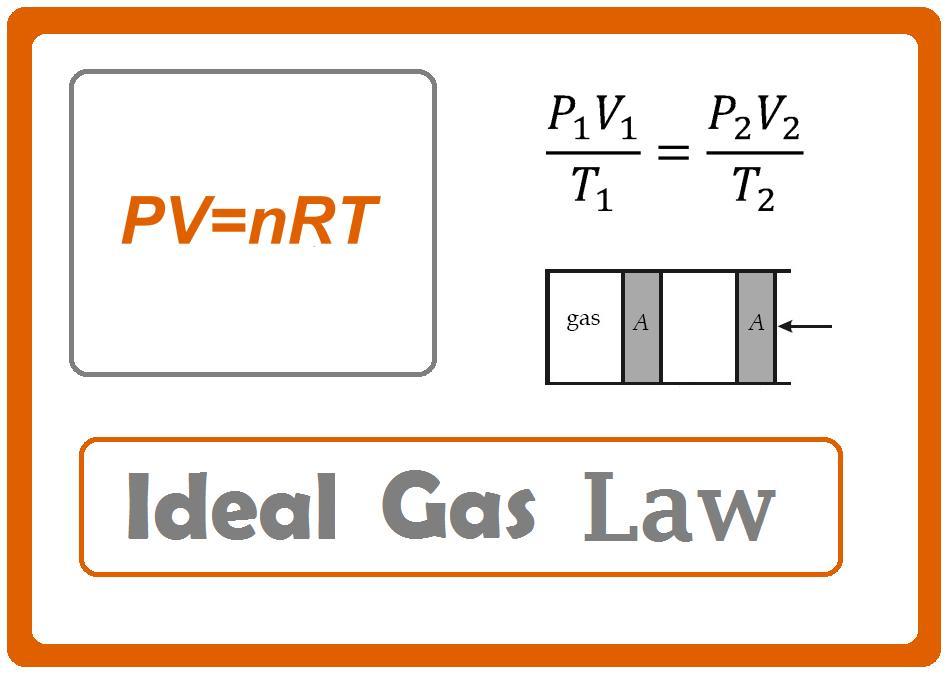
The Ideal Gas Law that needs to be recalled is:

\large {\boxed {PV = nRT} }

<em>P = Pressure (Pa)</em>

<em>V = Volume (m³)</em>

<em>n = number of moles (moles)</em>

<em>R = Gas Constant (8.314 J/mol K)</em>

<em>T = Absolute Temperature (K)</em>

Let us now tackle the problem !

\texttt{ }

<u><em>Question (Translation):</em></u>

<em>A total of 0.2 moles of ideal gas are in containers with volume of 10 liters and a pressure of 1 atm. What is the temperature of the gas?</em>

<u>Given:</u>

number of moles = n = 0.2 moles

volume of gas = V = 10 liters

pressure of gas = P = 1 atm

gas contant = R = 0.0821 L.atm/mol.K

<u>Unknown:</u>

temperature of gas = T = ?

<u>Solution:</u>

PV = nRT

1 \times 10 = 0.2 \times 0.0821 \times T

10 = 0.01642 \times T

T = 10 \div 0.01642

T \approx 600 \texttt{ K}

\texttt{ }

<h3>Learn more</h3>
  • Minimum Coefficient of Static Friction : brainly.com/question/5884009
  • The Pressure In A Sealed Plastic Container : brainly.com/question/10209135
  • Effect of Earth’s Gravity on Objects : brainly.com/question/8844454

\texttt{ }

<h3>Answer details</h3>

Grade: High School

Subject: Physics

Chapter: Pressure

\texttt{ }

Keywords: Gravity , Unit , Magnitude , Attraction , Distance , Mass , Newton , Law , Gravitational , Constant , Liquid , Pressure


8 0
2 years ago
Other questions:
  • It takes 3 minutes to make toast in a 1500 watt toaster. Calculate how much work is done by the toaster.
    5·2 answers
  • At the instant that the velocity of the crate is v⃗ =(3.40m/s)ι^+(2.20m/s)j^, what is the instantaneous power supplied by this f
    7·1 answer
  • an ice skater is moving at a speed of 2 mi/hr when she slams into a wall 0.05 hours later. what is her acceleration?
    10·2 answers
  • You are driving due north on i-81 to come to jmu with a speed of 10 m/s, suddenly you realize you forgot your book. You make a u
    12·1 answer
  • Two identical metal spheres A and B are in contact. Both are initially neutral. 1.0× 10 12 electrons are added to sphere A, then
    15·1 answer
  • A burglar drops a bag of loot fr a window hotel. The bag takes 0.15s to pass the 1.6m tall window of your room as it falls towar
    13·1 answer
  • Weddell seals make holes in sea ice so that they can swim down to forage on the ocean floor below. Measurements for one seal sho
    11·1 answer
  • Guadalupe has a motorized globe on her desk that has a 0.16 m radius. She turns on the 4.25-watt motor and the globe begins to s
    12·1 answer
  • A rock falls for 1.43 seconds how far did it fall? The falls's velocity is an acceleration of -9.81 m/s2
    13·1 answer
  • A 1500 kg car traveling at 20 m/s suddenly runs out of gas while approaching the valley shown in the figure. The alert driver im
    9·1 answer
Add answer
Login
Not registered? Fast signup
Signup
Login Signup
Ask question!