answer.
Ask question
Login Signup
Ask question
All categories
  • English
  • Mathematics
  • Social Studies
  • Business
  • History
  • Health
  • Geography
  • Biology
  • Physics
  • Chemistry
  • Computers and Technology
  • Arts
  • World Languages
  • Spanish
  • French
  • German
  • Advanced Placement (AP)
  • SAT
  • Medicine
  • Law
  • Engineering
patriot [66]
2 years ago
8

What is the percent by mass of 15g of sugar of 70g of water?

Chemistry
1 answer:
Mama L [17]2 years ago
6 0

Answer:

lol u have mrs carnes

Explanation:

You might be interested in
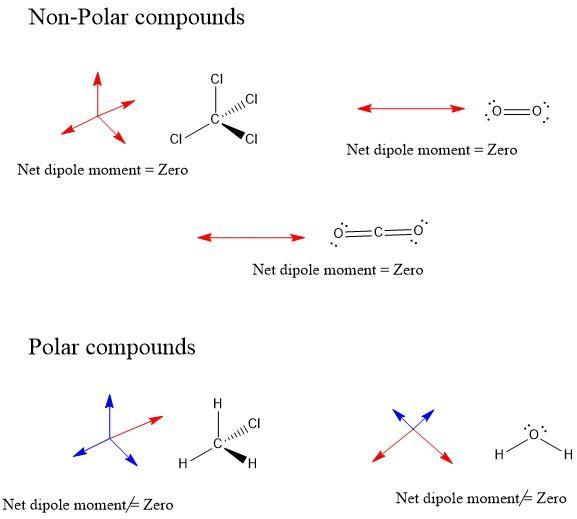
Given six molecules, identify the molecules with polar bonds and the molecules that are polar.CCl4, CH3Cl, H20, CO2, O2
Nikitich [7]

Answer:

Non-polar compounds: CCl_4, O_2, CO_2

Polar compounds: CH_3Cl, H_2O

Explanation:

For this question, we must start with the <u>Lewis structure</u> for each molecule and then we can do their respective analysis:

-) CCl_4

In this case, we have 4 equal atoms attached to the central atom. Therefore, we have the <u>same magnitude</u> of electronegativity. Chlorine atoms have <u>different and opposite directions.</u> Therefore due to the orientation the dipole moments cancel and the <u>net dipole moment will be zero</u> and the molecule will be non-polar.

-) O_2

In this case, we have a linear structure in which the magnitude of the dipole moment is the same, but the direction is the <u>opposite</u>. Therefore the dipole moments are canceled and the molecule will be <u>non-polar</u>.

-) CO_2

In this case, we also have a linear structure in which the magnitude of the dipole moment is the same, but the direction is the <u>opposite</u>. Therefore the dipole moments are canceled and the molecule will be <u>non-polar</u>.

-) CH_3Cl

For this molecule, we have a <u>different atom</u>. The hydrogen atom, therefore the magnitude of one of the atoms attached to the central atom is different and the magnitude of the <u>net dipole moment will be different from zero</u> and the molecule will be <u>polar</u>.

-) H_2O

For this molecule, due to the structure of the molecule, the dipole moments of oxygens <u>will not have a totally opposite configuration</u>. Therefore, the net dipole moment will be different from zero and the molecule will be <u>polar</u>.

See figure 1 to further explanations

I hope it helps!

5 0
2 years ago
If you perform the experiment described in investigation #15 by mixing 10 g of glue with 13 g of water and 8 g of sodium borate
Phantasy [73]

10 g of glue with 13 g of water ,

Mass ratio of the material can be calculated as:    

\frac{Mass of glue}{Mass of glue + Mass of water}  

\frac{10 g}{10 g + 13 g }  

\frac{10 g}{23 g }

8 g of sodium borate suspended in 11 g of water, mass ratio can be calculated as:

\frac{Mass of sodium borate}{Mass of sodium borate + Mass of water}  

\frac{ 8 g}{ 8 g + 11 g }  

\frac{8 g}{19 g }

3 0
2 years ago
How many molecules are in 79g of fe2o3
horrorfan [7]
Convert grams —> mols and then mols —> atoms

We know that there are 6.02 x 10^23 atoms/mol

And we know that there are about 160 grams of fe2o3 per mol

So (79g fe2o3)/(160 g/mol) = .49 mol fe2o3

Now we use avogadro’s number to do

(.49 mol fe2o3)/(6.02 x 10^23 atoms/mol) = the answer.

I’ll leave the easy math to you.
7 0
2 years ago
Four students all do the same experiment for the science fair. They test reaction times for pushing a button when a specific col
emmasim [6.3K]
Sorry, Cant really tell how to differentiate the students and trial times
3 0
2 years ago
Which equation shows the proper setup to find the volume of a 0.250 M CaCl2 solution that contains 39.5 g of CaCl2?
Jlenok [28]
Molarity = number of mole of substance(n) / volume of solution (V).

n(CaCl2) = mass (CaCl2)/M(CaCl2)

M(CaCl2) = 40+2*35.5 = 111 g/mol 

n(CaCl2) =39.5 g CaCl2*1 mol/111g

0.250 M = 39.5 g CaCl2*1 mol/111g*volume of solution (V).

volume of solution (V) = 39.5 g CaCl2*1 mol/(0.250 M*111g) = 1.42 L
4 0
2 years ago
Read 2 more answers
Other questions:
  • Reacting 35.4 ml of 0.220 m agno3 with 52.0 ml of 0.420 m k2cro4 results in what mass of solid formed
    6·1 answer
  • A mixture of three gases has a total pressure at 298 K of 1560 mm Hg. the mixture is analyzed and is found to contain 1.50 mol N
    10·1 answer
  • Which of the following concerning second ionization energies is true?
    13·1 answer
  • An object accelerates 3.0 m/s2 when a force of 6.0 Newton’s is applied to it. What is the mass of the object?
    13·1 answer
  • What tool would you need discover whether a mineral has fracture?
    7·1 answer
  • During a laboratory experiment, 36.12 grams of Al2O3 was formed when O2 reacted with aluminum metal at 280.0 K and 1.4 atm. What
    11·1 answer
  • During a titration the following data were collected. A 50.0 mL portion of an HCl solution was titrated with 0.500 M NaOH; 200.
    7·1 answer
  • A mixture containing 20 mole % butane, 35 mole % pentane and rest
    15·2 answers
  • An athlete has 15% body fat by mass. What is the weight of fat, in pounds, of a 74 kg-athlete?
    13·1 answer
  • Calculate the mass of the zinc that reacts with 4.11 g of hydrochloric acid to form 9.1 g of zinc chloride and 3.97 g of hydroge
    6·1 answer
Add answer
Login
Not registered? Fast signup
Signup
Login Signup
Ask question!