answer.
Ask question
Login Signup
Ask question
All categories
  • English
  • Mathematics
  • Social Studies
  • Business
  • History
  • Health
  • Geography
  • Biology
  • Physics
  • Chemistry
  • Computers and Technology
  • Arts
  • World Languages
  • Spanish
  • French
  • German
  • Advanced Placement (AP)
  • SAT
  • Medicine
  • Law
  • Engineering
Mama L [17]
2 years ago
14

Butane (C4 H10(g), Hf = –125.6 kJ/mol) reacts with oxygen to produce carbon dioxide (CO2 , Hf = –393.5 kJ/mol ) and water (H2 O,

Hf = –241.82 kJ/mol) according to the equation below. What is the enthalpy of combustion (per mole) of C4H10 (g)? Use .
Chemistry
1 answer:
WITCHER [35]2 years ago
6 0

Answer: Enthalpy of combustion (per mole) of C_4H_{10} (g) is -2657.5 kJ

Explanation:

The chemical equation for the combustion of butane follows:

2C_4H_{10}(g)+4O_2(g)\rightarrow 8CO_2(g)+10H_2O(g)

The equation for the enthalpy change of the above reaction is:

\Delta H^o_{rxn}=[(8\times \Delta H^o_f_{CO_2(g)})+(10\times \Delta H^o_f_{H_2O(g)})]-[(1\times \Delta H^o_f_{C_4H_{10}(g)})+(4\times \Delta H^o_f_{O_2(g)})]

We are given:

\Delta H^o_f_{(C_4H_{10}(g))}=-125.6kJ/mol\\\Delta H^o_f_{(H_2O(g))}=-241.82kJ/mol\\\Delta H^o_f_{(O_2(g))}=0kJ/mol\\\Delta H^o_f_{(CO_2(g))}=-393.5kJ/mol\\\Delta H^o_{rxn}=?

Putting values in above equation, we get:

\Delta H^o_{rxn}=[(8\times -393.5)+(10\times -241.82)]-[(2\times -125.6)+(4\times 0)]\\\\\Delta H^o_{rxn}=-5315kJ

Enthalpy of combustion (per mole) of C_4H_{10} (g) is -2657.5 kJ

You might be interested in
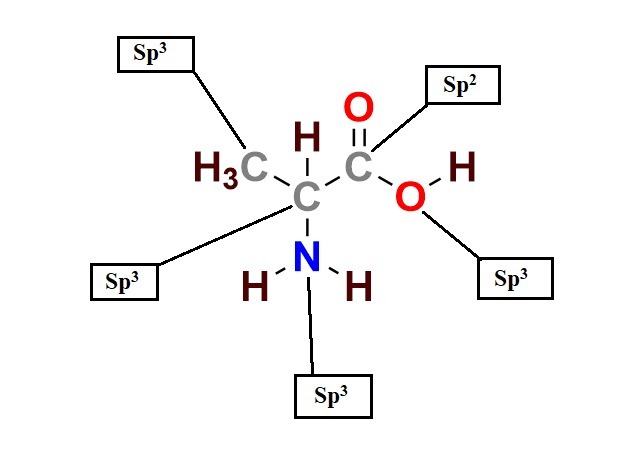
Consider the structure of the amino acid alanine. indicate the hybridization about each interior atom.
OLEGan [10]
The structure of Alanine is shown below,
Except the carbon atom of carbonyl group which is Sp² Hybridized, all remaining atoms are Sp³ Hybridized. The hybridization of each element is depicted in a box below,

5 0
2 years ago
Read 2 more answers
At a temperature of __________ °c, 0.444 mol of co gas occupies 11.8 l at 889 torr.
Novay_Z [31]
<span>ideal gas law is: PV = nRT P = pressure (torr) = 889 torr V = volume (Liters) = 11.8 L n = moles of gas = 0.444 mol R = gas constant = 62.4 (L * torr / mol * k) solve for T (in kelvin) T = PV/nR T = (889*11.8)/(.444*62.4) T = 378.6 K convert to C (subtract 273) T = 105.6 deg C</span>
3 0
2 years ago
Read 2 more answers
The compound AX2 decomposes according to the equation, 2 AX2(g) =&gt; 2 AX(g) + X2(g). In one experiment, AX2 was measured at va
Karolina [17]

Answer:

0.0011 mol/L.s

Explanation:

The average rate of disappearing of the reagent is the variation of the concentration of it divided by the time that this variation is being measured. The reaction rate, is proportional to the coefficient of the substance, so, for a generic reaction:

aA + bB --> cC + dD

rate = -(1/a)Δ[A]/Δt = -(1/b)Δ[B]/Δt = (1/c)Δ[C]/Δdt = (1/d)Δ[D]/dt

The minus sign is because of the reagent is desapering, so:

rate = -(1/2)*(0.0209 - 0.0300)/(10 - 6)

rate = 0.0011 mol/L.s

8 0
2 years ago
Zinc metal is added to hydrochloric acid to generate hydrogen gas and is collected over a liquid whose vapor pressure is the sam
mafiozo [28]

Question:

Zinc metal is added to hydrochloric acid to generate hydrogen gas and is collected over a liquid whose vapor pressure is the same as pure water at 20.0 degrees C (18 torr). The volume of the mixture is 1.7 L and its total pressure is 0.987 atm. Determine the number of moles of hydrogen gas present in the sample.

A. 0.272 mol

B. 0.04 mol

C. 0.997 mol

D. 0.139 mol

E. 0.0681 mol

Answer:

The correct option is;

E. 0.0681 mol

Explanation:

The equation for the reaction is

Zn + HCl = H₂ + ZnCl₂

Vapor pressure of the liquid = 18 torr = 2399.803 Pa

Total pressure of gas mixture H₂ + liquid vapor = 0.987 atm  

= 100007.775 Pa

Therefore, by Avogadro's law, pressure of the hydrogen gas is given by the following equation

Pressure of H₂ = 100007.775 Pa - 2399.803 Pa = 97607.972 Pa

Volume of H₂ = 1.7 L = 0.0017 m³

Temperature = 20 °C = 293.15 K

Therefore,

n = \frac{PV}{RT} =  \frac{100007.775 \times 0.0017 }{8.3145 \times 293.15} = 0.068078 \ moles

Therefore, the number of moles of hydrogen gas present in the sample is n ≈ 0.0681 moles.

7 0
2 years ago
14. What is the pH of a 0.24 M solution of sodium propionate, NaC3H502, at 25°C? (For
Murrr4er [49]

Answer:

9.1

Explanation:

Step 1: Calculate the basic dissociation constant of propionate ion (Kb)

Sodium propionate is a strong electrolyte that dissociates according to the following equation.

NaC₃H₅O₂ ⇒ Na⁺ + C₃H₅O₂⁻

Propionate is the conjugate base of propionic acid according to the following equation.

C₃H₅O₂⁻ + H₂O ⇄ HC₃H₅O₂ + OH⁻

We can calculate Kb for propionate using the following expression.

Ka × Kb = Kw

Kb = Kw/Ka = 1.0 × 10⁻¹⁴/1.3 × 10⁻⁵ = 7.7 × 10⁻¹⁰

Step 2: Calculate the concentration of OH⁻

The concentration of the base (Cb) is 0.24 M. We can calculate [OH⁻] using the following expression.

[OH⁻] = √(Kb × Cb) = √(7.7 × 10⁻¹⁰ × 0.24) = 1.4 × 10⁻⁵ M

Step 3: Calculate the concentration of H⁺

We will use the following expression.

Kw = [H⁺] × [OH⁻]

[H⁺] = Kw/[OH⁻] = 1.0 × 10⁻¹⁴/1.4 × 10⁻⁵ = 7.1 × 10⁻¹⁰ M

Step 4: Calculate the pH of the solution

We will use the definition of pH.

pH = -log [H⁺] = -log 7.1 × 10⁻¹⁰ = 9.1

5 0
2 years ago
Other questions:
  • A beam of light passes though a liquid in a test tube without scattering. Which type of mixture is most likely in the test tube?
    13·2 answers
  • A chromate ion consists of four oxygen atoms bonded to a chromium atom. It has two extra electrons. The formula of this ion:
    9·2 answers
  • An atom of oxygen has an atomic number of 8 and a mass number of 18. How many of each type of subatomic particle does it contain
    12·2 answers
  • A mixture of three gases has a pressure at 298 K of 1380 mm Hg. The mixture is analysed and is found to contain 1.27 mol CO2, 3.
    6·1 answer
  • How much energy must be removed from a 125 g sample of benzene (molar mass= 78.11 g/mol) at 425.0 K to liquify the sample and lo
    9·1 answer
  • How many milliliters of 0.200 M NH4OH are needed to react with 12.0 mL of 0.550 M FeCl3?
    5·1 answer
  • Calculate the number of C atoms in 9.837 x 1024 molecules of CO2. <br><br>Please help
    15·1 answer
  • What features of this model will help Armando answer the question?
    8·2 answers
  • Cl2 and N2 react according to the following equation 3Cl2(g) + N2(g) rightarrow 2NCl3(g) If 4 L of a stoichiometric mixture of c
    11·1 answer
  • Janine is trying to separate some ethanol from water. Which method should she use does anyone know this
    15·1 answer
Add answer
Login
Not registered? Fast signup
Signup
Login Signup
Ask question!