answer.
Ask question
Login Signup
Ask question
All categories
  • English
  • Mathematics
  • Social Studies
  • Business
  • History
  • Health
  • Geography
  • Biology
  • Physics
  • Chemistry
  • Computers and Technology
  • Arts
  • World Languages
  • Spanish
  • French
  • German
  • Advanced Placement (AP)
  • SAT
  • Medicine
  • Law
  • Engineering
Mandarinka [93]
2 years ago
12

Which gas is used to take out blueprint​

Chemistry
1 answer:
tiny-mole [99]2 years ago
7 0

The blueprint process

The best known is a process using ammonium ferric citrate and potassium . The paper is impregnated with a solution of ammonium ferric citr

You might be interested in
What is the pH of a solution made by mixing 15.00 mL of 0.100 M HCl with 50.00 mL of 0.100 M KOH? Assume that the volumes of the
denis23 [38]

Answer:

The correct answer is: pH = 12.73

Explanation:

The <em>neutralization reaction</em> between HCl and KOH is given by the following chemical equation:

HCl + KOH ⇒ KCl + H₂O

Since HCl is a strong acid and KOH is a strong base, HCl is completely dissociated into H⁺ and Cl⁻ ions, whereas KOH is dissociated completely into K⁺ and OH⁻ ions.

For acids, the number of equivalents is given by the moles of H⁺ ions (in this case: 1 equivalent per mol of HCl). For bases, the number of equivalents is given by the moles of OH⁻ ions (in this case: 1 equivalent per mol of KOH).

The H⁺ ions from HCl will react with OH⁻ ions of KOH to give H₂O. The pH is calculated from the difference between the equivalents of H⁺ and OH⁻:

equivalents of H⁺= volume HCl x Molarity HCl

                            = (15.0 mL x 1 L/1000 mL) x 0.100 mol/L

                            = 1.5 x 10⁻³ eq H⁺

equivalents of OH⁻= volume KOH x Molarity KOH

                               = (50.0 mL x 1 L/1000 mL) X 0.100 mol/L

                               = 5 x 10⁻³ eq OH⁻

There are more OH⁻ ions than H⁺ ions. The excess of OH⁻ (that did not react with H⁺ ions) is calculated as follows:

OH⁻ ions= (5 x 10⁻³ eq OH⁻) -  (1.5 x 10⁻³ eq H⁺) = 3.5 x 10⁻³ eq OH⁻= 3.5 x 10⁻³ moles OH⁻  

As the volumes of the solutions are additive, the total volume of the solution is:

V= 15.0 mL + 50.0 mL = 65.0 mL= 0.065 L

So, the concentration of OH⁻ ions in the solution is given by:

[OH⁻] = moles OH⁻/V= (3.5 x 10⁻³ moles OH⁻)/0.065 L = 0.054 mol/L = 0.054 M  

From  [OH⁻], we can calculate pOH:

pOH = -log [OH⁻] = -log (0.054) = 1.27

Finally, we know that pH + pOH= 14; so we calculate pH:

pH= 14 - pOH = 14 - 1,27 =  12.73                                                            

8 0
3 years ago
Which issue is a limitation of using synthetic polymers? Check all that apply.
Margarita [4]

#1 (As trash, synthetic polymers are not biodegradable)

#2 (Landfills can easily fill up with synthetic polymers)

#4 (Recycling synthetic polymers is costly)

4 0
2 years ago
Read 2 more answers
Analyze and solve this partially completed galvanic cell puzzle. There are 4 electrodes each identified by a letter of the alpha
klasskru [66]

Complete Question

The complete question is shown on the first uploaded image

Answer:

The correct option is  E_{cell}__{AC}} = 0.94

Explanation:

  From the question we are told that

          the cell voltage for AD is  E_{cell}__{AD}} = 1.56V

From the data give we can see that

               E_{cell}__{AD}} - E_{cell}__{BD}} = E_{cell}__{AB}}

i.e           1.56 - 1.53 = 0.03

   In the same way we can say that

              E_{cell}__{AD}}-E_{cell}__{CD}} = E_{cell}__{AC}}

=>        E_{cell}__{AC}}=1.56- 0.62

                       E_{cell}__{AC}} = 0.94


5 0
2 years ago
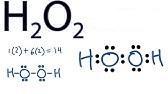
Many free radicals combine to form molecules that do not contain any unpaired electrons. The driving force for the radical–radic
Alexxandr [17]

Answer:

In the attached image the Lewis equation is shown where it is shown how two oxygens react with two hydrogens to meet the octet of the electrons.

Explanation:

Hydrogen peroxide is one of the most named chemicals since it is not only sold as "hydrogen peroxide" in pharmacies but it is also one of the great weapons of immune defense cells to defend ourselves against anaerobic bacteria.

The disadvantage of this compound is that when dividing it forms free oxygen radicals that are considered toxic or aging for our body.

4 0
2 years ago
Chloe wants to lighten the color of her dark hair, which will require the use of both haircolor and hydrogen peroxide. hydrogen
bearhunter [10]

The answer is developer .

Chloe wants to lighten the color of her dark hair, which will require the use of both hair color and hydrogen peroxide.

Hydrogen peroxide (H₂O₂) is an example of a most commonly used developer in hair color.

Hydrogen peroxide lighten hair color, as it can dissolve darker pigment. According to the  natural hair color and the length of time a person will leave hydrogen peroxide on  hair,  hair can turn somewhere on the color spectrum between caramel, orange and yellow.


7 0
2 years ago
Other questions:
  • Which of these is a base? a-vinegar b-ammonia c-HCl d- HNO3
    5·2 answers
  • What mass of H2 gas (in <br> g. would be produced by the complete reaction of the aluminum block?
    14·1 answer
  • At what temperature is the following reaction feasible: HCl(g) + NH3(g) -&gt; NH4Cl(s)?
    11·2 answers
  • Hydrogen is unique among the elements because ________. 1. It is not really a member of any particular group. 2. Its electron is
    7·1 answer
  • During a laboratory experiment, 36.12 grams of Al2O3 was formed when O2 reacted with aluminum metal at 280.0 K and 1.4 atm. What
    11·1 answer
  • The light reactions of photosynthesis use _____ and produce _____. The light reactions of photosynthesis use _____ and produce _
    9·1 answer
  • A swimmer enters a gloomier world (in one sense) on diving to greater depths. Given that the mean molar absorption coefficient o
    10·1 answer
  • imagine you have four food dyes to test A, B, C and D imagine that you are going to investigate which food dye diffuses more qui
    7·1 answer
  • As the pressure of a system changes, boiling points can change in what direction?
    5·2 answers
  • Give an example of a rule of the natural world that a scientist can assume is always true.
    6·1 answer
Add answer
Login
Not registered? Fast signup
Signup
Login Signup
Ask question!