answer.
Ask question
Login Signup
Ask question
All categories
  • English
  • Mathematics
  • Social Studies
  • Business
  • History
  • Health
  • Geography
  • Biology
  • Physics
  • Chemistry
  • Computers and Technology
  • Arts
  • World Languages
  • Spanish
  • French
  • German
  • Advanced Placement (AP)
  • SAT
  • Medicine
  • Law
  • Engineering
-BARSIC- [3]
2 years ago
3

The variables for this experiment include mass, volume and the materials in the various balls, as well as their densities. In Pa

rt III, you will be investigating the questionable baseball. Use the drop-down menus to complete the sentences and identify the independent and dependent variables. In Part III, the independent variable, the one that is intentionally manipulated, is . In Part III, the dependent variable, the one that you measure the response in, is .
Chemistry
2 answers:
cricket20 [7]2 years ago
8 0

Answer:

In Part III, the independent variable, the one that is intentionally manipulated, is material.              In Part III, the dependent variable, the one that you measure the response in, is

✔ density

Explanation:

Sidana [21]2 years ago
6 0

Explanation:

A variable is any factor, trait, or condition that can exist in differing amounts or types. An experiment usually has three kinds of variables: independent, dependent, and controlled. The independent variable is the one that is changed by the scientist.

You might be interested in
Iodine has a lower atomic weight than tellurium (126.90 for I, 127.60 for Te) even though it has a higher atomic number (53 for
andrew11 [14]

Answer and Explanation:

Iodine have lower atomic mass than tellurium even though the atomic number of iodine is more than the atomic number of tellurium

This is because the atomic weight of any element is the sum of number of proton and number of neutron, even though the number of proton in iodine is more so but the number of neutron is less as compared to tellurium which makes the tellurium of high atomic mass

6 0
2 years ago
Read 2 more answers
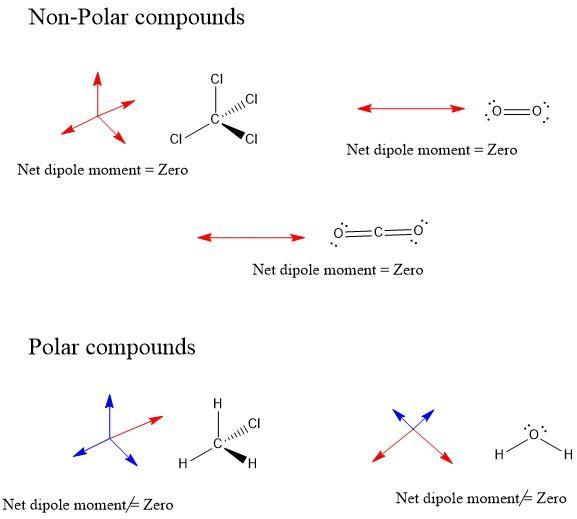
Given six molecules, identify the molecules with polar bonds and the molecules that are polar.CCl4, CH3Cl, H20, CO2, O2
Nikitich [7]

Answer:

Non-polar compounds: CCl_4, O_2, CO_2

Polar compounds: CH_3Cl, H_2O

Explanation:

For this question, we must start with the <u>Lewis structure</u> for each molecule and then we can do their respective analysis:

-) CCl_4

In this case, we have 4 equal atoms attached to the central atom. Therefore, we have the <u>same magnitude</u> of electronegativity. Chlorine atoms have <u>different and opposite directions.</u> Therefore due to the orientation the dipole moments cancel and the <u>net dipole moment will be zero</u> and the molecule will be non-polar.

-) O_2

In this case, we have a linear structure in which the magnitude of the dipole moment is the same, but the direction is the <u>opposite</u>. Therefore the dipole moments are canceled and the molecule will be <u>non-polar</u>.

-) CO_2

In this case, we also have a linear structure in which the magnitude of the dipole moment is the same, but the direction is the <u>opposite</u>. Therefore the dipole moments are canceled and the molecule will be <u>non-polar</u>.

-) CH_3Cl

For this molecule, we have a <u>different atom</u>. The hydrogen atom, therefore the magnitude of one of the atoms attached to the central atom is different and the magnitude of the <u>net dipole moment will be different from zero</u> and the molecule will be <u>polar</u>.

-) H_2O

For this molecule, due to the structure of the molecule, the dipole moments of oxygens <u>will not have a totally opposite configuration</u>. Therefore, the net dipole moment will be different from zero and the molecule will be <u>polar</u>.

See figure 1 to further explanations

I hope it helps!

5 0
2 years ago
A student measured the mass of some sodium chloride for a lab. the lab called for 6.25 g (the accurate measurement ) , but the s
Yuri [45]

Answer:

The answer is

\huge 4\%

Explanation:

The percentage error of a certain measurement can be found by using the formula

P(\%) =  \frac{error}{actual \:  \: number}  \times 100\% \\

From the question

actual mass = 6.25 g

error = 6.25 - 6 = 0.25

So we have

p(\%) =  \frac{0.25}{6.25}  \times 100

We have the final answer as

<h3>4 %</h3>

Hope this helps you

3 0
2 years ago
Element X is a radioactive isotope such that every 82 years, its mass decreases by half. Given that the initial mass of a sample
lesantik [10]

Answer: 17 years

Explanation:

Expression for rate law for first order kinetics  for radioactive substance is given by:

t=\frac{2.303}{k}\log\frac{a}{a-x}

where,

k = rate constant

t = age of sample

a = let initial amount of the reactant

a - x = amount left after decay process  

a) for completion of half life:

Half life is the amount of time taken by a radioactive material to decay to half of its original value.

t_{\frac{1}{2}}=\frac{0.693}{k}

k=\frac{0.693}{82years}=8.4\times 10^{-3}years^{-1}

b) for 8900 g of the mass of the sample to reach  7700 grams

t=\frac{2.303}{8.4\times 10^{-3}}\log\frac{8900}{7700}

t=17years

Thus it will take 17 years

4 0
2 years ago
Which condition can cause excessive pressure on the high side of a self contained active recovery device
murzikaleks [220]

Answer:

What can cause excessive pressure on the high side of an active self-contained recovery device? A closed recovery tank inlet valve or excessive air or other non condensables in the recovery tank (either A or B) Portable refillable tanks or containers used to ship recovered refrigerants must meet what standard(s)?

Explanation:

please mark me as brainliest thank you

5 0
1 year ago
Other questions:
  • What is the minimum total energy released when an electron and its antiparticle (positron) annihilate each other?
    8·2 answers
  • How many moles of ions are in 285 ml of 0.0150 m mgcl2?
    10·2 answers
  • Carbon tetrachloride contains one carbon and four chlorine atoms. for this compound 11.818 g of chlorine combine with 1.000 g of
    7·2 answers
  • A chemist wants to extract copper metal from copper chloride solution. The chemist places 0.50 grams of aluminum foil in a solut
    10·1 answer
  • Complete the chemical formula for each ionic compound. Consult the periodic table to help you answer the question. beryllium nit
    9·2 answers
  • What is the limiting reactant for the following reaction given we have 3.4 moles of Ca(NO3)2 and 2.4 moles of Li3PO4?Reaction: 3
    7·2 answers
  • The density of mercury is 13.6 g/cm3 . What volume (in quarts) is occupied by 100. g of Hg? (1 L = 1.06 qt)
    11·1 answer
  • During a laboratory experiment, 36.12 grams of Al2O3 was formed when O2 reacted with aluminum metal at 280.0 K and 1.4 atm. What
    11·1 answer
  • The formula of complex ion formed when aluminum hydroxide dissolves in sodium hydroxide will be: Select the correct answer below
    10·1 answer
  • This is the chemical formula for acetic acid (the chemical that gives the sharp taste to vinegar): An analytical chemist has det
    15·1 answer
Add answer
Login
Not registered? Fast signup
Signup
Login Signup
Ask question!