answer.
Ask question
Login Signup
Ask question
All categories
  • English
  • Mathematics
  • Social Studies
  • Business
  • History
  • Health
  • Geography
  • Biology
  • Physics
  • Chemistry
  • Computers and Technology
  • Arts
  • World Languages
  • Spanish
  • French
  • German
  • Advanced Placement (AP)
  • SAT
  • Medicine
  • Law
  • Engineering
Rudiy27
2 years ago
7

Which of these is a difference between a single skin cell and the skin tissue that covers an entire hand?

Chemistry
2 answers:
fgiga [73]2 years ago
7 0

Answer:

c

Explanation:

the cells grow more than the tissue

mote1985 [20]2 years ago
6 0

Answer:

A. A skin cell has a less complex structure than skin tissue has.

Explanation:

You might be interested in
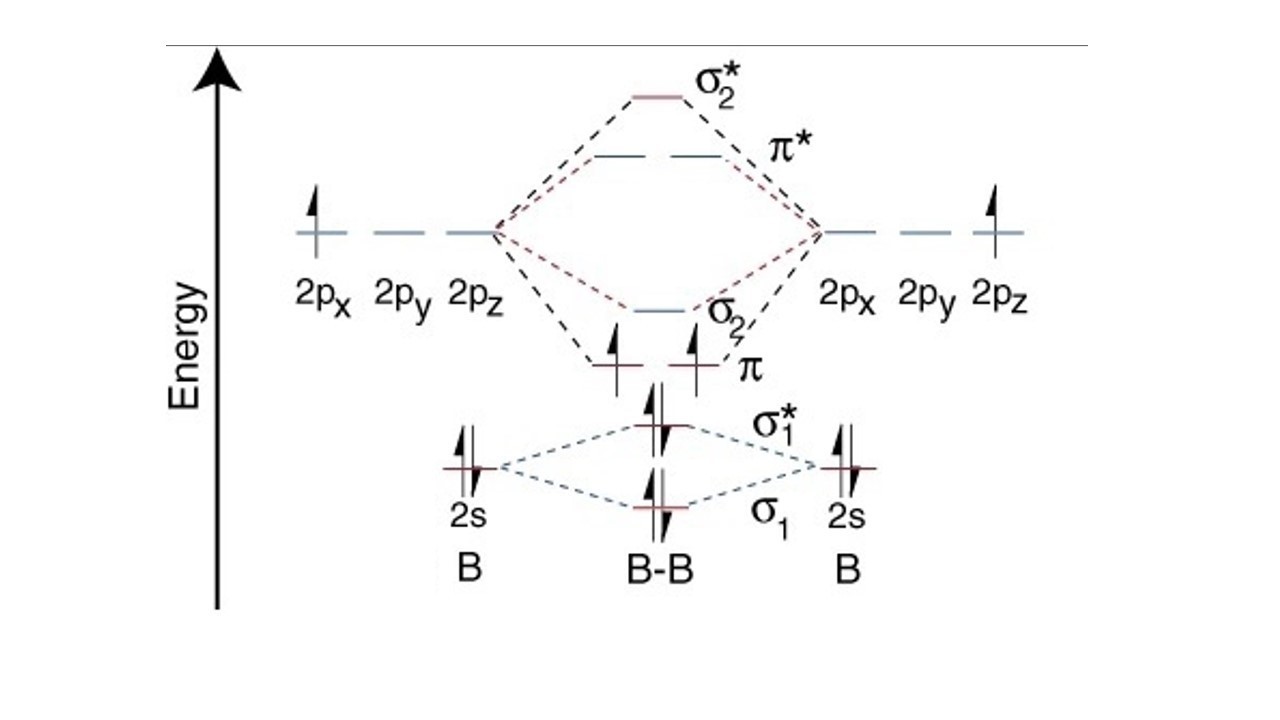
The highest energy occupied molecular orbital in the b−b bond of the b2 molecule is _____
statuscvo [17]
According to molecular orbital theory, atomic orbitals combine to form molecular orbital. Number of molecular orbitals are equal to number of atomic orbitals. Further, of the total number of molecular orbitals, half are called as bonding molecular orbital while remaining are anti-bonding molecular orbital. In case, if system contains lone pair of electrons, they occupy non-bonding molecular orbital. Highest occupied molecular energy levels are referred as HOMO, while lowest unoccupied molecular energy levels are referred as LUMO.

In case of B2 molecule, two B atoms combines to generate molecular orbitals. Attached is  the MOT diagram of B2 molecule

From the attached figure, it is clearly evitable that high occupied energy level in B2 is π. Also, it must be noted both <span>pi molecular orbitals i.e. Pi 2Px and Pi 2Py at highest energy level (occupied).</span>

6 0
2 years ago
Read 2 more answers
A molecular biologist measures the mass of cofactor a in an average yeast cell. the mass is 41.5 pg . what is the total mass in
Ronch [10]
In this question, you are given the average cofactor mass per cell (41.5pg) and the total cells count(105 cells). You are asked how much cofactor that will be found from those cells(microgram= 10^6 picogram). Then the calculation would be:
Cofactor mass= cofactor per cell * cell count= 41.5pg/cell * 105 cells= 4357.5pg= 4.36 x 10^3pg

Then convert the picogram(pg) into microgram: 4.36 x 10^3pg/ (10^6pg/microgram)= 4.36x10^-3 microgram or 0.00436 microgram

if 105 cells mean 10^5 cells, the answer should be 4.15 microgram
6 0
2 years ago
Read 2 more answers
Why does silver iodide have a higher melting point than vanillin
MAVERICK [17]
AgI has a higher melting point than vanillin because it is an ionic compound. The bonds are held more tightly together than in vanillin because it is a covalent compound. Ionic bonds have a higher melting point because the electrons are being transferred from one atom to the other.
5 0
2 years ago
The unit cell for cr2o3 has hexagonal symmetry with lattice parameters a = 0.4961 nm and c = 1.360 nm. If the density of this ma
IRINA_888 [86]

To calculate the packing factor, first calculate the area and volume of unit cell.

Area is calculated as:

A=6R^{2}\sqrt{3}

Here, R is radius and is related to a as follows:

R=\frac{a}{2}

Putting the value in expression for area,

A=6(\frac{a}{2})^{2}\sqrt{3}=1.5a^{2}\sqrt{3}

The value of a is 0.4961 nm

Since, 1 nm=10^{-7}cm

Thus, 0.4961 nm=4.961\times 10^{-8} cm

Putting the value,

Area=1.5(4.961\times 10^{-8}cm)^{2}\sqrt{3}=6.39\times 10^{-15}cm^{2}

Now, volume can be calculated as follows:

V=Area\times c

The value of c is 1.360 nm or 1.360\times 10^{-7} cm

Putting the value,

V=(6.39\times 10^{-15}cm^{2})\times (1.360\times 10^{-7} cm)=8.7\times 10^{-22}cm^{3}

now, number of atom in unit cell can be calculated by using the following formula:

n=\frac{\rho N_{A}V_{c}}{A}

Here, A is atomic mass of Cr_{2}O_{3} is 151.99 g/mol.

Putting all the values,

n=\frac{(5.22 g/cm^{3})(6.023\times 10^{23} mol^{-1})(8.7\times 10^{-22}cm^{3})}{(151.99 g/mol)}\approx 18

Thus, there will be 18 Cr_{2}O_{3} units in 1 unit cell.

Since, there are 2 Cr atoms and 3 oxygen atoms thus, units of chromium and oxygen will be 2×18=36 and 3×18=54 respectively.

The atomic radii of Cr^{3+} and O^{2-} is 62 pm and 140 pm respectively.

Converting them into cm:

1 pm=10^{-10}cm

Thus,

r_{Cr^{3+}}=6.2\times 10^{-9}cm

and,

r_{O^{2-}}=1.4\times 10^{-8}cm

Volume of sphere will be sum of volume of total number of cations and anions thus,

V_{S}=V_{Cr^{3+}}+V_{O^{2-}}

Since, volume of sphere is V=\frac{4}{3}\pi r^{3},

V_{S}=36\left ( \frac{4}{3}\pi (r_{Cr^{3+})^{3}} \right )+54\left ( \frac{4}{3}\pi (r_{O^{2-})^{3}} \right )

Putting the values,

V_{S}=36\left ( \frac{4}{3}(3.14) (6.2\times 10^{-9} cm)^{3}} \right )+54\left ( \frac{4}{3}(3.14) (1.4\times 10^{-8} cm)^{3}} \right )=6.6\times 10^{-22}\times 10^{-8}cm^{3}

The atomic packing factor is ratio of volume of sphere and volume of crystal, thus,

packing factor=\frac{V_{S}}{V_{C}}=\frac{6.6\times 10^{-22}cm^{3}}{8.7\times 10^{-22}cm^{3}}=0.758

Thus, atomic packing factor is 0.758.

6 0
2 years ago
Read 2 more answers
Recall that your hypothesis is that these values are the fraction of atoms that are still radioactive after n half-life cycles.
jolli1 [7]

Answer : A= 0.5, B = 0.25 , C = 0.125, D = 0.015625 and E = 0.00390625

Explanation :

Half life of a substance is defined as the amount of time taken by the substance to reduce to half of its original amount.

Here n represents the number of half lives.

The amount of substance that remains after n half lives can be calculated using the given formula, 0.5^{n}

So when we have n =1,

Fraction of substance that remains = 0.5¹ = 0.5.

That means after first half life over, the amount of substance that remains is 0.5 times that of original.

Therefore we have A = 0.5

When n = 2, we have 0.5² = 0.25

So when 2 half lives are over, the amount of substance that remains is 0.25 times that of original

Therefore B = 0.25

When n = 3, we have 0.5³ = 0.125

So when 3 half lives are over, the amount of substance that remains is 0.125 times that of original.

Therefore we have C = 0.125

When n = 6 , we have 0.5⁶ = 0.015625

So D = 0.015625

When n = 8, we have 0.5⁸ = 0.00390625

Therefore E = 0.00390625

The values for A, B, C, D and E are 0.5, 0.25, 0.125, 0.015625 and 0.00390625 respectively.

8 0
2 years ago
Read 2 more answers
Other questions:
  • Q22.  Which best represents how electrons are arranged in the energy levels of a carbon atom? A.First energy level = 1 electron
    6·1 answer
  • Two well-known complex ions containing ni are [ni(h2o)6]2+, which is green, and [ni(en)3]2+, which is purple. which one of these
    10·1 answer
  • A certain element forms an ion with 10 electrons and a charge of +2. identify the element.
    15·1 answer
  • Identify the limiting reactant when 1.22 g of O2 reacts with 1.05 g H2 to produce water.
    5·1 answer
  • You run an electrolysis of NaCl and collect one of the products in a test tube. You realize later you did not label the test tub
    10·2 answers
  • Explain how the lines seen in the spectroscope relate to the position of electrons in the metal atom?
    15·1 answer
  • Police often monitor traffic with "K-band" radar guns, which operate in the microwave region at 22.235 GHz (1 GHz = 109 Hz). Fin
    7·1 answer
  • Consider the following chemical equation: NH4NO3(s)⟶NH+4(aq)+NO−3(aq) What is the standard change in free energy in kJmol at 298
    7·1 answer
  • Use the words protons neutrons and I suppose in the same sentence ​
    5·1 answer
  • How many elements are in H2CrO4
    15·2 answers
Add answer
Login
Not registered? Fast signup
Signup
Login Signup
Ask question!