answer.
Ask question
Login Signup
Ask question
All categories
  • English
  • Mathematics
  • Social Studies
  • Business
  • History
  • Health
  • Geography
  • Biology
  • Physics
  • Chemistry
  • Computers and Technology
  • Arts
  • World Languages
  • Spanish
  • French
  • German
  • Advanced Placement (AP)
  • SAT
  • Medicine
  • Law
  • Engineering
Julli [10]
2 years ago
13

Consider the reaction. mc014-1.jpg How many grams of methane should be burned in an excess of oxygen at STP to obtain 5.6 L of c

arbon dioxide? 2.0 g 4.0 g 16.0 g 32.0 g
Chemistry
2 answers:
vodomira [7]2 years ago
8 0

Answer:

the answer is 4 grams methane.

Explanation:

ur welcome

garri49 [273]2 years ago
5 0
The reaction for the combustion of methane can be expressed as follows.
                           CH4 + 2O2 --> CO2 + 2H2O
We solve first for the amount of carbon dioxide in moles by dividing the given volume by 22.4L which is the volume of 1 mole of gas at STP.
                            moles of CO2 = (5.6 L) / (22.4 L/1 mole)
                             moles of CO2 = 0.25 moles
Then, we can see that every mole of carbon dioxide will need 1 mole of methane
                              moles methane = (0.25 moles CO2) x (1 moles O2/1 mole CO2)
                                                    = 0.25 moles CH4
Then, multiply this by the molar mass of methane which is 16 g/mole. Thus, the answer is 4 grams methane. 
You might be interested in
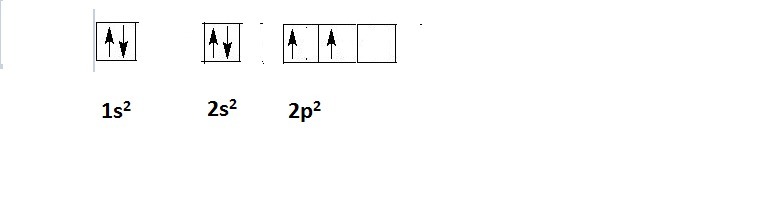
In which orbitals would the valence electrons for carbon <br> c. be placed?
katrin2010 [14]

Answer: 2s and 2p

Explanation: Carbon is an element with atomic number of 6 and thus contains 6 electrons. The electrons are filled in order of increasing energies and follows Afbau's rule.The electrons are singly filled first in each orbital having same spin, then only pairing occurs. This rule was known as Hund's Rule.

The valence electrons are the electrons which are present in last shell. Thus valence electrons are 4, two in s and 2 in p orbitals.

C: 6:1s^22s^22p_x^12p_y^1


8 0
2 years ago
Read 2 more answers
For the reaction PCl5(g) &lt;--&gt; PCl3(g) Cl2(g) at equilibrium, which statement correctly describes the effects of increasing
xenn [34]

The given question is incomplete. The complete question is :

For the reaction PCl_5(g)\rightleftharpoons PCl_3(g)+Cl_2(g) at equilibrium, which statement correctly describes the effects of increasing pressure and adding PCl_5, respectively

a) Increasing pressure causes shift to reactants, adding PCl_5 causes shift to products.

b) Increasing pressure causes shift to products ,adding PCl_5 causes shift to reactants.

c) Increasing pressure causes shift to products, adding PCl_5 causes shift to products.

d) Increasing pressure causes shift to reactants,adding PCl_5 causes shift to reactants

Answer: Increasing pressure causes shift to reactants, adding PCl_5 causes shift to products.

Explanation:

Any change in the equilibrium is studied on the basis of Le-Chatelier's principle.

This principle states that if there is any change in the variables of the reaction, the equilibrium will shift in the direction to minimize the effect.

For the given equation:

PCl_5(g)\rightleftharpoons PCl_3(g)+Cl_2(g)

a)  If the pressure is increased, the volume will decrease according to Boyle's Law. Now, according to the Le-Chatlier's principle, the equilibrium will shift in the direction where decrease in pressure is taking place. As the number of moles of gas molecules is lesser at the reactant side. So, the equilibrium will shift in the left direction. i.e. towards reactants.

b) If PCl_5 is added, the equilibrium will shift in the direction where PCl_5 is decreasing. So, the equilibrium will shift in the right direction. i.e. towards products.

8 0
2 years ago
When one atom loses an electron and another atom accepts that electron a(n) bond between the two atoms results?
morpeh [17]
When an element losses its electron its called a cation. When an element accepted that electron it called anion. This is called an ionic bond.
8 0
2 years ago
The volume of a gas at 7.00°c is 49.0 ml. if the volume increases to 74.0 ml and the pressure is constant, what will the tempera
marshall27 [118]
Using charles law
v1/t1=v2/t2
v1=49ml
v2=74
t1=7+273=280k
t2=?
49/280=74/t2
0.175=74/t2  cross multiply
0.175t2=74
t2=74/0.175
t2=422k or 149celcius
8 0
2 years ago
The average concentration of bromde ion in seawater is 65 mg of bromide ion per kg of seawater. what is the molarity of the brom
allsm [11]
Usually concentrations are expressed as molarity, or moles of solute per liter solution. First, convert the mass of bromide ion to moles. The molar mass of bromine is 79.904 g/mol.

Moles of bromine = 65 mg * 1 g/1000 mg * 1 mol/79.904 g = 8.135×10⁻⁴ moles

Next, convert the mass of seawater to volume using the density.

Volume of seawater =  1 kg * 1 m³/ 1,025 kg * 1000 L/1 m³ = 0.976 L

Thus,
Molarity = 8.135×10⁻⁴ moles/0.976 L = 8.335×10⁻⁴ M
5 0
2 years ago
Other questions:
  • What is the oxidation state of each element in FeBr2
    14·2 answers
  • What is the main difference between the alpine tundra and the arctic tundra? a. The alpine tundra includes trees. b. The alpine
    10·2 answers
  • A 5 mole sample of liquid acetone is converted to a gas at 75.0°C. If 628 J are required to raise the temperature of the liquid
    12·1 answer
  • A sample of an ideal gas has its volume doubled while its temperature remains constant. If the original pressure was 100 torr, w
    14·1 answer
  • What element has the electron configuration 1s22s22p63s23p64s23d104p65s24d105p66s24f145d106p2?
    8·2 answers
  • Solid aluminum metal and diatomic chlorine gas react spontaneously to form a solid product. Give the balanced chemical equation
    14·1 answer
  • Give two examples (i.e. list 2 elements that are examples) of: a. an atom with a half-filled subshell b. an atom with a complete
    13·1 answer
  • The structures of TeF4 and TeCl4 in the gas phase have been studied by electron diffraction (S. A. Shlykov, N. I. Giricheva, A.
    15·1 answer
  • Calculate the wavelength of a photon of green light that has a frequency (v) of 5.76x10^14 s^-1
    9·1 answer
  • How many moles of copper are in 6,000,000 atoms of copper?
    9·1 answer
Add answer
Login
Not registered? Fast signup
Signup
Login Signup
Ask question!