answer.
Ask question
Login Signup
Ask question
All categories
  • English
  • Mathematics
  • Social Studies
  • Business
  • History
  • Health
  • Geography
  • Biology
  • Physics
  • Chemistry
  • Computers and Technology
  • Arts
  • World Languages
  • Spanish
  • French
  • German
  • Advanced Placement (AP)
  • SAT
  • Medicine
  • Law
  • Engineering
bulgar [2K]
2 years ago
8

Enter the numbers 1 to 5 to put in order the steps for lighting a Bunsen burner.

Chemistry
2 answers:
ivanzaharov [21]2 years ago
9 0
The correct steps in lighting a Bunsen burner would be as follows: First, clean the area. Get rid of any flammable substances near the burner. Second, close the air supply Third, turn on the gas supply to the burner. Fourth, use a lighter to light the flame.  Fifth, adjust the flow of air to control the flame.
Rainbow [258]2 years ago
7 0

Answer:

The correct order of lighting a Bunsen Burner from the options is:

1. Clear the area of anything flammable, such as liquids, hair, etc.

2. Use a strike lighter to light the flame.

3. Turn on the gas supply to the Bunsen burner.

4. Adjust the air flow to control the size of the flame.

5. Close the air supply on the Bunsen burner.

Explanation:

First of all, I want you to note that the process or standard operating procedure for using a Bunsen burner, is to ensure safety of both the user and the laboratory. Hence the steps should be followed in order as listed below:

1. First clear out any flammable material around the burner, so that when it is lit, nothing will be ignited to start a fire. This is important because if clearing is done after lighting the burner, it might already be too late.

2. and 3. a strike lighter is lit first before turning on the gas supply. If the gas  supply is turned on first before lighting the burner, then there will be reservoir gas in the atmosphere around the burner and once the strike lighter is lit, it may cause an explosion as gas is highly flammable. Hence the lighter is lit first then the gas supply is turned on slowly until the burner is ignited

4. next, the airflow is adjusted slowly to get a desired flame size. Ideally, when the burner produces a blue flame, adjustments should be stopped.

5. Finally after the use of the burner, the air supply should be closed tightly to ensure that there is no further leakage of gas.

It addition to these, it should be noted that the gas cylinder that supplies the gas to the burner, should not be in the same room or space as the burner, and a fire extinguisher should be readily available in the room where the burner is used, should there be any emergencies.


You might be interested in
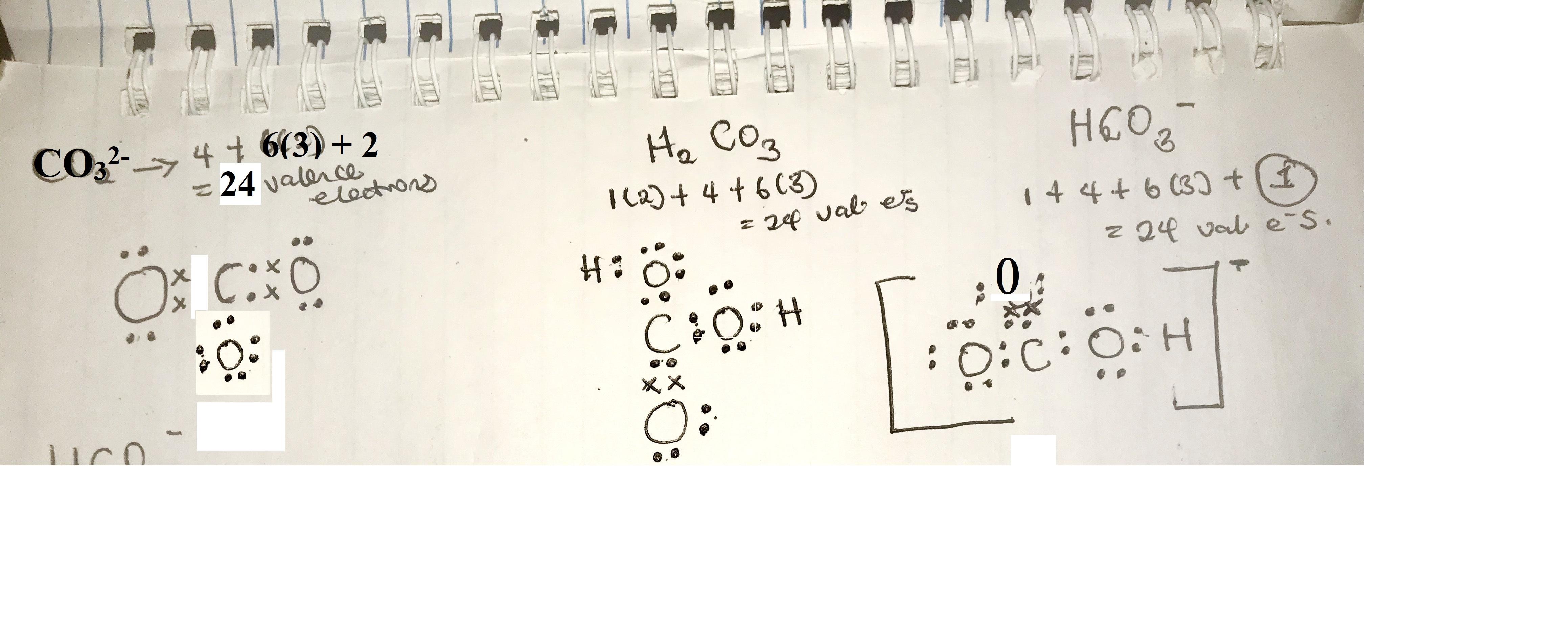
draw the lewis structure for CO2, H2CO3, HCO3-, and CO3 2-.Rank these in order of increasing attraction to water molecules. Expl
gavmur [86]

Answer:

The structures are attached in file.

Hydrogen bonding and intermolecular forces is the reason for ranks allotted.

Explanation:

In determining Lewis structure, we calculate the overall number of valence electrons available for bonding.  Making carbon (the least electronegative atom) the central atom in the structure, we allocate valence electrons until each atom has achieved stability.

In order of decreasing affinity to water molecules:

CO_{3}^{2-}  > HCO_{3} ^{2-} > H_{2} CO_{3}

This is due to the fact that the CO_{3}^{2-}will accept protons more readily than the bicarbonate ion, HCO_{3} ^{2-}. Carbonic acid, H_{2} CO_{3} will not accept any more protons, hence it is the least attractive to water molecule, even though soluble.

3 0
2 years ago
Explain why you cannot just take away a proton to make a halogen negative.​
Ilia_Sergeevich [38]

The force that holds protons and neutrons together is too strong to overcome.

<h3>Explanation</h3>

Consider the location of the particles in an atom.

  • Electrons are found outside the nucleus.
  • Protons and neutrons are found within the nucleus.

Protons carry positive charges and repel each other. The nucleus will break apart without the strong force that holds the protons and neutrons together. This force is much stronger than the attraction between the nucleus and the electrons. X-rays are energetic enough for removing electrons from an atom. However, you'll need a collider to remove protons from a stable nucleus. You could well have ionized the atom with all that energy.

Also, changing the number of protons per nucleus will convert the halogen atom to an atom of a different element. Rather than making the halogen negative, removing a proton will convert the halogen atom to the negative ion of a different element.

6 0
2 years ago
Challenge question: This question is worth 6 points. As you saw in problem 9 we can have species bound to a central metal ion. T
GenaCL600 [577]

Answer:

CN^- is a strong field ligand

Explanation:

The complex, hexacyanoferrate II is an Fe^2+ specie. Fe^2+ is a d^6 specie. It may exist as high spin (paramagnetic) or low spin (diamagnetic) depending on the ligand. The energy of the d-orbitals become nondegenerate upon approach of a ligand. The extent of separation of the two orbitals and the energy between them is defined as the magnitude of crystal field splitting (∆o).

Ligands that cause a large crystal field splitting such as CN^- are called strong field ligands. They lead to the formation of diamagnetic species. Strong field ligands occur towards the end of the spectrochemical series of ligands.

Hence the complex, Fe(CN)6 4− is diamagnetic because the cyanide ion is a strong field ligand that causes the six d-electrons present to pair up in a low spin arrangement.

5 0
2 years ago
A 23.2 g sample of an organic compound containing carbon, hydrogen and oxygen was burned in excess oxygen and yielded 52.8 g of
allochka39001 [22]

Answer:

The answer to your question is   C₃H₆O

Explanation:

Data

mass of sample = 23.2 g

mass of carbon dioxide = 52.8 g

mass of water = 21.6 g

empirical formula = ?

Process

1.- Calculate the mass and moles of carbon

                       44 g of CO₂ ---------------  12 g of C

                        52.8 g          ---------------  x

                        x = (52.8 x 12)/44

                        x = 633.6/44

                        x = 14.4 g of C

                        12 g of C ------------------  1 mol

                        14.4 g of C ---------------   x

                         x = (14.4 x 1)/(12)

                         x = 1.2 moles of C

2.- Calculate the grams and moles of Hydrogen

                         18 g of H₂O ---------------  2 g of H

                         21.6 g of H₂O -------------  x

                          x = (21.6 x 2) / 18

                         x = 2.4 g of H

                         1 g of H -------------------- 1 mol of H

                         2.4 g of H -----------------  x

                          x = (2.4 x 1)/1

                          x = 2.4 moles of H

3.- Calculate the grams and moles of Oxygen

Mass of Oxygen = 23.2 - 14.4 - 2.4

                           = 6.4 g

                         16 g of O ----------------  1 mol

                          6.4 g of O --------------  x

                          x = (6.4 x 1)/16

                          x = 0.4 moles of Oxygen

4.- Divide by the lowest number of moles

Carbon = 1.2 / 0.4 = 3

Hydrogen = 2.4/ 0.4 = 6

Oxygen = 0.4 / 0.4 = 1

5.- Write the empirical formula

                                C₃H₆O

8 0
2 years ago
Which of the following statements concerning a metal crystallized in a face-centered cubic cell is/are CORRECT? 1. One metal ato
AleksAgata [21]

Answer:

Only 3 is correct.

Explanation:

The crystal of a metal or an ionic compound is called a cell, and there are 7 types of unit cells: cubic, tetragonal, orthorhombic, monoclinic, hexagonal, rhombohedral, and triclinic.

In a face-centered cubic cell (FCC) all angles are 90º and all lengths are equal. Each cubic cell has 8 atoms in each corner of the cube, and that atom is shared with 8 neighboring cells. So for a metal crystal, the atom is located at each of the eight lattice points, where it is shared equally between eight unit cells.

5 0
2 years ago
Other questions:
  • Which compound most likely contains polar covalent bonds?. The choices are the following: NaCl. AlF3. Br2. NF3
    13·2 answers
  • Consider the reaction. mc014-1.jpg How many grams of methane should be burned in an excess of oxygen at STP to obtain 5.6 L of c
    13·2 answers
  • In which orbital does an electron in a bromine atom experience the greatest effective nuclear charge?
    9·2 answers
  • How many atoms of hydrogen are in 210 g of hydrogen peroxide (h2o2)?
    8·2 answers
  • Given the equation: ch4 + br2 → ch3br + hbr which type of reaction does this equation represent
    11·2 answers
  • Industrial production of nitric acid, which is used in many products including fertilizers and explosives, approaches 10 billion
    9·1 answer
  • 15. An apparatus consists of a 4.0 dm3
    14·2 answers
  • Acid deposition would most likely result in_________
    8·1 answer
  • In your body, carbon dioxide, CO2, dissolves in the blood to form carbonic acid, H2CO3 as follows:
    12·1 answer
  • How many mm are equal to 4.75 x 10⁻² m?
    11·1 answer
Add answer
Login
Not registered? Fast signup
Signup
Login Signup
Ask question!