answer.
Ask question
Login Signup
Ask question
All categories
  • English
  • Mathematics
  • Social Studies
  • Business
  • History
  • Health
  • Geography
  • Biology
  • Physics
  • Chemistry
  • Computers and Technology
  • Arts
  • World Languages
  • Spanish
  • French
  • German
  • Advanced Placement (AP)
  • SAT
  • Medicine
  • Law
  • Engineering
9966 [12]
2 years ago
10

What mass of zinc oxide would be produced by the thermal decomposition of 375 grams of zinc carbonate?

Chemistry
1 answer:
Llana [10]2 years ago
6 0
Zinc carbonate has the chemical formula : ZnCO3 and the equation for thermal decomposition is:
ZnCO3 .................> ZnO + CO2
1 mole of ZnCO3 produces one mole of ZnO

From the periodic table:
molar mass of zinc = 65.38 gm
molar mass of carbon = 12 gm
molar mass of oxygen = 16 gm

molar mass of ZnCO3 = 65.38 + 12 + 3(16) = 125.38 gm
molar mass of ZnO = 65.38 + 16 = 81.38 gm

125.38 gm of ZnCO3 produces 81.38 gm of ZnO, therefore:
mass of ZnO in 375 gm = (375 x 81.38) / 125.38 = 243.4 gm

Based on the above calculations, the correct answer is 243 grams


You might be interested in
Air is a ________ mixture??​
pantera1 [17]
Homogeneous


Hope this helps!!!
6 0
1 year ago
Read 2 more answers
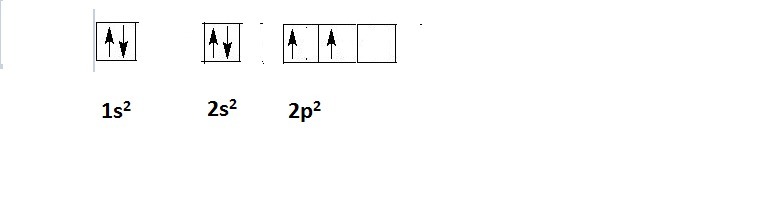
In which orbitals would the valence electrons for carbon <br> c. be placed?
katrin2010 [14]

Answer: 2s and 2p

Explanation: Carbon is an element with atomic number of 6 and thus contains 6 electrons. The electrons are filled in order of increasing energies and follows Afbau's rule.The electrons are singly filled first in each orbital having same spin, then only pairing occurs. This rule was known as Hund's Rule.

The valence electrons are the electrons which are present in last shell. Thus valence electrons are 4, two in s and 2 in p orbitals.

C: 6:1s^22s^22p_x^12p_y^1


8 0
2 years ago
Read 2 more answers
Which solution contains the largest number of moles of chloride ions?
elixir [45]
Molarity = number of moles of solute/liters of solution
number of moles of solute = molarity x liters of solution

Part (a): <span>30.00 ml of 0.100m Cacl2
number of moles of CaCl2 =  0.1 x 0.03 = 3x10^-3 moles
1 mole of CaCl2 contains 2 moles of chlorine, therefore 3x10^-3 moles of CaCl2 contains 6x10^-3 moles of chlorine

Part (b): </span><span>10.0 ml of 0.500m bacl2
number of moles of BaCl2 = 0.5 x 0.01 = 5x10^-3 moles
1 mole of BaCl2 contains 2 moles of chlorine, therefore 5x10^-3 moles of BaCl2 contains 10x10^-3 moles of chlorine

Part (c): </span><span>4.00 ml of 1.000m nacl
number of moles of NaCl = 1 x 0.004 = 0.004 moles
1 mole of NaCl contains 1 mole of chlorine, therefore 4x10^-3 moles of NaCl contains 4x10^-3 moles of chlorine

Part (d): </span><span>7.50 ml of 0.500m fecl3
number of moles of FeCl3 = 0.5 x 0.0075 = 3.75x10^-3 moles
1 mole of FeCl3 contains 3 moles of chlorine, therefore 3.75x10^-3 moles of FeCl3 contains 0.01125 moles of chlorine

Based on the above calculations, the correct answer is (d)</span>
5 0
2 years ago
Read 2 more answers
Calculate the pka of hypochlorous acid. The ph of a 0.015 m solution of hypochlorous acid has a ph of 4.64.
o-na [289]

Answer:

  • pKa = 7.46

Explanation:

<u>1) Data:</u>

a) Hypochlorous acid = HClO

b) [HClO} = 0.015

c) pH = 4.64

d) pKa = ?

<u>2) Strategy:</u>

With the pH calculate [H₃O⁺], then use the equilibrium equation to calculate the equilibrium constant, Ka, and finally calculate pKa from the definition.

<u>3) Solution:</u>

a) pH

  • pH = - log [H₃O⁺]

  • 4.64 = - log [H₃O⁺]

  • [H_3O^+]= 10^{-4.64} = 2.29.10^{-5}

b) Equilibrium equation: HClO (aq) ⇄ ClO⁻ (aq) + H₃O⁺ (aq)

c) Equilibrium constant: Ka =  [ClO⁻] [H₃O⁺] / [HClO]

d) From the stoichiometry: [CLO⁻] = [H₃O⁺] = 2.29 × 10 ⁻⁵ M

e) By substitution: Ka = (2.29 × 10 ⁻⁵ M)² / 0.015M = 3.50 × 10⁻⁸ M

f) By definition: pKa = - log Ka = - log (3.50 × 10 ⁻⁸) = 7.46

5 0
2 years ago
A large flask is evacuated and weighed, filled with argon gas, and then reweighed. When reweighed, the flask is found to have ga
Elden [556K]

Answer:

100.52

Explanation:

from the ideal gas equation PV=nRT

for a given container filled with any ideal gas P and V remains constant.So T is also constant.R is as such a constant.

So n i.e no of moles will also be constant.

no of moles of Ar=3.224/40=0.0806

no of moles of unknown gas=0.0806

molecular wt of unknown gas=8.102/0.0806=100.52

8 0
2 years ago
Other questions:
  • If 35.50 cm3 of a NaOH solution are required for the complete neutralization of a 25.00cm3 sample of 0.200mol dm-3 H2SO4, what i
    5·1 answer
  • The ksp of zinc carbonate (znco3 is 1.0 × 10⁻¹⁰. what is the solubility concentration of carbonate ions in a saturated solution
    11·2 answers
  • Using two spring scales, students pull on opposite sides of a dynamic cart at rest. 7 Newtons of force is pulling left and 5 New
    7·1 answer
  • An atom of oxygen has an atomic number of 8 and a mass number of 18. How many of each type of subatomic particle does it contain
    12·2 answers
  • What are the coefficients to balance the following equation?<br><br> ba+br2=babr2
    8·2 answers
  • Which of the following does not participate in, nor is a component of, the electron transport chain? (Remember that molecules ca
    8·1 answer
  • A 23.74-mL volume of 0.0981 M NaOH was used to titrate 25.0 mL of a weak monoprotic acid solution to the stoi- chiometric point.
    5·2 answers
  • When 200g of AgNO3 solution mixes with 150 g of NaI solution, 2.93 g of AgI precipitates, and the temperature of the solution ri
    13·1 answer
  • A gas mixture at 0°C and 1.0atm contains 0.010mol of H2, 0.015mol of O2, and 0.025mol of N2. Assuming ideal behavior, what is th
    12·1 answer
  • What type of radioactive decay will the isotopes 13B and 188Au most likely undergo?
    11·1 answer
Add answer
Login
Not registered? Fast signup
Signup
Login Signup
Ask question!