answer.
Ask question
Login Signup
Ask question
All categories
  • English
  • Mathematics
  • Social Studies
  • Business
  • History
  • Health
  • Geography
  • Biology
  • Physics
  • Chemistry
  • Computers and Technology
  • Arts
  • World Languages
  • Spanish
  • French
  • German
  • Advanced Placement (AP)
  • SAT
  • Medicine
  • Law
  • Engineering
Sever21 [200]
2 years ago
12

At 25.0∘c, the molar solubility of silver chromate in water is 1.10×10⁻¹² m . calculate the solubility in grams per liter. expre

ss your answer in grams per liter to three significant figures. how many liters of water are required to dissolve 1.00 g of silver chromate? express your answer in liters to three significant figures.

Chemistry
2 answers:
Serga [27]2 years ago
6 0

Answer: Solubility is 3.65\times 10^{-10}grams/liter and 2.74\times 10^{9}L of water is required to dissolve 1 g of silver chromate.

Explanation: The equation for the reaction will be as follows:

Ag_2CrO_4\leftrightharpoons 2Ag^++CrO_4^{2-}

1 mole of Ag_2CrO_4 gives 2 moles of Ag^{+} and 1 mole of CrO_4^{2-}

Thus if solubility of Ag_2CrO_4 is s moles/liter, solubility of Ag^{+} is 2s moles\liter and solubility of CrO_4^{2-} is s moles/liter

Given:- s=1.10\times 10^{-4}moles/liter

Solubility in grams/liter=\text{solubility in moles/liter}\times {\text {Molar mass}}

Solubility in grams/liter=1.10\times 10^{-12}\times 331.73=3.65\times 10^{-10}grams/liter

3.65\times 10^{-10}g of Ag_2CrO_4 dissolve in= 1L

1 g of Ag_2CrO_4 dissolve in=\frac{1}{3.65\times 10^{-10}}\times 1=2.74\times 10^{9}L


Lena [83]2 years ago
5 0

<em>The solubility silver chromate in grams per liter = 3.65. 10⁻¹⁰</em>

<em>2,74.10⁹ liters of water are required to dissolve 1.00 g of silver chromate</em>

<h3><em>Further explanation</em></h3>

Solubility is the maximum amount of a substance that can dissolve in some solvents. Factors that affect solubility

  • 1. Temperature:
  • 2. Surface area:
  • 3. Solvent type:
  • 4. Stirring process:

Ksp is an ion product in equilibrium

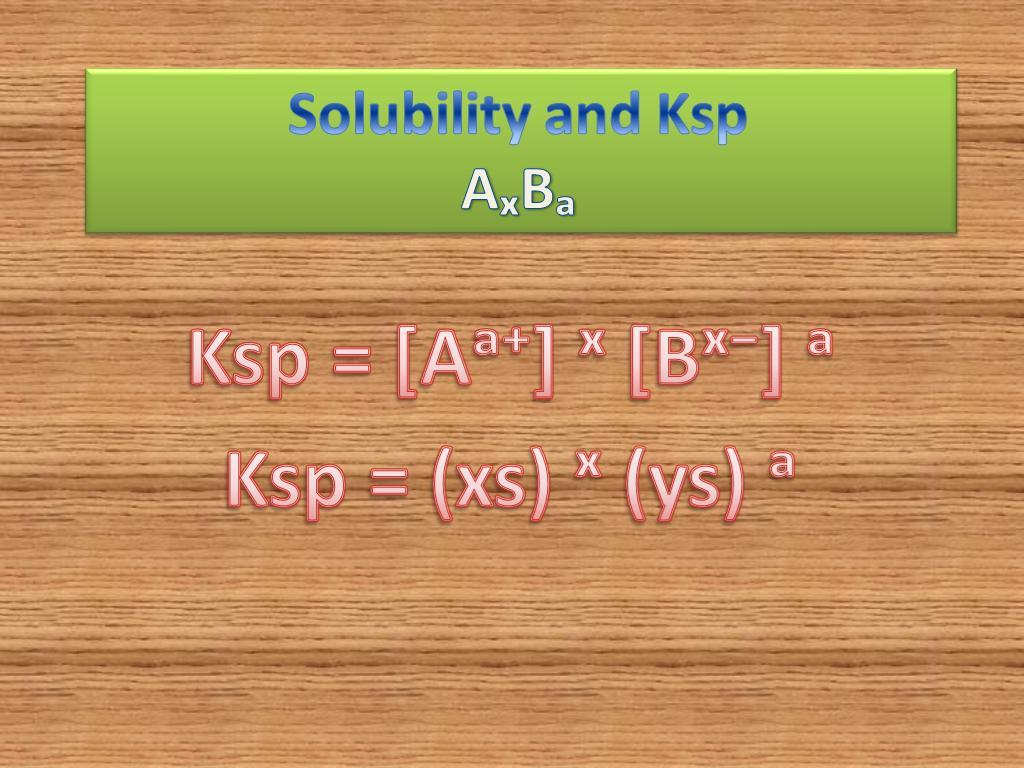
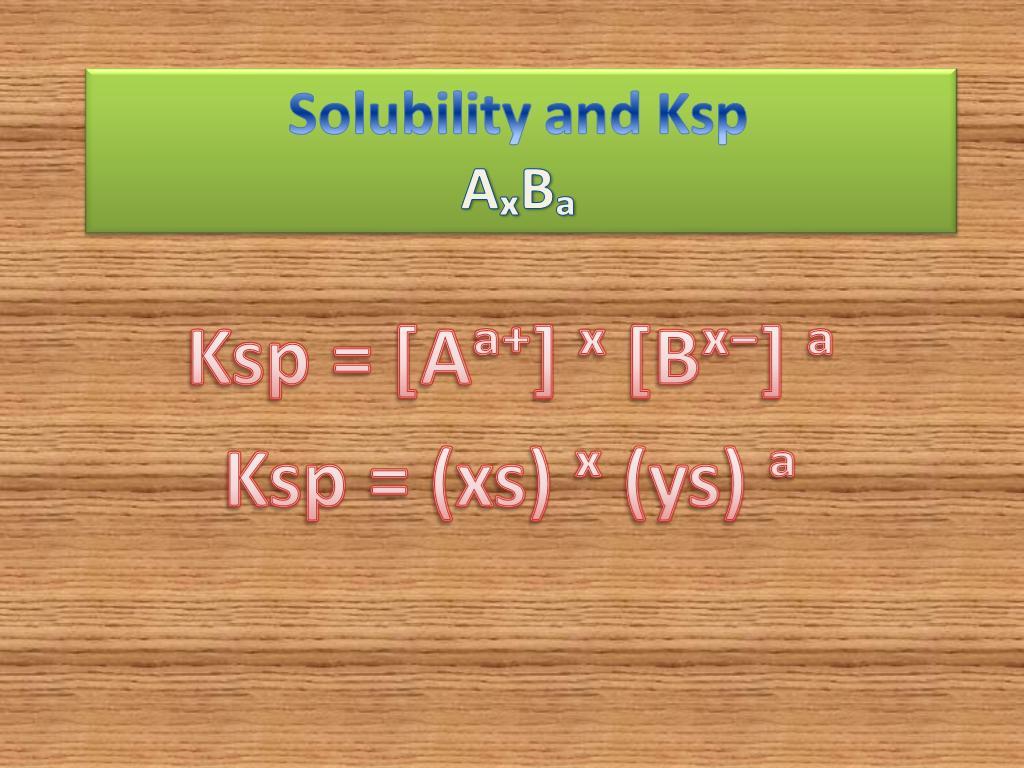
Solubility relationships and solubility constants of the AxBa solution can be stated as follows.

AₓBₐ (s) ← ⎯⎯⎯⎯ → x Aᵃ⁺ (aq) + a Bˣ⁻ (aq)

s                                xs              ys

Ksp = [Aᵃ⁺] ˣ [Bˣ⁻] ᵃ

Ksp = (xs) ˣ (ys) ᵃ

Solubility unit in the form of mole / liter or gram / liter

Solubility of Ag₂CrO₄ = 1.10 .10⁻¹² mole / liter

to change units to grams / liter, we multiply by molar mass:

M Ag₂CrO₄ = 2.Ar Ag + Ar Cr + 4. Ar O

M Ag₂CrO₄ = 2.108 + 52 + 4.16

M Ag₂CrO₄ = 332

So the solubility is in grams / liter

= 1.10. 10⁻¹² x 332

= 3.65. 10⁻¹⁰

(3 significant numbers, 3.6 and 5)

If we dissolve 1 gram of silver chromate into the solution, we need as much water as possible

= 1 gram / 3.65. 10⁻¹ grams / liter

= 2.74.10⁹ liter

(3 significant numbers, 2,7 and 4)

<h3><em>Learn more</em></h3>

the rate of solubility

brainly.com/question/9551583

influencing factors are both solubility and the rate of dissolution

brainly.com/question/2393178

The solubility of a substance

brainly.com/question/2847814

Keywords: solubility, silver chromate, a significant number
You might be interested in
A 15.0-L rigid container was charged with 0.500 atm of kryp‑ ton gas and 1.50 atm of chlorine gas at 350.8C. The krypton and chl
Alecsey [184]

Answer: 32.94 g

Explanation: It's stoichiometry problem so balanced equation is required. The balanced equation is given below:

Kr+2Cl_2\rightarrow KrCl_4

From the balanced equation, krypton and chlorine react in 1:2 mol ratio. We will calculate the moles of each reactant gas using ideal gas law equation(PV = nRT) and then using mol ratio the limiting reactant is figured out that helps to calculate the amount of the product formed.

for Krypton, P = 0.500 atm and for chlorine, P = 1.50 atm

V = 15.0 L

T = 350.8 + 273 = 623.8 K

For krypton, n=\frac{0.500*15.0}{0.0821*623.8}

n = 0.146 moles

for chlorine, n=\frac{1.50*15.0}{0.0821*623.8}

n = 0.439

From the mole ratio, 1 mol of krypton reacts with 2 moles of chlorine. So 0.146 moles of krypton will react with 2 x 0.146 = 0.292 moles of chlorine.

Since 0.439 moles of chlorine are available, it is present in excess and hence the limiting reactant is krypton.

So, the amount of product formed is calculated from moles of krypton.

Molar mass of krypton tetrachloride is 225.61 gram per mol.

There is 1:1 mol ratio between krypton and krypton tetrachloride.

0.146molKr(\frac{1molKrCl_4}{molKr})(\frac{225.61gKrCl_4}{1molKrCl_4})

= 32.94 g of KrCl_4

So, 32.94 g of the product will form.

5 0
2 years ago
0.45 g of hydrated sodium carbonate crystals were heated until 3.87 of anhydrous power remained.
snow_tiger [21]

Formula of hydrated sodium carbonate : Na₂CO₃.10H₂O, so moles of water in one mole of hydrated salt = 10

<h3>Further explanation</h3>

Hydrate is a compound that binds water (H₂O), usually in the form of crystals/ solids

If these compounds are dissolved in water or heated, the hydrates can decompose:

Example: X.YH₂O (s) → X (aq) + YH₂O (l)

The formula for the hydrated compound contains: YH2O

The mole ratio shows the ratio of the coefficients of the hydrate compound

10.45 hydrated sodium carbonate(Na₂CO₃.xH₂O) were heated until 3.87 of 3.87of anhydrous (Na₂CO₃) remained, so

mass H₂O released :

\tt 10.45-3.87=6.58~g

mass Na₂CO₃ = 3.87 g

mol ratio Na₂CO₃(MW= g/mol) : H₂O(MW=18 g/mol) =

\tt \dfrac{3.87}{105,9888}\div \dfrac{6.58}{18}=0.0365\div 0.3655=1\div 10

6 0
2 years ago
The metallic radius of a lithium atom is 152 pm. What is the volume of a lithium atom in cubic meters?
Anuta_ua [19.1K]

Answer:

Volume of lithium atom is found to be 1.47 X 10⁻²⁹ m³

Explanation:

Let us consider the volume of atom as a sphere (but it is little complex than that). This volume is mathematically expressed as,

V=\frac{4}{3}\pi  R^{3}----------------------------------------------------------------------------------------(Eq. 1)

Here, R is the radius of lithium atom. The radius is given in picometers, so firstly let us convert it into meters

R=(152pm )(1X10^{-12}\frac{m}{pm})

R = 1.52 X 10^{-10}m

placing this value in Eq.1 the required result is achieved

V=\frac{4}{3}\pi  {1.52X10^{-10}}^{3}

V= 1.47 X 10⁻²⁹ m³

8 0
2 years ago
PLEASE HELP!!! The image represents the reaction between a certain number of molecules of N2 and H2.
77julia77 [94]

Answer:

  • <u><em>The leftover reactant is the nitrogen gas, N₂.</em></u>

Explanation:

As per your description:

<u>1. Square on the left: N₂(g)</u>

  • 3 units of two joint circles: this represents 3 molecules of nitrogen gas, N₂(g).

<u>2. Square on the right: H₂(g)</u>

  • 3 units of two joint circles: this represents 3 molecules of hydrogen gas, H₂(g).

<u>3. Reaction</u>

If the maximum possible amount of NH₃ is formed during the reaction, you assume that the reaction goes to completion.

The chemical equation that represents the reaction is:

  • N₂(g) +  H₂(g) → NH₃(g)

Which must be balanced:

  • N₂(g) +  3H₂(g) → 2NH₃(g)

That means that 1 molecule (or 1 mol) of N₂(g) reacts with 3 molecules (or 3 moles ) of  H₂(g) to produce 2 molecules (or 2 moles) of NH₃(g).

Since, the squares show that there are 3 molecules of each reactant, the 3 molecules of hydrogen gas will be able to react with 1 molecule of nitrogen gas. When that happens, all the hydrogen gas is consumend and yet two molecules of nitrogen gas will remain unreacted. Hence, the nitrogen gas is the leftover reactant.

4 0
2 years ago
Read 2 more answers
How many g i2 should be added to 750g ccl4 to prepare a 0.200m solution?
vesna_86 [32]
<span>There are a number of ways to express concentration of a solution. This includes molality. Molality is expressed as the number of moles of solute per mass of the solvent. We calculate as follows:

0.200 mol I2 / kg CCl4 ( .750 kg CCl4 ) ( 253.809 g I2 / mol I2) = 38.07 g I2 needed

Hope this helps.

 </span>
6 0
2 years ago
Read 2 more answers
Other questions:
  • Determine the mass of oxygen in a 7.20 g sample of Al2(SO4)3.
    9·2 answers
  • The highest elevation Mt. Zembat in Alaska 40 years ago was measured at 7600 feet. Today the highest elevation is 7598 feet. Wha
    11·1 answer
  • A gas occupies 2.22 l at 3.67 atm. what is the volume at 1.94 atm?
    8·1 answer
  • How many moles are contained in 3.131 × 1024 particles?
    8·1 answer
  • How did Mendeleev feel about Russian science education when he came back from Germany
    7·2 answers
  • In May 2016, William Trubridge broke the world record in free diving (diving underwater without the use of supplemental oxygen)
    13·1 answer
  • Hydrogen is unique among the elements because __________. 1. It has only one valence electron. 2. It is the only element that ca
    7·1 answer
  • What is the main purpose of using NaOH in the saponification reaction . NaOH works as the catalyst b. NaOH solution is the solve
    14·1 answer
  • A large balloon contains 1.00 mol of helium in a volume of 22.4 L at 0.00oC. What pressure will the helium exert on its containe
    14·1 answer
  • 8. Explain how Elianto oil is obtained from maize seeds.​
    10·1 answer
Add answer
Login
Not registered? Fast signup
Signup
Login Signup
Ask question!