answer.
Ask question
Login Signup
Ask question
All categories
  • English
  • Mathematics
  • Social Studies
  • Business
  • History
  • Health
  • Geography
  • Biology
  • Physics
  • Chemistry
  • Computers and Technology
  • Arts
  • World Languages
  • Spanish
  • French
  • German
  • Advanced Placement (AP)
  • SAT
  • Medicine
  • Law
  • Engineering
kiruha [24]
2 years ago
5

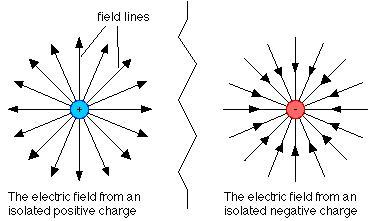
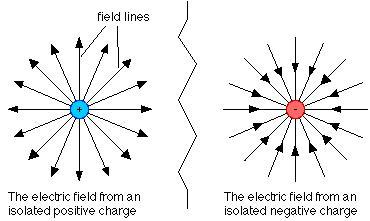
Describe what happens to the electric field lines when two objects with unlike charges are brought near each other.

Physics
2 answers:
VladimirAG [237]2 years ago
8 0

Answer:

  • <u>Unlike Charges:</u>

The unlike charges attracts each other, as we can say that the two atoms or point charges which posses different properties attracts one another.

Explanation:

  • <u>The electric field lines:</u>

The electric fields shows the direction, the nature, and the magnitude of the charges been placed there in a given space. As the field lines from the positive point charge(+) goes in the outward direction and the negative charges(-) has the field lines coming towards it or they are directed towards inside the test charge.

  • As, the different charges interact lines when interact with one another, the lines become more curved and they slide over the two charges. Now, that is also due to the number of charges attracted toward each present on the surface of the two charges.

<u />

harina [27]2 years ago
4 0
Hello.

The answer is:

It creates a spark.

Then thespark can sometimes start a fire or other serious problems.

Have a nice day
You might be interested in
Use the terms "force", "weight", "mass", and "inertia" to explain why it is easier to tackle a 220 lb football player than a 288
Tomtit [17]
<span><u>Answer </u>
The mass of 220 lb football has less than 288 lb football. So, it will be easier to move it since it will require less force. The heavy football will have a bigger momentum. Since 288 lb has more weight than 220 lb, it will have bigger inertia making it difficult for the players to stop it.
This makes it easier to tackle 220 lb football than 288 lb football. 
</span>
7 0
2 years ago
Read 2 more answers
If a rock is thrown upward on the planet mars with a velocity of 11 m/s, its height (in meters) after t seconds is given by h =
Butoxors [25]
(a) 3.56 m/s 
(b) 11 - 3.72a 
(c) t = 5.9 s 
(d) -11 m/s  
For most of these problems, you're being asked the velocity of the rock as a function of t, while you've been given the position as a function of t. So first calculate the first derivative of the position function using the power rule. 
y = 11t - 1.86t^2 
y' = 11 - 3.72t 
Now that you have the first derivative, it will give you the velocity as a function of t. 
(a) Velocity after 2 seconds. 
y' = 11 - 3.72t 
y' = 11 - 3.72*2 = 11 - 7.44 = 3.56 
So the velocity is 3.56 m/s  
(b) Velocity after a seconds. 
y' = 11 - 3.72t 
y' = 11 - 3.72a  
So the answer is 11 - 3.72a  
(c) Use the quadratic formula to find the zeros for the position function y = 11t-1.86t^2. Roots are t = 0 and t = 5.913978495. The t = 0 is for the moment the rock was thrown, so the answer is t = 5.9 seconds.  
(d) Plug in the value of t calculated for (c) into the velocity function, so: 
y' = 11 - 3.72a
 y' = 11 - 3.72*5.913978495
 y' = 11 - 22
 y' = -11 
 So the velocity is -11 m/s which makes sense since the total energy of the rock will remain constant, so it's coming down at the same speed as it was going up.
3 0
2 years ago
A 2 kg stone is tied to a 0.5 m string and swung around a circle at a constant angular velocity of 12 rad/s. the angular momentu
Illusion [34]
Starting from the angular velocity, we can calculate the tangential velocity of the stone:
v=\omega r= (12 rad/s)(0.5 m)= 6 m/s

Then we can calculate the angular momentum of the stone about the center of the circle, given by
L=mvr
where
m is the stone mass
v its tangential velocity
r is the radius of the circle, that corresponds to the length of the string.

Substituting the data of the problem, we find
L=(2 kg)(6 m/s)(0.5 m)=6 kg m^2 s^{-1}
3 0
2 years ago
Which of the following are inertial reference frames? A. A car driving at steady speed on a straight and level road. B. A car dr
Aloiza [94]

Answers:

A. A car driving at steady speed on a straight and level road.

B. A car driving at steady speed up a 10∘ incline.

Explanation:

An object is said to be in an inertial reference frame if the net force acting on the object is zero. According to Newton's second law, this also means that the acceleration of the object is also zero:

F=ma

Since F=0, a=0 as well.

Let's now analyze each case.

A. A car driving at steady speed on a straight and level road. --> YES: this is an inertial reference frame, because the car is keeping a constant speed and a constant direction, so its velocity is not changing, and its acceleration is zero.

B. A car driving at steady speed up a 10∘ incline. --> YES: this is an inertial reference frame, because the car is keeping a constant speed and a constant direction, so its velocity is not changing, and its acceleration is zero.

C. A car speeding up after leaving a stop sign. --> NO: this is not an intertial reference frame, because the car is speeding up, so it is accelerating.

D. A car driving at steady speed around a curve. --> NO: this is not an inertial reference frame, because the car is changing direction, therefore its velocity is changing and so the car is accelerating.

So the only two choices which are correct are A and B.
8 0
2 years ago
Read 2 more answers
A straight wire carries a current of 3 A which is in the plane of this page, pointed toward the top of the page. A particle of c
Ilia_Sergeevich [38]

Answer:

The magnitude of the magnetic force exerted on the moving charge by the current in the wire is 2.18 x 10^{-8} N

The direction of the magnetic force exerted on the moving charge by the current in the wire is radially inward

Explanation:

given information:

current, I = 3 A

q_{0} = +6.5 x 10^{-6} C

r = 0.05 m

v = 280 m/s

and direction of the magnetic force exerted on the moving charge by the current in the wire, we can use the following formula:

F = qvB sin θ

where

F = magnetic force (N)

q = electric charge (C)

v = velocity (m/s)

θ = the angle between the velocity and magnetic field

to find B we use

B = μ_{0}I/2πr

μ_{0} = 4π x 10^{-7} or 1.26 x 10^{-6} N/A^{2} , thus

B = 4π x 10^{-7} x 3 / 2π(0.05)

  = 1.2  x  10^{-5} T

Now, we can calculate the magnitude force

F = qvB sin θ

θ = 90°, because the speed and magnetic are perpendicular

F = 6.5 x 10^{-6} x 280  x 1.2 x  10^{-5} sin 90°

  = 2.18 x 10^{-8} N

Using the hand law, the magnetic direction is radially inward

8 0
2 years ago
Other questions:
  • A power drill runs at a voltage of 120 V and draws a current of 4 A. What is the wattage of the drill?
    11·1 answer
  • A pump lifts water from a lake to a large tank 20 m above the lake. How much work against gravity does the pump do as it transfe
    11·2 answers
  • The two structural members, one of which is in tension and the other in compression, exert the indicated forces on joint O. Dete
    10·1 answer
  • A4 40 kg girl skates at 3.5 m/s one ice toward her 65 kg friend who is standing still, with open arms. As they collide and hold
    8·1 answer
  • series RC circuit is built with a 15 kΩ resistor and a parallel-plate capacitor with 18-cm-diameter electrodes. A 18 V, 36 kHz s
    11·1 answer
  • A balloon and a mass are attached to a rod that is pivoted at P.
    10·1 answer
  • A container contains 200g of water at initial temperature of 30°C. An iron nail of mass 200g at temperature of 50°C is immersed
    14·1 answer
  • Suppose Mitch Marner (mass=80kg) and Zdano Chara (mass=116kg) collide head-on at the blue line when Marner is skating 10m/s and
    8·1 answer
  • Calculate the force of gravity between two objects of masses 1300 kg and 7800 kg, which are 0.23 m apart.
    6·1 answer
  • A closed, rigid container holding 0.2 moles of a monatomic ideal gas is placed over a Bunsen burner and heated slowly, starting
    12·1 answer
Add answer
Login
Not registered? Fast signup
Signup
Login Signup
Ask question!