answer.
Ask question
Login Signup
Ask question
All categories
  • English
  • Mathematics
  • Social Studies
  • Business
  • History
  • Health
  • Geography
  • Biology
  • Physics
  • Chemistry
  • Computers and Technology
  • Arts
  • World Languages
  • Spanish
  • French
  • German
  • Advanced Placement (AP)
  • SAT
  • Medicine
  • Law
  • Engineering
Rufina [12.5K]
2 years ago
3

Which one of the following solutions will have the greatest concentration of hydroxide ions 0.100 M rubidium 0.100 M magnesium h

ydroxide 0.100 ammonia 0.100 M beryllium hydroxide 0.100 M hydrochloric acid

Chemistry
1 answer:
TiliK225 [7]2 years ago
8 0

Answer : The correct answer is solutions of 0.100 M of Magnesium hydroxide and Beryllium hydroxide.

The Hydroxide ions(OH⁻) are produced when ionic compounds (basic compound ) dissociates in water or compound reacts with water as follows :

MOH (s) + H2O (l) <=> M+ (aq) + OH⁻(aq)

M (aq) + H₂O(l) <=> MH (aq) + OH⁻(aq)

Where MOH and M are compounds.

Concentration of OH⁻ can be found in compound by following steps :

Step 1 : To find acid or base .

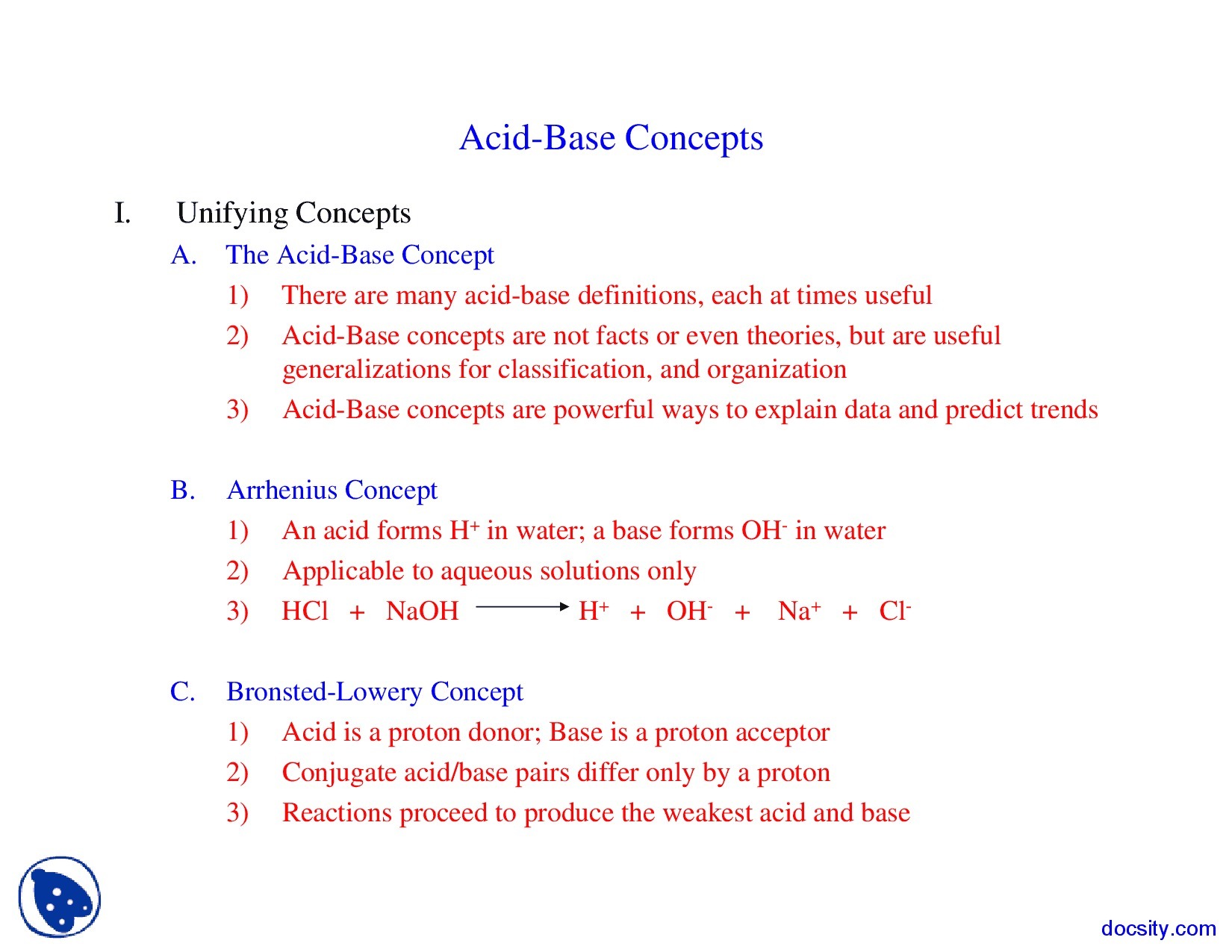
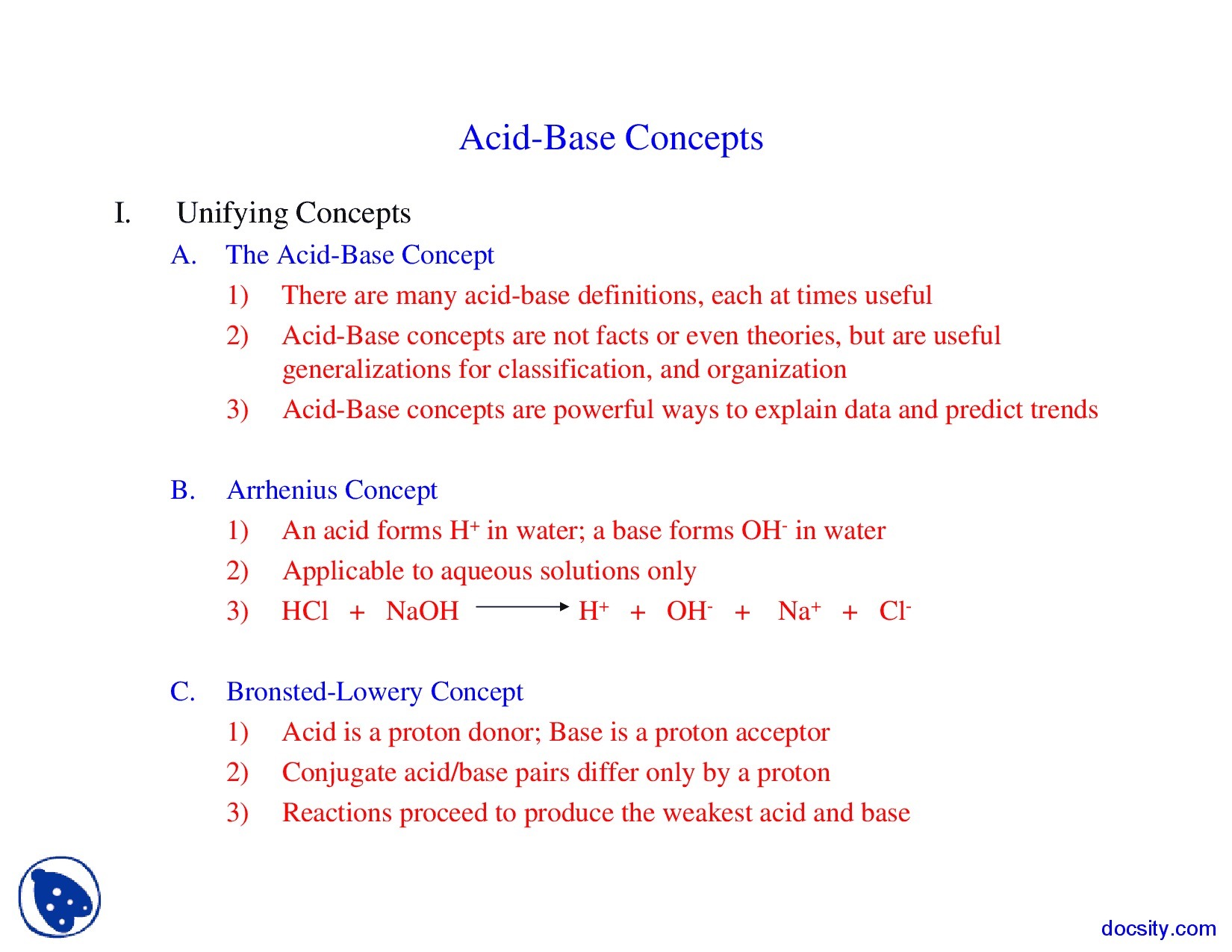
First of all we need to find whether the given compound is acid or base by acid - base concept . (image attached )

If a compound is acid , it will not produce OH⁻ ions or negligible amount of OH⁻ ions. So it can be ruled out .

If the compound is base , step 2 should be followed .

Step 2 : To find strength of base .

We need to find whether the given base is strong or weak .

Generally hydroxides of Group 1 and 2 are strong base . Here are some listed strong base ( image attached ) .Base other than these criteria will be weak base .

Step 3 :To find concentration of OH⁻ ions :

If the base is strong , means it will dissociate completely to produce OH⁻ ions . Hence concentration of OH⁻ can be calculated by stoichiometric relation from balanced reaction.

If base is weak , it will not dissociate completely to give all the OH⁻ ions , so we will make ICE table of a balanced reaction for those base and use kb values to calculate concentration of base .

A) Rubidium hydroxide (RbOH ) (0.100 M ) :

According to Arrhenius concept RbOH is a base and from list it is a strong base . Hence it will dissociate completely to give OH⁻ ions .

RbOH + H₂O <=> Rb⁺ + OH⁻

Since the Ratio of RbOH : OH⁻ = 1 : 1 .

[OH^-]  = 0.100 M RbOH * \frac{1  OH^-}{1  RbOH }  = 0.100 M OH^-

[OH⁻] = 0.100 M

B) Magnesium hydroxide , Mg(OH)₂ ( 0.100 M) :

According to Arrhenius concept and since Mg is from group 2 , so Mg(OH)₂ can be said as Strong base . So Mg(OH)₂ will dissociate completely as :

Mg(OH)₂ + H₂O <=> Mg²⁺ + 2 OH⁻

The ratio of OH⁻ : Mg(OH)₂ = 2 : 1

[OH^- ]  = 0.100 M Mg(OH)2 * \frac{2  OH^-}{1 Mg(OH)2}

[OH⁻ ] = 0.200 M

C) Ammonia (NH3 ) (0.100 M ) :

According to Lewis concept it is base but it neither belongs to list nor group 1 and 2 , Hence it is weak base and will dissociate incompletely as :

NH₃ + H₂O <=> NH₄OH <=> NH₄⁺ + OH⁻

Since it is weak base so ICE table will be formed as:

NH₃ + H₂O <=> NH₄⁺ + OH⁻

Initial(M) 0.100 , - 0 0

Change(M) -x - +x + x

Equilibrium(M) 0.100-x - x x

Now Kb expression will be written as :

kb = \frac{[NH4^+] * [OH^-] }{[NH3]}

Kb for NH3 is 1.8 * 10 ⁻⁵ ( from list in image )

Plugging equilibrium values of [NH₄⁺] = [OH⁻] = x and [NH₃] = (0.100-x ) in this expression :

1.8 * 10 ^-^5 = \frac{x *x}{(0.100 - x )}

Since kb is small (10⁻⁵ ) , x from (0.100 -x ) can be neglected

1.8 * 10 ^-^5 = \frac{x *x}{(0.100 )}

Multiplying both side by 0.100

1.8 * 10 ^-^5 * 0.100  = \frac{x *x}{(0.100 - x )} * 0.100

x² = 1.8 * 10⁻⁶

x = 1.34 * 10⁻³

Hence concentration of OH⁻ produced by NH₃ = 1.34 * 10⁻³ M

D) Beryllium hydroxide ,Be(OH)₂ (0.100 M ) :

According to Arrhenius concept it is a base and since it belongs to Group 2 , its is strong base . Hence it will dissociate completely .

Be(OH)₂ + H₂O <=> Be²⁺ + 2 OH⁻

Ratio between OH⁻ : Be(OH)₂ = 2 : 1

[OH^- ] = 0.100 M Be(OH)2 *\frac{2 OH^-}{1 Be(OH)2}

Hence [OH⁻] by Be(OH)₂ = 0.200 M

E) Hydrochloric acid , HCl (0.100 M ) :

According to all the concepts HCl is acid . Since it is acid it produce negligible amount of OH⁻ ion . So this option can be neglected .

If all are summarized :

[OH⁻] by RbOH = 0.100 M

[OH⁻] by Mg(OH)₂ = 0.200 M

[OH⁻] by NH₃ = 1.34 * 10⁻³ M

[OH⁻] by Be(OH)₂ = 0.200 M

[OH⁻] by HCl = negligible

Hence Mg(OH)₂ and Be(OH)2 produced highest amount of [OH⁻] .
You might be interested in
Which is the correct statement regarding the relative Rf values of the starting methyl benzoate vs the product, methyl m-nitrobe
Marianna [84]

Answer:

1. The product has a higher Rf value on a silica gel TLC plate because it is more polar than the starting methyl benzoate.

2. False

3. True

Explanation:

In chromatography, there is a stationary phase and a mobile phase. The ratio of the distance moved by a component and the distance moved by the solvent gives the retention factor (Rf).

Since silica gel is a polar solvent, it will retain the more polar product methyl m-nitrobenzoate compared to the methyl benzoate starting material.

In comparing the electrophillic aromatic substitution of m-nitrobenzoate  and methyl benzoate, we must remember that the presence of electron withdrawing groups (such as -NO2 and -CHO) on the aromatic compound deactivates the compound towards electrophillic aromatic substitution hence, methyl m-nitrobenzoate is less reactive than methyl benzoate in Electrophilic Aromatic Substition and Methyl benzoate is less reactive than benzene in Electrophilic Aromatic Substition

5 0
2 years ago
A meal containing a burger, fries, and a milkshake contains 53.0 grams of fat, 38.0 grams of protein, and 152 grams of carbohydr
ollegr [7]

Answer:

4.8 h

Explanation:

The meal contains 53.0 grams of fat. If fat provides 38 kJ/g, the energy supplied is:

53.0 g × 38 kJ/g = 2.0 × 10³ kJ

The meal contains 38.0 grams of protein. If protein provides 17 kJ/g, the energy supplied is:

38.0 g × 17 kJ/g = 6.5 × 10² kJ

The meal contains 152 grams of carbohydrate. If carbohydrate provides 17 kJ/g, the energy supplied is:

152 g × 17 kJ/g = 2.6 × 10³ kJ

The total energy supplied is:

2.0 × 10³ kJ + 6.5 × 10² kJ + 2.6 × 10³ kJ = 5.3 × 10³ kJ

Swimming burns 1100.0 kJ/hour. The time required to burn 5.3 × 10³ kJ is:

5.3 × 10³ kJ × (1 h/1100.0 kJ) = 4.8 h

5 0
2 years ago
The equilibrium 2NO(g)+Cl2(g)⇌2NOCl(g) is established at 500 K. An equilibrium mixture of the three gases has partial pressures
QveST [7]

<u>Answer:</u>

<u>For A:</u> The K_p for the given reaction is 4.0\times 10^1

<u>For B:</u> The K_c for the given reaction is 1642.

<u>Explanation:</u>

The given chemical reaction follows:

2NO(g)+Cl_2(g)\rightleftharpoons 2NOCl(g)

  • <u>For A:</u>

The expression of K_p for the above reaction follows:

K_p=\frac{(p_{NOCl})^2}{(p_{NO})^2\times p_{Cl_2}}

We are given:

p_{NOCl}=0.24 atm\\p_{NO}=9.10\times 10^{-2}atm=0.0910atm\\p_{Cl_2}=0.174atm

Putting values in above equation, we get:

K_p=\frac{(0.24)^2}{(0.0910)^2\times 0.174}\\\\K_p=4.0\times 10^1

Hence, the K_p for the given reaction is 4.0\times 10^1

  • <u>For B:</u>

Relation of K_p with K_c is given by the formula:

K_p=K_c(RT)^{\Delta ng}

where,

K_p = equilibrium constant in terms of partial pressure = 4.0\times 10^1

K_c = equilibrium constant in terms of concentration = ?

R = Gas constant = 0.0821\text{ L atm }mol^{-1}K^{-1}

T = temperature = 500 K

\Delta ng = change in number of moles of gas particles = n_{products}-n_{reactants}=2-3=-1

Putting values in above equation, we get:

4.0\times 10^1=K_c\times (0.0821\times 500)^{-1}\\\\K_c=\frac{4.0\times 10^1}{(0.0821\times 500)^{-1})}=1642

Hence, the K_c for the given reaction is 1642.

7 0
2 years ago
An unknown element X has the following isotopes: ²⁵X (80.5% abundant) and ²⁷X (19.5% abundant). What is the average atomic mass
IgorC [24]

Answer:

25.39

Explanation:

Given parameters:

Abundance of X-25  = 80.5%

Abundance of X - 27  = 19.5%

Unknown:

Average atomic mass of X  = ?

Solution:

The average atomic mass of X can be derived using the expression below:

Average atomic mass = (abundance x mass of X - 25) + (abundance x mass of X - 27)

Average atomic mass  =  (80.5%  x 25) +   (19.5% x 27)  = 25.39

5 0
2 years ago
You are given a solution of hcooh (formic acid) with an approximate concentration of 0.20 m and you will titrate this with a 0.1
balu736 [363]
V(NaOH)*M(NaOH)=V(HCOOH)M(HCOOH)
35.43ml*0.1150m=20.00ml*M(HCOOH)
M(HCOOH)=0.2037m
6 0
2 years ago
Read 2 more answers
Other questions:
  • A ten mile area of trees is removed from the tropical rainforest. How will this affect the amount of water and the amount of oxy
    9·1 answer
  • In a group assignment, students are required to fill 10 beakers with 0.720 M CaCl2. If the molar mass of CaCl2 is 110.98 g/mol a
    8·2 answers
  • What is the net cell reaction for the iron-silver voltaic cell?
    13·1 answer
  • What is the predicted order of first ionization energies from highest to lowest for beryllium, calcium, magnesium, and strontium
    5·2 answers
  • A student titrates 10.00 milliliters of hydrochloric acid of unknown molarity with 1.000 m naoh. it takes 21.17 milliliters of b
    11·1 answer
  • At 10°c one volume of water dissolves 3.10 volumes of chlorine gas at 1.00 atm pressure. what is the henry's law constant of cl2
    6·1 answer
  • A major problem caused by humans is the contamination and depletion of _____ resources. A. solar B. water C. wind
    7·2 answers
  • Iodine has a lower atomic weight than tellurium (126.90 for I, 127.60 for Te) even though it has a higher atomic number (53 for
    6·2 answers
  • Which statement about the spectrophotometric analysis of Red 40 dye is TRUE?
    8·1 answer
  • onsider the reversible dissolution of lead(II) chloride. P b C l 2 ( s ) − ⇀ ↽ − P b 2 + ( a q ) + 2 C l − ( a q ) PbClX2(s)↽−−⇀
    9·1 answer
Add answer
Login
Not registered? Fast signup
Signup
Login Signup
Ask question!