answer.
Ask question
Login Signup
Ask question
All categories
  • English
  • Mathematics
  • Social Studies
  • Business
  • History
  • Health
  • Geography
  • Biology
  • Physics
  • Chemistry
  • Computers and Technology
  • Arts
  • World Languages
  • Spanish
  • French
  • German
  • Advanced Placement (AP)
  • SAT
  • Medicine
  • Law
  • Engineering
adoni [48]
2 years ago
4

A 50-cm wire placed in an east-west direction is moved horizontally to the north with a speed of 2.0 m/s. the horizontal compone

nt of the earth's magnetic field at that location is 25 μt toward the north and the vertical component is 50μt downward. what is the emf induced between the ends of the wire?

Physics
2 answers:
attashe74 [19]2 years ago
4 0

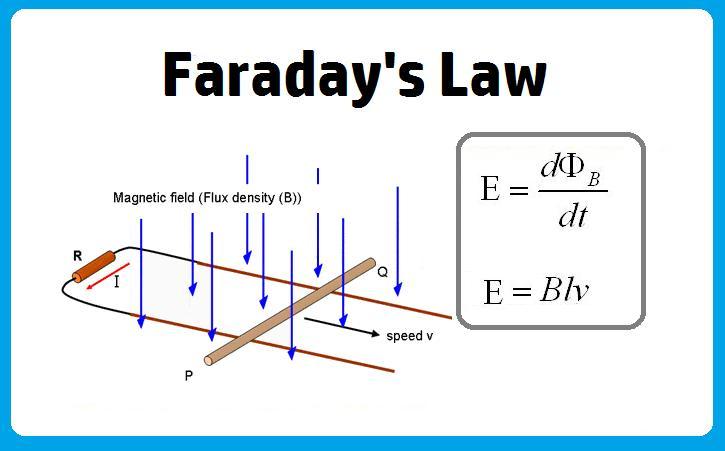
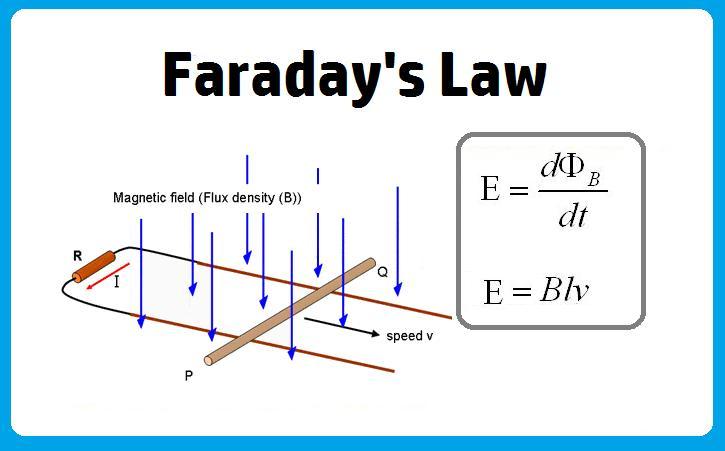
When a wire is moved inside uniform magnetic field then its free electrons will experience magnetic force on it due to which wire will have potential difference at its ends.

Now here we will have magnetic field due to earth and wire is moving in this constant field so induced emf is given by formula

EMF = v.(B x L)

given that

B = 25\mu Tj - 50\mu Tk

v = 2 m/s j

L = 0.50 m (-i)

now by using the above formula we will have

EMF = 2(j) .(25\mu j - 50\mu k) x (-0.50 i)

EMF = 2(j) .(12.5\mu k + 25\mu j)

EMF = 50 \mu Volts

frez [133]2 years ago
4 0

The emf induced between the ends of the wire is about 50 μV

\texttt{ }

<h3>Further explanation</h3>

Let's recall the induced emf formula for straight wire moving in magnetic field as follows:

\boxed {\varepsilon = B L v}

where:

<em>ε = induced emf ( V )</em>

<em>B = magnetic field strength ( T )</em>

<em>L = length of wire ( m )</em>

<em>v = speed of wire ( m/s )</em>

<em>B, L , v are mutually perpendicular</em>

Let us now tackle the problem!

<u>Given:</u>

speed of wire = v = 2.0 m/s

length of wire = L = 50 cm

magnetic field strength = B = 50 μT → <em>vertical component</em>

<u>Asked:</u>

induced emf = ε = ?

<u>Solution:</u>

\varepsilon = B L v

\varepsilon = (50\ \mu T)(50 \ cm)(2.0 \ m/s)

\varepsilon = (50\ \mu T)(0.5 \ m)(2.0 \ m/s)

\varepsilon = (50\ \mu T)(1.0 \ m^2/s)

\varepsilon = 50\ \mu V

\texttt{ }

<h3>Conclusion:</h3>

The emf induced between the ends of the wire is about 50 μV

\texttt{ }

<h3>Learn more</h3>
  • The three resistors : brainly.com/question/9503202
  • A series circuit : brainly.com/question/1518810
  • Compare and contrast a series and parallel circuit : brainly.com/question/539204

\texttt{ }

<h3>Answer details</h3>

Grade: High School

Subject: Physics

Chapter: Electromagnetism

You might be interested in
If a rock is thrown upward on the planet mars with a velocity of 14 m/s, its height (in meters) after t seconds is given by h =
crimeas [40]

<u>Answer:</u>

 Velocity of rock after 2 seconds = 6.56 m/s

<u>Explanation:</u>

 We have equation of motion , s= ut+\frac{1}{2} at^2, s is the displacement, u is the initial velocity, a is the acceleration and t is the time.

Here height of rock in meters, h = 14t-1.86t^2

Comparing both the equations

    We will get initial velocity = 14 m/s(already given) and \frac{1}{2} a = -1.86

     So,  Acceleration, a = -3.72 m/s^2

 Now we have equation of motion, v = u + at, where v is the final velocity, u is the initial velocity, a is the acceleration and t is the time taken.

 When time is 2 seconds we need to find final velocity.

     v = 14 - 3.72 * 2 = 6.56 m/s.

  So, Velocity of rock after 2 seconds = 6.56 m/s  
6 0
2 years ago
Charge: A piece of plastic has a net charge of +2.00 μC. How many more protons than electrons does this piece of plastic have? (
snow_lady [41]

Answer

given,

net charge = +2.00 μC

we know,

1 coulomb charge =  6.28 x 10¹⁸electrons

1 micro coulomb  charge =  6.28 x 10¹⁸ x 10⁻⁶ electron

                                         = 6.28 x 10¹² electrons

2.00 μC = 2 x 6.28 x 10¹² electrons

              = 1.256 x 10¹³ electrons

since net charge is positive.

The number of protons should be 1.256 x 10¹³ more than electrons.

hence, +2.00 μC have 1.256 x 10¹³ more protons than electrons.

6 0
2 years ago
Please help! will give brainlest!!!!!!!!!!!!
eimsori [14]

The force of friction is 19.1 N

Explanation:

According to Newton's second law, the net force acting on the bag is equal to the product between its mass and its acceleration:

\sum F = ma

where

\sum F is the net force

m is the mass

a is the acceleration

The bag is moving at constant speed, so its acceleration is zero:

a=0

Therefore the net force is zero as well:

\sum F = 0

Here we are interested only in the forces acting along the horizontal direction, therefore the net force is given by:

\sum F = F cos \theta - F_f = 0

where

F cos \theta is the horizontal component of the applied force, with

F = 22.5 N

\theta=32.0^{\circ}

F_f is the force of friction

And solving for F_f, we find

F_f =Fcos \theta=(22.5)(cos 32.0^{\circ})=19.1 N

Learn more about friction:

brainly.com/question/6217246

brainly.com/question/5884009

brainly.com/question/3017271

brainly.com/question/2235246

#LearnwithBrainly

7 0
2 years ago
In Physics lab, Ellen has been given the task of constructing a simple motor. She must find common household items at home and b
Aleks [24]

Answer:

a) battery-->electrical current-->copper wire rotor -->magnet--> mechanical energy

Explanation:

6 0
2 years ago
Read 2 more answers
A steel rod with a length of l = 1.55 m and a cross section of A = 4.45 cm2 is held fixed at the end points of the rod. What is
Blababa [14]

To solve this problem it is necessary to apply the concepts related to thermal stress. Said stress is defined as the amount of deformation caused by the change in temperature, based on the parameters of the coefficient of thermal expansion of the material, Young's module and the Area or area of the area.

F = AY\alpha \Delta T

Where

A = Cross-sectional Area

Y = Young's modulus

\alpha= Coefficient of linear expansion for steel

\Delta T= Temperature Raise

Our values are given as,

A = 4.45cm^2

T = 37K

\alpha = 1.17*10^{-5}K^{-1}

Y = 200*10^9Gpa

Replacing we have,

F = (4.45*10^{-4})(200*10^9)(1.17*10^{-5})(37)

F = 38526.1N

Therefore the size of the force developing inside the steel rod when its temperature is raised by 37K is 38526.1N

7 0
2 years ago
Other questions:
  • Isaac throws an apple straight up from 1.0 m above the ground, reaching a maximum height of 35 meters. Neglecting air resistance
    10·2 answers
  • A 60.0 kg object is moving east at 8.00 m/s, and then slows down to 4.00 m/s. How much work was done?
    8·2 answers
  • a student wants to push a box of books with the mass of 50 kg in 3 m horizontally towards the location of the shelves where the
    11·1 answer
  • During a 72-ms interval, a change in the current in a primary coil occurs. This change leads to the appearance of a 6.0-mA curre
    5·1 answer
  • The cheetah is considered the fastest running animal in the world. Cheetahs can accelerate to a speed of 21.7 m/s in 2.50 s and
    13·1 answer
  • A 100.0 mL sample of 1.020 M HCl is mixed with a 50.0 mL sample of 2.040 M NaOH in a Styrofoam cup. If both solutions were initi
    7·1 answer
  • The magnitude J(r) of the current density in a certain cylindrical wire is given as a function of radial distance from the cente
    15·2 answers
  • A slide whistle is an open-closed tube with an adjustable plunger that changes the length. You are playing the slide whistle and
    9·1 answer
  • Newton's law of cooling states that the temperature of an object changes at a rate proportional to the difference between its te
    11·1 answer
  • Many kinds of analysis in the physical sciences are helped by identifying quantities that are constant. It is usual to begin by
    5·1 answer
Add answer
Login
Not registered? Fast signup
Signup
Login Signup
Ask question!