answer.
Ask question
Login Signup
Ask question
All categories
  • English
  • Mathematics
  • Social Studies
  • Business
  • History
  • Health
  • Geography
  • Biology
  • Physics
  • Chemistry
  • Computers and Technology
  • Arts
  • World Languages
  • Spanish
  • French
  • German
  • Advanced Placement (AP)
  • SAT
  • Medicine
  • Law
  • Engineering
galina1969 [7]
2 years ago
9

A strain of Escherichia coli has been genetically engineered to produce human protein. A batch culture is started by inoculating

12 g of cells into a 100-litre bubble column fermenter containing 10 g 1^- 1 glucose. The culture does not exhibit a lag phase. The maximum specific growth rate of the cells is 0.9 h^-1; the biomass yield from glucose is 0.575 g g^-1
1. Estimate the time required to reach stationary phase.
2. What will be the final cell density if the fermentation is stopped after only 70% of the substrate is consumed?
Chemistry
2 answers:
igomit [66]2 years ago
5 0

Answer:

1. 4.32 h

2. 4.12 g/L

Explanation:

1. For a batch culture, the time (tb) can be calculated by:

tb =  ln (X/X0)/μmax

Where X0 is the initial mass concentration of the cells (12 g/100L = 0.12 g/L), X is the mass concentration of the cells at tb, and μmax is the maximum specific growth rate of the cells.

The biomass yield (Y) is:

Y = (X - X0)/ (S0 - S)

Where S is the mass concentration of the substrate at tb and S0 the initial mass concentration of the substrate (glucose in this case).

Reorganizing:

X = Y*(S0 -S) + X0

Let's assume that at the stationary state all substrate was consumed, so S = 0.

tb = ln[(YS0 + X0)/X0)]/μmax

tb = ln[(0.575*10 + 0.12)/0.12]/0.9

tb = 4.32 h

2.  If 70% of the substrate is consumed, S = 10 - 0.7*10 = 3 g/L

tb = ln[(0.575*(10-3) + 0.12)/0.12]/0.9

tb = 3.93 h

The initial concentration is X0 = 0.12 g/L, the X:

tb =  ln (X/X0)/μmax

3.93 = ln(X/0.12)/0.9

ln(X/0.12) = 3.537

X/0.12 = e^{3.537}

X/0.12 = 34.36

X = 4.12 g/L

Dima020 [189]2 years ago
4 0

Answer:

a) to = 4.3 h

b) xf = 4.1 g/L

Explanation:

We have the following data:

So = 10 g*L^-1 = initial concentration

Ys = biomass yield = 0.575 g*g^-1

umax = maximum specific growth rate = 0.9 h^-1

The initial cell concentration is equal to:

xo = 12 g/100 L = 0.12 g/L

a) The batch time it takes to reach the stationary phase equals:

to = (1/umax)*ln(1 + (Ys*(so-sf)/xo))) = (1/0.9)*ln(1+(0.575*(10-0))/0.12)))) = 4.3 h

b) Since the fermentation stops after consuming only 70% of the glucose, we have the following:

sf = (1-07)*so = 0.3*10 = 3 g/L

tb = (1/0.9)*ln(1+(0.575*(10-3))/(0.12)))) = 3.94 h

Finally, the final cell concentration can be found by the following equation:

xf = xo*e^(umax * tb) = 0.12 * e^(0.9 * 3.94) = 4.1 g/L

You might be interested in
The human body burns glucose for energy according to this chemical reaction: The products of the reaction are carbon dioxide and
denis-greek [22]

Answer:

The average persons requires 75000 breaths to exhale 1.0 Kg of fat

Explanation:

Note: The question is incomplete. The complete question is given below:

"The human body burns glucose (C6H1206) for energy according to this chemical reaction:

C6H1206 + 602----> 6CO2 + 6H20

The products of the reaction are carbon dioxide (CO2) and water (H20). Interestingly, all of the carbon dioxide and much of the water exits the body through the lungs: on every breath, the average person exhales 500 mL of air, which is typically enriched to 4% CO2 and 5% water vapor by volume. In short, when a person loses weight by dieting, the weight that is lost actually departs his body as a gas, every time he exhales. Each kilogram of body fat lost requires exhaling about 3.0 kg of carbon dioxide. Calculate how many breaths it takes an average person to "exhale" 1.00 kg of fat. Round your answer to the nearest thousand. You'll need to know that the density of CO2 is 2.0 kg/m³”.

Volume of air exhaled on average per breath = 500 mL

Volume of CO2 exhaled per breath = 4/100 × 500 = 20 mL

Since, 1000000 mL = 1 m³;

20 mL = 0.00002 m³

3.0 kg of CO2 is exhaled per Kg of fat.

Density of CO2 = 2.0 Kg/m³

Volume = mass/density

Volume of 3.0 Kg CO2 = 3.0/2.0 = 1.5 m³

Number of breaths that will have a volume of 1.5 m³ = 1.5/0.00002 = 75000 breaths.

5 0
2 years ago
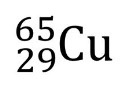
Give the nuclide symbol for an atom that has<br> mass number 64 and 35 neutrons.
azamat
The mass number represents the summation of the number of protons and the number of neutrons in the nucleus of an atom.
We are given that the mass number is 64 and that the number of neutrons is 35. Therefore:
number of protons = 64 - 35 = 29 protons

In ground state, number of protons in an atom is equal to the number of electrons. Therefore,
number of electrons = 29 electron

Using the periodic table, we will find that the element that has 29 electrons in ground state is copper.
The nuclide symbol of copper is shown in the attached image.

5 0
2 years ago
You see a structural formula in which the symbols for elements are connected by a long dash. You can assume that the chemical bo
Shkiper50 [21]
<span>You see a structural formula in which the symbols for elements are connected by a long dash. I can assume that the chemical bonds in the compound are covalent.</span>
4 0
2 years ago
Read 2 more answers
Enter the symbol of a sodium ion, Na+, followed by the formula of a sulfate ion, SO42−. Separate the ions with a comma only—spac
gladu [14]

Na⁺,SO₄²⁻ is the answer

<h3>Further explanation </h3>

An ion is an atom or molecule that has a net electrical charge. There are many ions, one of them are sodium ion and sulfate ion.

SO₄²⁻ or Sulfate is a naturally occurring polyatomic ion that consist of a central sulfur atom surrounded by four oxygen atoms with occured widely in everyday life. Sodium ions are important for regulation of blood and body fluids, transmission of nerve impulses, heart activity, and certain metabolic functions.

Whereas Na⁺ or Sodium is a chemical element with the symbol Na and atomic number 11. It is a soft, silvery-white, highly reactive metal. Sulfate ion is a very weak base. Therefore sulfate ion undergoes negligible hydrolysis in aqueous solution.

Enter the symbol of a sodium ion, Na⁺, followed by the formula of a sulfate ion, SO₄²⁻. Separate the ions with a comma only—spaces are not allowed. Express your answers as ions separated by a comma. Therefore the answer is: Na⁺,SO₄²⁻

Hope it helps!

<h3>Learn more</h3>
  1. Learn more about sodium ion brainly.com/question/6839866
  2. Learn more about sulfate ion brainly.com/question/2763823
  3. Learn more about ions brainly.com/question/11852357

<h3>Answer details</h3>

Grade:  9

Subject:  Chemistry

Chapter:  Introduction to Mastering Chemistry

Keywords: sodium ion, sulfate ion, ions, Chemistry, symbol

6 0
2 years ago
Read 2 more answers
Consider the following balanced equation: Fe + 2Ag+ Fe2+ + 2Ag Which statement is true?
vaieri [72.5K]
I’m pretty sure it’s d
5 0
2 years ago
Other questions:
  • if 5 moles of P4 reacted with 22 moles Cl2 according to the above reaction, determine:How many moles PCl3 are produced
    14·1 answer
  • Acetone and sodium chloride both have similiar mass. Explain why their other properties differ.
    9·2 answers
  • Consider the reaction cacn2 3 h2o → caco3 2 nh3 . how much nh3 is produced if 187 g of caco3 are produced?
    9·1 answer
  • Based on a kc value of 0.200 and the given data table, what are the equilibrium concentrations of xy, x, and y, respectively? ex
    5·1 answer
  • A 10.0-ml sample of 0.200 m hydrocyanic acid (hcn) is titrated with 0.0998 m naoh. what is the ph at the equivalence point? for
    7·1 answer
  • Identify which of the following two reactions you would expect to occur more rapidly: (1) addition of HBr to 2-methyl-2-pentene
    13·1 answer
  • What is the pressure of a 3.00 L gas vessel that has 18.0 grams of helium at 25°C? (R= 0.0821 L atm/ mol K)
    7·1 answer
  • Which isoelectronic series is correctly arranged in order of increasing radius?
    6·1 answer
  • Check 0/1 ptRetries 5 Element R has three isotopes. The isotopes are present in 0.0825, 0.2671, and 0.6504 relative abundance. I
    6·1 answer
  • Daniel Harris has always enjoyed eating tuna fish. Unfortunately, a study of the mercury content of canned tuna in 2010 found th
    13·1 answer
Add answer
Login
Not registered? Fast signup
Signup
Login Signup
Ask question!