answer.
Ask question
Login Signup
Ask question
All categories
  • English
  • Mathematics
  • Social Studies
  • Business
  • History
  • Health
  • Geography
  • Biology
  • Physics
  • Chemistry
  • Computers and Technology
  • Arts
  • World Languages
  • Spanish
  • French
  • German
  • Advanced Placement (AP)
  • SAT
  • Medicine
  • Law
  • Engineering
arlik [135]
2 years ago
6

How would an electron shell model of an oxygen atom (O) appear after the atom has formed chemical bonds? It would have six elect

rons in the outermost shell.

Chemistry
2 answers:
Zigmanuir [339]2 years ago
8 0

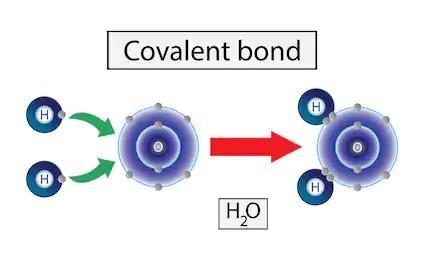
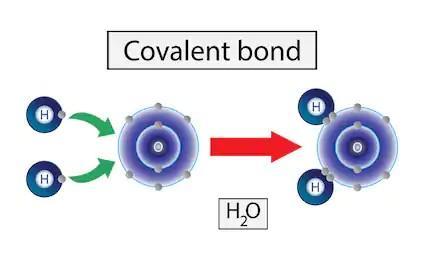
Answer: It would have 8 electrons in its outermost shell.

Explanation:

The outermost shell of an Oxygen atom, usually called valence shells contains only 6 electrons while the rest 2 are in the innermost shell.

When chemicals bonds are formed, it  takes in just 2 more electrons from the donor atom to form a stable octet state.

Example is the covalent bond between Hydrogen atom. (Check attatchment)

ehidna [41]2 years ago
4 0

Answer:

It would have eight electrons in the outermost shell.

Explanation:

This is because O atom would have gained extra two electrons for the chemical bonding (Ionic bond) and hence, the O atom would have eight electrons in the outermost shell (in an octet state).

You might be interested in
Find the ions in the periodic table that have an electron configuration of nd8 (n = 3, 4, 5...).
Alla [95]
 <span>Cu⁺ is the only one of the ions in the list that will show 8 electrons in a d sublevel....its configuration will be Ar| 4s² 3d⁸
hope this helps</span>
4 0
2 years ago
Read 2 more answers
A deck of cards has dimensions 8.9cm x 5.72cm x 1.82 cm. What is the volume of the deck in cubic centimeters?
arsen [322]

Answer:

92.65256 cm^3

Explanation:

To find this, we can simply multiply all three dimensions to get the answer in cubic centimeters, and we get the answer above. If you want to be more specific, we can go by the sigfig rule and the answer would be rounded to 93 cm^3.

5 0
2 years ago
Imagine that a new polyatomic anion called "platoate" is invented. What would an acid of "platoate" be named?
o-na [289]
<h3>Answer:</h3>

                   Platoic Acid

<h3>Explanation:</h3>

                        While naming Carboxylic Acids we know that when the Carboxylic Acid looses proton it is converted into corresponding conjugate base called as Carboxylate.

Examples:

                        HCOOH           →           HCOO⁻  +  H⁺

                     Formic acid                     Formate Ion

                    H₃CCOOH           →           H₃CCOO⁻  +  H⁺

                     Acetic acid                       Acetate Ion

                    H₅C₂COOH           →           H₅C₂COO⁻  +  H⁺

                 Propanoic acid                       Propanoate Ion

Therefore, if the conjugate base is Platoate then the corresponding acid will be Platoic Acid means we will replace the -ate by -ic acid <em>i.e.</em>

                   RCOO⁻  +  H⁺        →            RCOOH

                   Platoate Ion                         Platoic Acid

8 0
2 years ago
Read 2 more answers
The crystalline hydrate cd(no3)2 ⋅ 4h2o(s) loses water when placed in a large, closed, dry vessel at room temperature: cd(no3)2⋅
Sever21 [200]

The given dehydration equation is,

Cd(NO_{3})_{2}. 4H_{2}O (s) ---> Cd(NO_{3})_{2}(s) + 4 H_{2}O(g)

Cadmiumnitrate tetrahydrate when heated dehydrates releasing the combined water as water vapor. The reaction produces 4 moles of gaseous product water vapor. So, the degree of disorder or randomness increases. Hence, the sign of change in entropy is positive.

This reaction is spontaneous at room temperature even if it is endothermic as the sign of change in entropy is positive.

8 0
2 years ago
Read 2 more answers
For which of the following reactions is ΔH∘rxn equal to ΔH∘f of the product(s)?You do not need to look up any values to answer t
Nutka1998 [239]

Answer:

Reactions 1, 3 and 5

Explanation:

First thing's first, let's ensure that all the reactions given are balanced. This is given as;

CO(g) + 1/2 O2(g )→ CO2(g)

Li(s) + 1/2 F2(l) → LiF(s)

C(s) + O2(g) → CO2(g)

CaCO3(g) → CaO + CO2(g)

2Li(s) + F2(g) → 2LiF(s)

For the condition to be valid;

- There is by convention 1 mol of product made. This means we eliminate reactions with more than one mole of compound formed. This eliminates reaction 5.

- The lements haveto be in their state at room temperature. Fluorine is a gas, not a liquid, at room temperature ans pressure, so 2 is not a correct answer.

This leaves us with reactions 1, 3 and 5 as the correct reactions that satisify the condition.
3 0
2 years ago
Other questions:
  • An iron atom has a mass of ×9.2710−23g and a cooking pot has a mass of 0.500kg
    12·2 answers
  • Which material has a crystalline structure at room temperature ( 20 degrees Celsius )
    6·2 answers
  • What percentage of solar radiation striking a plant is converted into chemical energy?
    8·1 answer
  • You run an electrolysis of NaCl and collect one of the products in a test tube. You realize later you did not label the test tub
    10·2 answers
  • When diluting the pickle juice food sample for titration, is it important to know the final volume exactly? Why or why not?
    12·1 answer
  • A swimmer enters a gloomier world (in one sense) on diving to greater depths. Given that the mean molar absorption coefficient o
    10·1 answer
  • In hypothetical element, two energy levels are separated by an energy of 282 kj/mol. what wavelength of light (in nm) is involve
    7·1 answer
  • The change in entropy, ΔS∘rxn , is related to the the change in the number of moles of gas molecules, Δngas . Determine the chan
    8·1 answer
  • Kaia, a chemical engineering graduate, has documented all titration procedures in her project report. She refers to this report
    12·1 answer
  • What is the herbivore in the following food chain: algae → fish → herons?
    8·1 answer
Add answer
Login
Not registered? Fast signup
Signup
Login Signup
Ask question!