answer.
Ask question
Login Signup
Ask question
All categories
  • English
  • Mathematics
  • Social Studies
  • Business
  • History
  • Health
  • Geography
  • Biology
  • Physics
  • Chemistry
  • Computers and Technology
  • Arts
  • World Languages
  • Spanish
  • French
  • German
  • Advanced Placement (AP)
  • SAT
  • Medicine
  • Law
  • Engineering
777dan777 [17]
2 years ago
8

Calculate the number of molecules in 15.7 mol carbon dioxide.

Chemistry
1 answer:
inna [77]2 years ago
4 0

Hey there!

One mole has 6.022 x 10²³ molecules.

We have 15.7 moles, so multiply.

15.7 x 6.022 x 10²³ = 9.45 x 10²⁴

There are 9.45 x 10²⁴ molecules in 15.7 moles of carbon dioxide.

Hope this helps!

You might be interested in
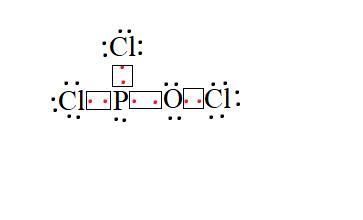
Determine the number of valence electrons in POCl₃ and then draw the corresponding Lewis structure (by following the octet rule
Aleks [24]

Answer:

Valence electrons: P = 5, O =6, Cl = 7

The Lewis structure is shown below.

Explanation:

To determine the number of valence electrons, we need to find the atom at the periodic table, because the group determines this. P is at group 15 (or 5A), so it has 5 valence electrons, O is at group 16 (or 6A) so it has 6 valence electrons, and Cl is at group 17 (or 7A) so it has 7 valence electrons.

To follow the octet rule, all the atoms must have 8 electrons in the valence shell, so, P must do 3 bonds, O two, and Cl one. So, the most likely formula is P with a single bond with O, and with two Cl, and the other Cl with a single bond with O.

There'll be 1 lone pair in P, 2 lone pairs in O, and 3 lone pairs in each Cl atom, as shown below.

The Lewis structure is done by placing the atoms with their valence electrons represented and then making the bonds, as shown below.


3 0
2 years ago
What changes if the degree (amount) of intermolecular bonds of a substance are changed?
elixir [45]
<h2>Answer:</h2>

The correct answers are;

volume of a substance

density of a substance

  • The volume and the density of the substance depend on inter molecular forces of the substance. So, when we will change the degree of inter molecular forces, whether decrease it or increase it, it will affect the volume and density of a substance.
7 0
2 years ago
Read 2 more answers
Natasha and Reanna observe a large airplane in the troposphere. Which experimental setup below would best determine how changing
snow_lady [41]

Answer:

i am pretty sure the answer is a

Explanation: because the airplane's flight time has to be the independent variable for it to affect the dependent variable that is the speed of how fast the airplane is going.

8 0
2 years ago
Read 2 more answers
The ph of a solution that contains 0.818 m acetic acid (ka = 1.76 x 10⁻⁵) and 0.172 m sodium acetate is __________.
crimeas [40]
PH is calculated using <span>Handerson- Hasselbalch equation,

                                      pH  =  pKa  +  log [conjugate base] / [acid]

Conjugate Base  =  Acetate (CH</span>₃COO⁻)
Acid                    =  Acetic acid (CH₃COOH)
So,
                                      pH  =  pKa  +  log [acetate] / [acetic acid]

We are having conc. of acid and acetate but missing with pKa,
pKa is calculated as,

                                     pKa  =  -log Ka
Putting value of Ka,
                                     pKa  =  -log 1.76 × 10⁻⁵

                                     pKa  =  4.75
Now,
Putting all values in eq. 1,
                     
                                     pH  =  4.75 + log [0.172] / [0.818]

                                     pH  =  4.072
4 0
2 years ago
7. How many moles of argon are there in 20.0 L, at 25 degrees Celsius and 96.8 kPa?
suter [353]
<h3>Answer:</h3>

              0.8133 mol

<h3>Solution:</h3>

Data Given:

                 Moles  =  n  =  ??

                 Temperature  =  T  =  25 °C + 273.15  =  298.15 K

                  Pressure  =  P  =  96.8 kPa  =  0.955 atm

                  Volume  =  V  =  20.0 L

Formula Used:

Let's assume that the Argon gas is acting as an Ideal gas, then according to Ideal Gas Equation,

                  P V  =  n R T

where;  R  =  Universal Gas Constant  =  0.082057 atm.L.mol⁻¹.K⁻¹

Solving Equation for n,

                  n  =  P V / R T

Putting Values,

                  n  =  (0.955 atm × 20.0 L) ÷ (0.082057 atm.L.mol⁻¹.K⁻¹ × 298.15 K)

                 n  =  0.8133 mol

4 0
2 years ago
Read 2 more answers
Other questions:
  • How many moles of hydrogen gas are produced when 0.066 mole of sodium is completely reacted?
    14·2 answers
  • When a 500. gram sample of water at 19.0oC absorbs 8.40 kiloJoules of heat, the temperature of the water will change to?
    11·1 answer
  • When 21.45 g of KNO3 was dissolved in water in a calorimeter, the temperature fell from 25.00°C to 14.14 °C. If the heat capacit
    7·1 answer
  • Consider two solutions, the first being 50.0 mL of 1.00 M CuSO4 and the second 50.0 mL of 2.00 M KOH. When the two solutions are
    12·1 answer
  • A mixture of ethyl alcohol (molecular mass = 46.1 u) and water (molecular mass = 18.0 u) contains one mole of molecules. The mix
    11·1 answer
  • The mole fraction of oxygen molecules in dry air is 0.2095. What volume of dry air at 1.00 atm and 25°C is required for burning
    9·1 answer
  • Molten gallium reacts with arsenic to form the semiconductor, gallium arsenide, GaAsGaAs, used in light emitting diodes and sola
    11·1 answer
  • Heating galactose, a monosaccharide sugar, in the presence of excess oxygen produces carbon dioxide gas and water vapor. Classif
    11·1 answer
  • In this problem, you will use Lenz's law to explore what happens when an electromagnet is activated a short distance from a wire
    13·1 answer
  • A gas mixture contains HBr, NO2, and C2H6 at STP. If a tiny hole is made in the container, which gas will effuse fastest? NO2 C2
    12·1 answer
Add answer
Login
Not registered? Fast signup
Signup
Login Signup
Ask question!