answer.
Ask question
Login Signup
Ask question
All categories
  • English
  • Mathematics
  • Social Studies
  • Business
  • History
  • Health
  • Geography
  • Biology
  • Physics
  • Chemistry
  • Computers and Technology
  • Arts
  • World Languages
  • Spanish
  • French
  • German
  • Advanced Placement (AP)
  • SAT
  • Medicine
  • Law
  • Engineering
Alex Ar [27]
2 years ago
15

Salt in crude oil must be removed before the oil undergoes processing in a refinery. The

Chemistry
1 answer:
irina1246 [14]2 years ago
3 0

Answer:

\large \boxed{0.64 \, \%}

Explanation:

Assume you are using 1 L of water.

Then you are washing 4 L of salty oil.

1. Calculate the mass of the salty oil

Assume the oil has a density of 0.86 g/mL.

\text{Mass of oil} = \text{4000 mL} \times \dfrac{\text{0.86 g}}{\text{1 mL}} = \text{3440 g}

2. Calculate the mass of salt in the salty oil

\text{Mass of salt} = \text{3440 g} \times \dfrac{\text{5 g salt}}{\text{100 g oil}} = \text{172 g salt}

3. Calculate the mass of salt in the spent water

\text{Mass of salt} = \text{1000 g water} \times \dfrac{\text{15 g salt}}{\text{100 g water}} = \text{150 g salt}

4. Mass of salt remaining in washed oil

Mass = 172 g - 150 g = 22 g  

5. Concentration of salt in washed oil

\text{Concentration} = \dfrac{\text{22 g}}{\text{3440 g}} \times 100 \, \% = \mathbf{0.64 \, \%}\\\\\text{The concentration of salt in the washed oil is $\large \boxed{\mathbf{0.64 \, \%}}$}

You might be interested in
if 5.50 mol of calcium carbide (CaC 2 ) reacts with an excess of water, how many moles of acetylene (C 2 H 2 ) , a gas used in w
Leona [35]

Answer:

5.5moles

Explanation:

CaC2 + 2H2O —> Ca(OH)2 + C2H2

From the equation, the following were observed:

1mole of CaC2 reacted to produced 1mol of C2H2.

Therefore, 5.5moles of CaC2 will also produce 5.5moles of C2H2

5 0
2 years ago
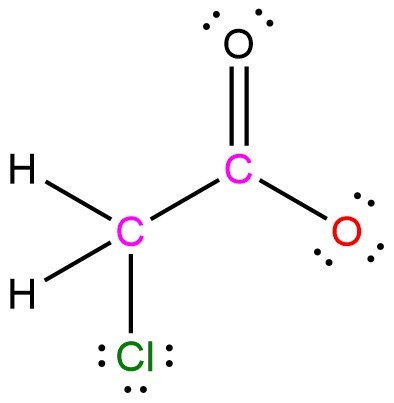
Write the lewis structure for ch2clcoo−. assign a formal charge for any atom with a non-zero formal charge.
Murljashka [212]
The Lewis structure of Chloroacetate (H₂CClCO₂) is given below. In structure it is shown that carbon has a double bond with one oxygen atom and two single bonds with CH₂Cl and O⁻.

Formal Charge;
                        Formal charge is caculated as,

Formal charge  =  # of valence e⁻ - [# of lone pair of e⁻ + 1/2 # of bonded e⁻]

Formal charge on Oxygen (Highlighted Red);

Formal charge  =  6 - [ 6 + 2/2]

Formal charge  =  6 - [6 + 1]

Formal charge  =  6 - [7]

Formal charge  =  -1

8 0
2 years ago
A student wants to reclaim the iron from an 18.0-gram sample of iron(III) oxide, which
lilavasa [31]

Answer:

m_{Fe}=12.6gFe

Explanation:

Hello,

In this case, since we have grams of iron (III) oxide whose molar mass is 159.69 g/mol are able to compute the produced grams of iron by using its atomic mass that is 55.845 g/mol and their 2:4 molar ratio in the chemical reaction:

m_{Fe}=18.0gFe_2O_3*\frac{1molFe_2O_3}{159.69gFe_2O_3}*\frac{4molFe_2O_3}{2molFe_2O_3} *\frac{55.845gFe}{1molFe_2O_3} \\\\m_{Fe}=12.6gFe

Best regards.

3 0
2 years ago
Read 2 more answers
A sample of a solid labeled as NaCl may be impure. a student analyzes the sample and determines that it contains 75 percent chlo
Evgesh-ka [11]

Answer:

D

Explanation:

The sample must contain impurity that is lower in atomic mass to sodium and since potassium has higher atomic mass to sodium, the answer is the sample contains NaCl and LiCl. We are sure already that the sample is not pure which rules out  option a and option b contains sodium iodide which cannot contribute to the increase in chlorine

5 0
2 years ago
How many moles of calcium chloride (CaCl2) are needed to react completely with 6.2 moles of silver nitrate (AgNO3)? 2AgNO3 + CaC
nexus9112 [7]

Here we have to choose the right option which tells the moles of CaCl₂ will react with 6.2 moles of AgNO₃ in the reaction

2AgNO₃ + CaCl₂→ 2AgCl + Ca(NO₃)₂

6.2 moles of silver nitrate (AgNO₃) will react with B. 3.1 moles of calcium chloride (CaCl₂).

From the reaction: 2AgNO₃ + CaCl₂→ 2AgCl + Ca(NO₃)₂

Thus 2 moles of AgNO₃ reacts with 1 mole of CaCl₂

Henceforth, 6.2 moles of AgNO₃ reacts with \frac{6.2}{2} = 3.1 moles of CaCl₂.

1 mole of CaCl₂ reacts with 2 moles of AgNO₃. Thus-

A. 2.2 moles of CaCl₂ will react with 2.2×2 = 4.4 moles of AgNO₃.

C. 6.2 moles of CaCl₂ will reacts with 6.2×2 = 12.4 moles of AgNO₃.

D. 12.4 moles of CaCl₂ will reacts with 12.4 × 2 = 24.8 moles of AgNO₃

Thus the right answer is 6.2 moles of AgNO₃ will react with 3.1 moles of CaCl₂.

6 0
2 years ago
Other questions:
  • A chemist in an imaginary universe, where electrons have a different charge than they do in our universe, performs the millikan
    6·1 answer
  • Rank the nonmetals in each set from most reactive (1) to least reactive (3). Neon: Selenium: Fluorine
    5·2 answers
  • In the correct lewis structure for the nitrate ion, no3 –­, nitrogen has how many covalent bonds?
    7·1 answer
  • How many moles of cacl2 are in 250 ml of a 3.0 m of cacl2 solution?
    12·2 answers
  • Identify all actions that you should take if you have chipped or broken glassware. Notify your teacher. Have the custodian clean
    8·2 answers
  • Jessica has 12.7 moles of a compound for an experiment. How many particles of the compound does she have?
    13·1 answer
  • The mineral rhodochrosite [manganese(II) carbonate, MnCO3] is a commercially important source of manganese. Write a half-reactio
    7·1 answer
  • Harmful chemicals released directly into the atmosphere due to either human activities or natural processes are ___ air pollutan
    7·1 answer
  • In hypothetical element, two energy levels are separated by an energy of 282 kj/mol. what wavelength of light (in nm) is involve
    7·1 answer
  • 1. How many moles of tin are needed to react with 3.5 moles of hydrogen fluoride?
    15·1 answer
Add answer
Login
Not registered? Fast signup
Signup
Login Signup
Ask question!