answer.
Ask question
Login Signup
Ask question
All categories
  • English
  • Mathematics
  • Social Studies
  • Business
  • History
  • Health
  • Geography
  • Biology
  • Physics
  • Chemistry
  • Computers and Technology
  • Arts
  • World Languages
  • Spanish
  • French
  • German
  • Advanced Placement (AP)
  • SAT
  • Medicine
  • Law
  • Engineering
zhuklara [117]
2 years ago
13

Potassium and iodine have formed a bond. Prior to this the potassium gave up an electron. It became a _____. positive ion neutra

l atom negative ion shared ion
Chemistry
2 answers:
Vilka [71]2 years ago
5 0

Answer: Option (a) is the correct answer.

Explanation:

A bond formed by sharing of electrons is known as a covalent bond. And, a bond formed due to transfer of electron from one atom to another is known as ionic bond.

For example, potassium has 1 valence electron and iodine have 7 valence electrons.

So, in order to attain stability potassium will transfer its one valence electron to iodine when they chemically combine together.

It results in the formation of KI that is, potassium iodide.

When an atom loses an electron then it acquires a positive charge and it is called a cation. Whereas if an atom gains an electron then it acquires a negative charge and it is called an anion.

Therefore, when potassium gave up an electron it became a positive ion.

telo118 [61]2 years ago
3 0
<span>Potassium and iodine have formed a bond. Prior to this the potassium gave up an electron. It became a positive ion. positive ion neutral atom negative ion shared ion</span>
You might be interested in
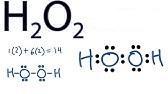
Many free radicals combine to form molecules that do not contain any unpaired electrons. The driving force for the radical–radic
Alexxandr [17]

Answer:

In the attached image the Lewis equation is shown where it is shown how two oxygens react with two hydrogens to meet the octet of the electrons.

Explanation:

Hydrogen peroxide is one of the most named chemicals since it is not only sold as "hydrogen peroxide" in pharmacies but it is also one of the great weapons of immune defense cells to defend ourselves against anaerobic bacteria.

The disadvantage of this compound is that when dividing it forms free oxygen radicals that are considered toxic or aging for our body.

4 0
2 years ago
We have an object with a density of 620 g/ cm3 and a volume of 75 cm3. What is the mass of this object?
Anna11 [10]
M=D*V
D=620 g/cm³
V=75 cm³

m= 620 g/cm³ * 75 cm³=46500 g
m=46500g
8 0
2 years ago
If an ionic compound were composed of a4+ and b−, which unit cell structure would give a neutral compound?
Ymorist [56]
<span>biological reactions that happen within cells while reducing the complex interactions found in a whole cell. Eukaryotic and prokaryotic cells have been used for creation of these simplified environments[1]. Subcellular fractions can be isolated by ultracentrifugation to provide molecular machinery that can be used in reactions in the absence of many of the other cellular components. Cell-free biosystems can be prepared by mixing a number of purified enzymes and coenzymes. Cell-free biosystems are proposed as a new low-cost biomanufacturing platform compared to microbial fermentation used for thousands of years. Cell-free biosystems have several advantages suitable in industrial applications</span>
4 0
2 years ago
What is the mass, in g, of 0.500 mol of 1,2-dibromoethane, CH2BrCH2Br?
inna [77]
Molar mass <span>CH2BrCH2Br = 188.0 g/mol

1 mole ---------- 188.0 g
</span>0.500 moles ----- ?

mass = 0.500 * 188.0 / 1

= 94.0 g

Answer C

hope this helps!
4 0
2 years ago
If the frequency of a radio station is 88.1 MHz (8.81 × 10⁷ Hz), what is the wavelength of the wave used by this radio station f
Grace [21]

Hello!

If the frequency of a radio station is 88.1 MHz, the wavelength of the wave used by this radio station for its broadcast is 3.403 m

<h2>Why?</h2>

We are going to use the following equation that shows the relation of the frequency of a wave with its wavelength, knowing that radio waves are electromagnetic waves and they travel at the speed of light (299 792 458 m/s):

Wavelength=\frac{Speed_{Light}}{Frequency}= \frac{299 792 458 m/s}{8.81*10^{7} Hz}=3.402865\approx3.403 m

Have a nice day!

5 0
2 years ago
Read 2 more answers
Other questions:
  • if 5 moles of P4 reacted with 22 moles Cl2 according to the above reaction, determine:How many moles PCl3 are produced
    14·1 answer
  • what is the best definition of an element? a. an element is a substance that cannot be broken down. b. an element is a positivel
    10·1 answer
  • Lewis structure XeH4? The hydrogen atom is not actually electronegative enough to form bonds to xenon. Were the xenon-hydrogen b
    6·2 answers
  • The element that has a valence configuration of 5s25p6 is ________.
    7·1 answer
  • (4) strontium (sr) has an fcc crystal structure, an atomic radius of 0.215 nm and an atomic weight of 87.62 g/mol. calculate the
    8·1 answer
  • If a dozen apples has a mass of 2.0 kg and 0.20 bushel is 1 dozen apples, How many bushels of apples are in 1.0 Kg of apples
    6·1 answer
  • Please help!!
    13·1 answer
  • An unknown element X has the following isotopes: ⁵²X (89.00% abundant), ⁴⁹X (8.00% abundant), ⁵⁰X (3.00% abundant). What is the
    13·1 answer
  • if 5.50 mol of calcium carbide (CaC 2 ) reacts with an excess of water, how many moles of acetylene (C 2 H 2 ) , a gas used in w
    12·1 answer
  • Explain the observed pattern of how the sizes and charges of atoms change with the addition and subtraction of electrons. ( NEED
    10·1 answer
Add answer
Login
Not registered? Fast signup
Signup
Login Signup
Ask question!