answer.
Ask question
Login Signup
Ask question
All categories
  • English
  • Mathematics
  • Social Studies
  • Business
  • History
  • Health
  • Geography
  • Biology
  • Physics
  • Chemistry
  • Computers and Technology
  • Arts
  • World Languages
  • Spanish
  • French
  • German
  • Advanced Placement (AP)
  • SAT
  • Medicine
  • Law
  • Engineering
DiKsa [7]
2 years ago
7

The formation of large molecules from small repeating units is known as what kind of reaction? Oxidation reduction condensation

hydrolysis
Chemistry
1 answer:
natka813 [3]2 years ago
7 0

Answer:

             The formation of large molecules from small repeating units is known as <u>Condensation</u> reactions.

Explanation:

                   Those reactions in which two molecules join together with a elimination of small neutral molecule like H₂O, CH₃OH, HCl e.t.c are known as condensation reactions.

                  Polymerization reactions are those reactions in which small molecules called as monomers join together to form a large molecule also known as polymers. These reactions are done via different mechanisms among which one is the condensation reaction.

Example:

              Proteins (polymer) are made up of amino acids (monomers) through condensation reaction as,

                     n H₂N-RH-COOH    →    H₂N-[-RH]n-COOH  +  n H₂O

In above equation "n" represent large number, H₂N-RH-COOH represent amino acid (monomer) and H₂N-[-RH]n-COOH represent protein (polymer). While, the H₂O eliminated is the small neutral molecule.

You might be interested in
Which has not been suggested as a reasonably practical way to store large amounts of hydrogen in relatively small spaces for its
Yakvenalex [24]

Answer: A. Liquefy hydrogen under pressure and store it much as we do with liquefied natural gas today.

Explanation:

Current Hydrogen storage methods fall into one of two technologies;

  1. <em>physical storage</em> where compressed hydrogen gas is stored under pressure or as a liquid; and
  2. <em>chemical storage</em>, where the hydrogen is bonded with another material to form a hydride and released through a chemical reaction.

Physical storage solutions are commonly used technologies but are problematic when looking at using hydrogen to fuel vehicles. Compressed hydrogen gas needs to be stored under high pressure and  requires large and heavy tanks. Also, liquid hydrogen boils at -253°C (-423°F) so it needs to be stored cryogenically with heavy insulation and actually contains less hydrogen compared with the same volume of gasoline.  

Chemical storage methods allow hydrogen to be stored at much lower pressures and offer high storage performance due to the strong binding of hydrogen and the high storage densities. They also occupy relatively smaller spaces than either compressed hydrogen gas or liquified hydrogen. A large number of chemical storage systems are under investigation, which involve hydrolysis reactions, hydrogenation/dehydrogenation reactions, ammonia borane and other boron hydrides, ammonia, and alane etc.

Other practical storage methods being researched that focuses on storing hydrogen as a lightweight, compact energy carrier for mobile applications include;

  • Metal hydrides  e.g. LiH
  • Nanostructured metal hydrides
  • Non-metal hydrides
  • Carbohydrates
  • Synthesized hydrocarbons
  • Aluminum
  • Liquid organic hydrogen carriers (LOHC)
  • Encapsulation , e.t.c.
5 0
2 years ago
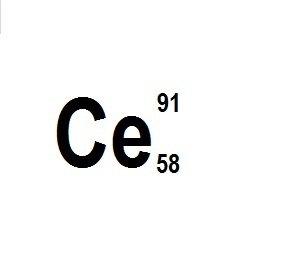
What is the symbol for the isotope of 58 co that possesses 33 neutrons?
Leona [35]
Element with an atomic number of 58 is actually Cerium, so the symbol should be Ce, not Co because that is Cobalt which has an atomic number of 27. With that being said, the notation for isotopes is the symbol of the element with a superscript and a subscript that are aligned. The superscript represents the mass number.

Mass number = protons + neutrons = 58 + 33 = 91

The subscript is the atomic number which is 58. The notation is written in the picture attached.

6 0
2 years ago
Read 2 more answers
How many molecules of N2 are in a 400.0 mL container at 780 mm Hg and 135°C? Avogadro’s number = 6.022 x 10²³A) 7.01 × 10²¹ mole
ASHA 777 [7]

Answer:

B

Explanation:

Firstly, we will need to calculate the number of moles. To do this, we make use of the ideal gas equation

PV = nRT

n = PV/RT

The parameters have the following values according to the question:

P = 780mmHg, we convert this to pascal.

760mHG = 101325pa

780mmHg = xpa

x = (780 * 101325)/760 = 103,991 Pa

V= 400ml = 0.4L

T = 135C = 135 + 273.15 = 408.15K

n = ?

R = 8314.463LPa/K.mol

Substituting these values into the equation yields the following:

n = (103991 * 0.4)/(8314.463 * 408.15)

= 0.012 moles

Now we know 1 mole contains 6.02 * 10^23 molecules, hence, 0.012moles will contain = 0.012 * 6.02 * 10^23 = 7.38 * 10^21 molecules

8 0
2 years ago
Read 2 more answers
Oh no! A thermometer suddenly fell on the floor
mihalych1998 [28]

Answer:

Tell the teacher about the accident right away.

3 0
2 years ago
Read 2 more answers
Which set contains no ionic species?
SVEN [57.7K]
The awnser should be A
7 0
2 years ago
Other questions:
  • Which statement is true concerning the reaction N(g) + N(g) → N2(g) + energy?
    12·1 answer
  • In a blast furnace, elemental iron is produced from a mixture of coke (c), iron ore (fe3o4), and other reactants. an important r
    15·1 answer
  • How many atoms of hydrogen are in 210 g of hydrogen peroxide (h2o2)?
    8·2 answers
  • Describe the pattern of the lewis dot structure of the first 18 elements
    14·1 answer
  • Which of the following statements is true about energy quantization at the atomic level? Electrons in the outermost orbits are t
    11·1 answer
  • Match the action to the effect on the equilibrium position for the reaction N2(g) + 3H2(g) ⇌ 2NH3(g). Match Term Definition Remo
    5·1 answer
  • What is the limiting reactant for the reaction below given that you start with 10.0 grams of Al (molar mass 26.98 g mol-1) and 1
    15·1 answer
  • It is 762 miles from here to Chicago. An obese physics teacher jogs at a rate of 5.0 miles every 20.0 minutes. How long would it
    10·1 answer
  • Why is the atomic mass of iron, 55.845 amu, most similar to the mass of iron-56, yet less than 56 amu? The atomic mass is the si
    5·1 answer
  • Write the balanced Ka and Kb reactions for HSO3- in water. Be sure to include the physical states of each species involved in th
    9·1 answer
Add answer
Login
Not registered? Fast signup
Signup
Login Signup
Ask question!