answer.
Ask question
Login Signup
Ask question
All categories
  • English
  • Mathematics
  • Social Studies
  • Business
  • History
  • Health
  • Geography
  • Biology
  • Physics
  • Chemistry
  • Computers and Technology
  • Arts
  • World Languages
  • Spanish
  • French
  • German
  • Advanced Placement (AP)
  • SAT
  • Medicine
  • Law
  • Engineering
NemiM [27]
2 years ago
13

A proton and an electron are fixed 1.75 nm apart from each other. What is the force exerted on the electron due to the proton?

Physics
2 answers:
katovenus [111]2 years ago
8 0

The electrostatic force exerted by the proton on the electron is given by:

F=k\frac{q_p q_e}{r^}

where

k=9.0 \cdot 10^9 N m^2 C^{-2} is the Coulomb's constant

q_p = q_e = 1.6 \cdot 10^{-19} C is the magnitude of the charge of the proton and of the electron

r=1.75 m is the distance between the proton and the electron

Substituting these data into the formula, we find the magnitude of the electrostatic force:

F=(9.0 \cdot 10^9) \frac{(1.6 \cdot 10^{-19})(1.6 \cdot 10^{-19})}{(1.75)^2}=7.5 \cdot 10^{-29} N

iogann1982 [59]2 years ago
7 0

The magnitude of electrical force between them is about 7.52 × 10⁻¹¹ Newton

\texttt{ }

<h3>Further explanation</h3>

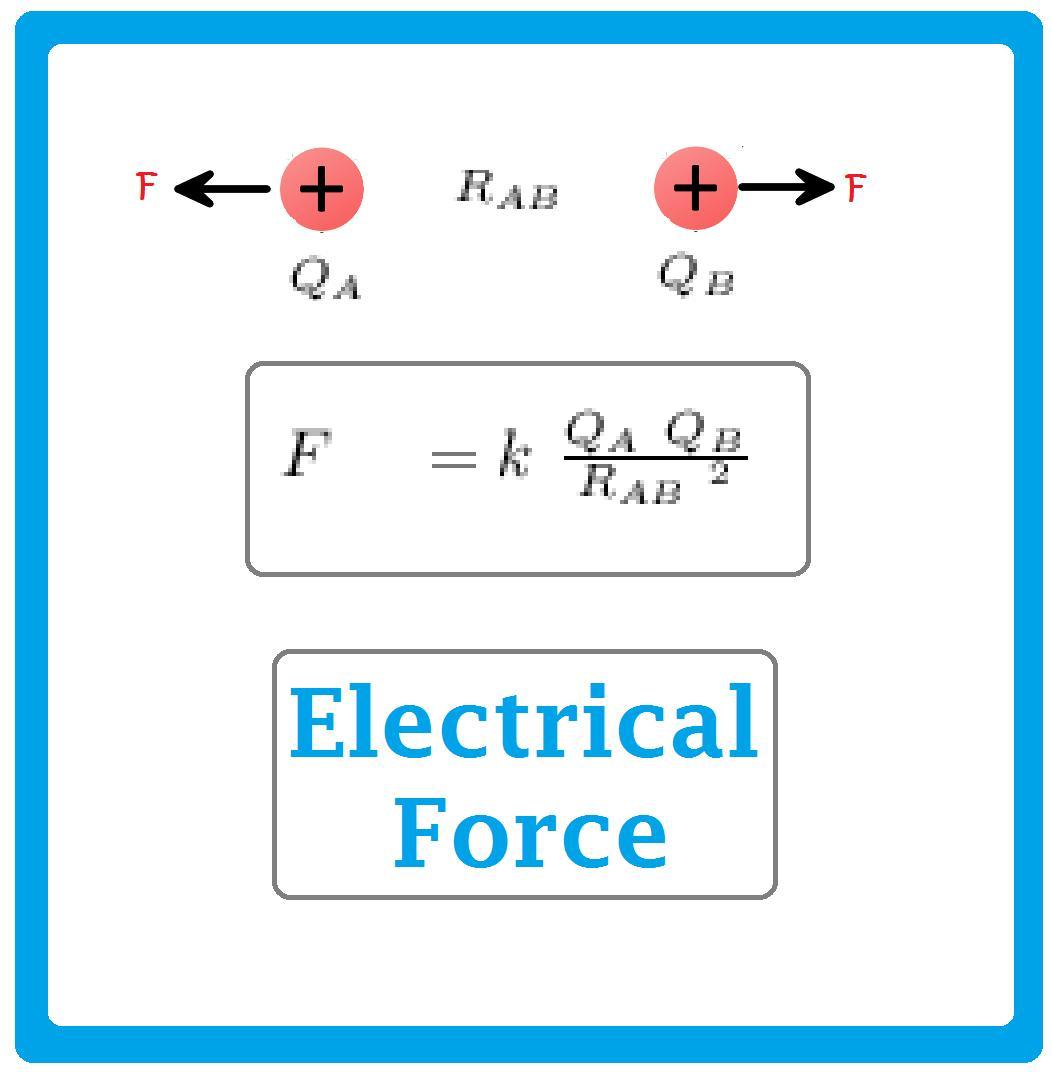
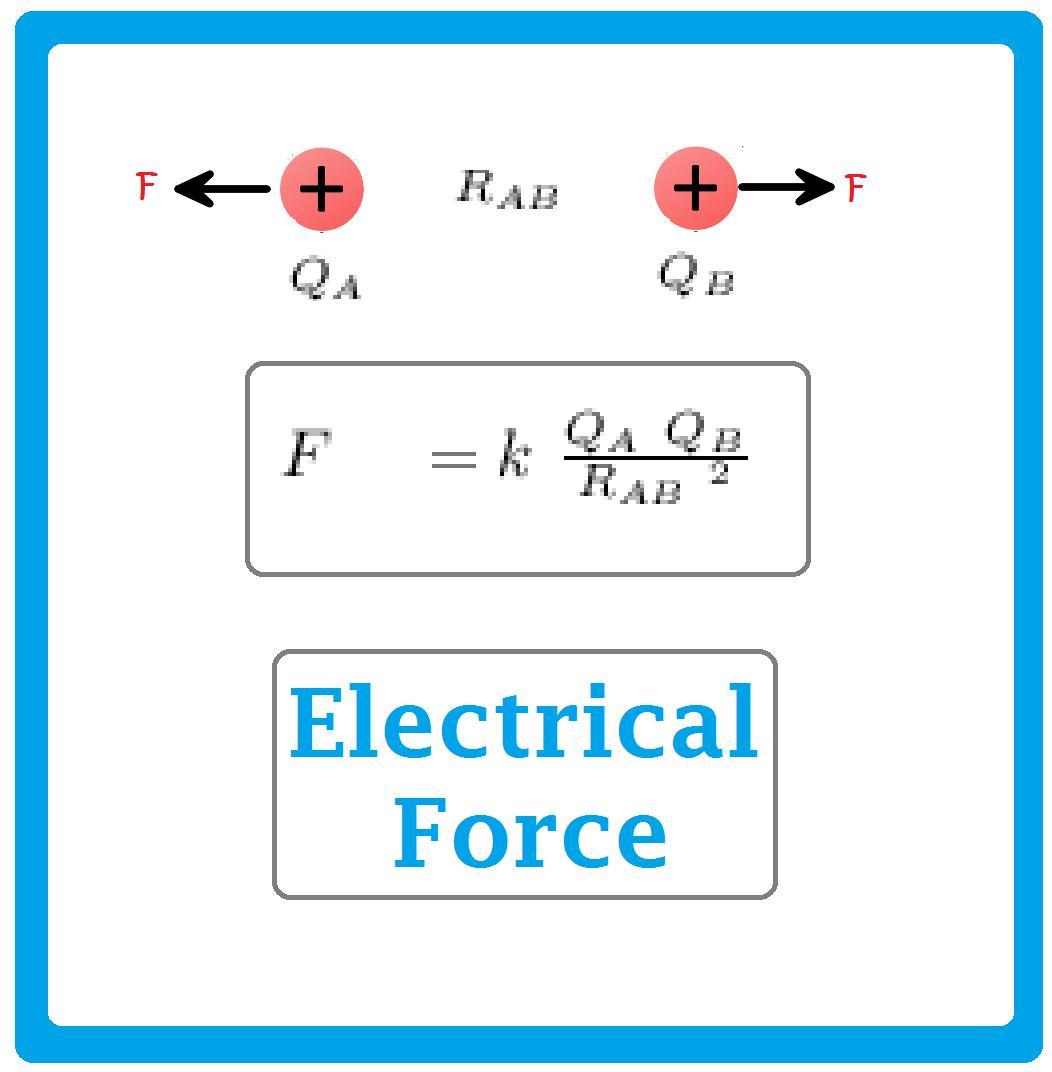
Electric charge consists of two types i.e. positively electric charge and negatively electric charge.

\texttt{ }

There was a famous scientist who investigated about this charges. His name is Coulomb and succeeded in formulating the force of attraction or repulsion between two charges i.e. :

\large {\boxed {F = k \frac{Q_1Q_2}{R^2} } }

<em>F = electric force (N)</em>

<em>k = electric constant (N m² / C²)</em>

<em>q = electric charge (C)</em>

<em>r = distance between charges (m)</em>

<em>The value of k in a vacuum = 9 x 10⁹ (N m² / C²)</em>

Let's tackle the problem now !

\texttt{ }

<u>Given:</u>

charge of proton = q₁ = 1.6 × 10⁻¹⁹ C

charge of electron = q₂ = 1.6 × 10⁻¹⁹ C

distance between proton and electron = R = 1.75 nm = 1.75 × 10⁻⁹ m

<u>Unknown:</u>

electrical force between them = F = ?

<u>Solution:</u>

F = k \frac{q_1 q_2}{R^2}

F = 9 \times 10^9 \times \frac{ 1.6 \times 10^{-19} \times 1.6 \times 10^{-19} }{ ( 1.75 \times 10^{-9} )^2 }

F = 9 \times 10^9 \times \frac{ 2.56 \times 10^{-38} }{ 3.0625 \times 10^{-18} }

F \approx 7.52 \times 10^{-11} \texttt { Newton}

\texttt{ }

<h3>Learn more</h3>
  • The three resistors : brainly.com/question/9503202
  • A series circuit : brainly.com/question/1518810
  • Compare and contrast a series and parallel circuit : brainly.com/question/539204

\texttt{ }

<h3>Answer details</h3>

Grade: High School

Subject: Physics

Chapter: Static Electricity

\texttt{ }

Keywords: Series , Parallel , Measurement , Absolute , Error , Combination , Resistor , Resistance , Ohm , Charge , Small , Forces
You might be interested in
Three balls are in water. Ball 1 floats, with half of it exposed above the water level. Ball 2, with a density less than the den
Ymorist [56]

Answer:

The magnitude of buoyancy force is equal to that of ball's weight.

Explanation:

Ball 1 is floating on water. Weight of ball 1 is Fg=m1g  is acting vertically downward

Force of buoyancy FB = ρVdisg is acting vertically upward.

Net force acting on the ball is zero, FB=Fg

Answer

The magnitude of buoyancy force is equal to that of ball's weight.

4 0
2 years ago
Read 2 more answers
an iron rod of length 100m at 10 degree Celsius is used to measure a distance of 2km on a day when the temperature is 40 degree
german

Answer:

0.68 m

Explanation:

α = dL / L1*(dT)

dL = L1(dT) * α

Initial length, L1 = 100

Chang in Length =dL

α linear expansivity ; dL = change in length ; dT = change in temperature ; L1 = initial length

α of iron rod = 1.13 * 10^-5 k

dL = 100(40 - 10) * 1.13 * 10^-5

dL = 100(30) * 1.13 * 10^-5

dL = 3000 * 1.13 * 10^-5

dL = 3390 * 10^-5

dL = 0.0339 m

Error :

Distance measured = 2km = (2 * 1000) = 2000m

[Distance measured / (initial length + change in length)] × change in length

Error = (2000 / (100 + 0.0339)) * 0.0339

Error = (2000 / 100.0339) * 0.0339

Error = 19.993222 * 0.0339

Error = 0.6777702

Error = 0.68 m

4 0
2 years ago
. A horizontal steel spring has a spring constant of 40.0 N/m. What force must be applied to the spring in order to compress it
ANEK [815]

Ans    4 more to be exact

Explanation:

7 0
2 years ago
Calculate the kinetic energy of a motorcycle of mass 60kg travelling at a velocity of 40km/h​
ELEN [110]

Answer:

1848.15J

Explanation:

KE =1/2 mv^2

Mass = 60kg, velocity =40km/h =11.11m/s

Hence

KE =30 x(11.1)^2 /2 = 1848.15J

5 0
2 years ago
A sled that has a mass of 8 kg is pulled at a 50 degree angle with a force of 20 N. The force of friction acting on the sled is
aivan3 [116]
A. a<span> = 1.3 m/s^2</span><span>; </span>FN<span> = 63.1 N</span>
4 0
2 years ago
Read 2 more answers
Other questions:
  • Which equation is most likely used to determine the acceleration from a velocity vs:time graph?
    11·2 answers
  • Which of the following is NOT a good way to reduce fuel consumption?
    15·2 answers
  • A certain alarm clock ticks four times each second, with each tick representing half a period. The balance wheel consists of a t
    15·1 answer
  • A truck of mass 1800kg is moving with a speed 54km/h. When brakes are applied, it
    12·1 answer
  • A hiker walks due east for a distance of 25.5 km from her base camp. On the second day, she walks 41.0 km northwest till she dis
    7·1 answer
  • The air in a pipe resonates at 150 Hz and 750 Hz, one of these resonances being the fundamental. If the pipe is open at both end
    6·1 answer
  • As computer structures get smaller and smaller, quantum rules start to create difficulties. Suppose electrons move through a cha
    11·1 answer
  • Which economic idea did Adam Smith promote in The Wealth of Nations?
    9·2 answers
  • a 50kg person is standing still in ice skates throws their 2.0kg helmet to the right at 25m/s while on a friction less surface.
    7·1 answer
  • A physics student walks 100 meters in 80 seconds. The student stops for 30 seconds, and then walks 200 meters farther in 90 seco
    6·1 answer
Add answer
Login
Not registered? Fast signup
Signup
Login Signup
Ask question!
