answer.
Ask question
Login Signup
Ask question
All categories
  • English
  • Mathematics
  • Social Studies
  • Business
  • History
  • Health
  • Geography
  • Biology
  • Physics
  • Chemistry
  • Computers and Technology
  • Arts
  • World Languages
  • Spanish
  • French
  • German
  • Advanced Placement (AP)
  • SAT
  • Medicine
  • Law
  • Engineering
yKpoI14uk [10]
2 years ago
7

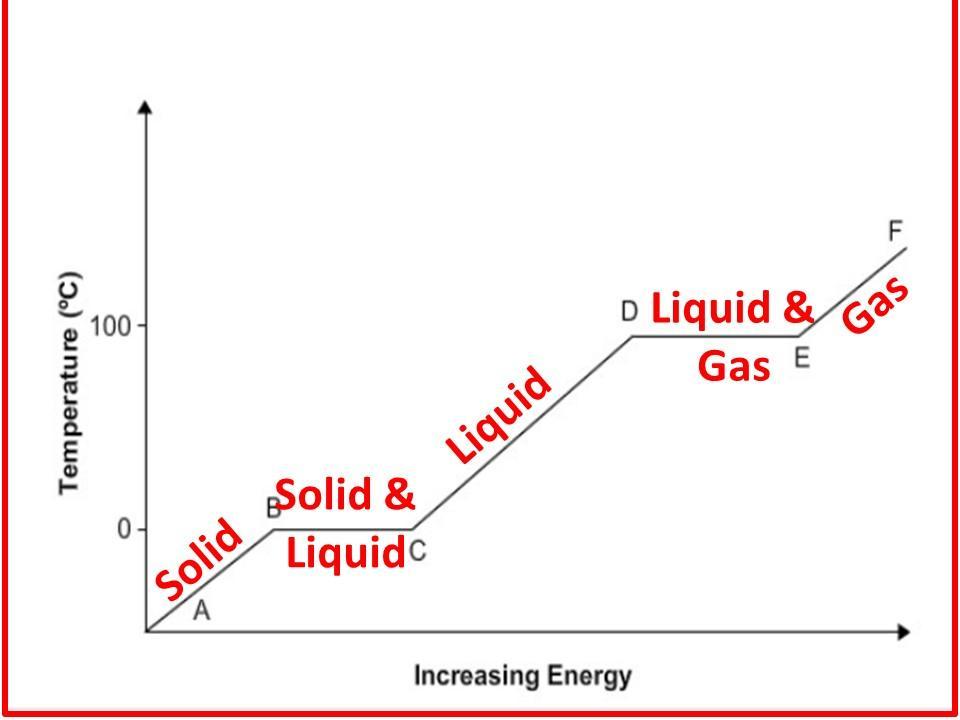
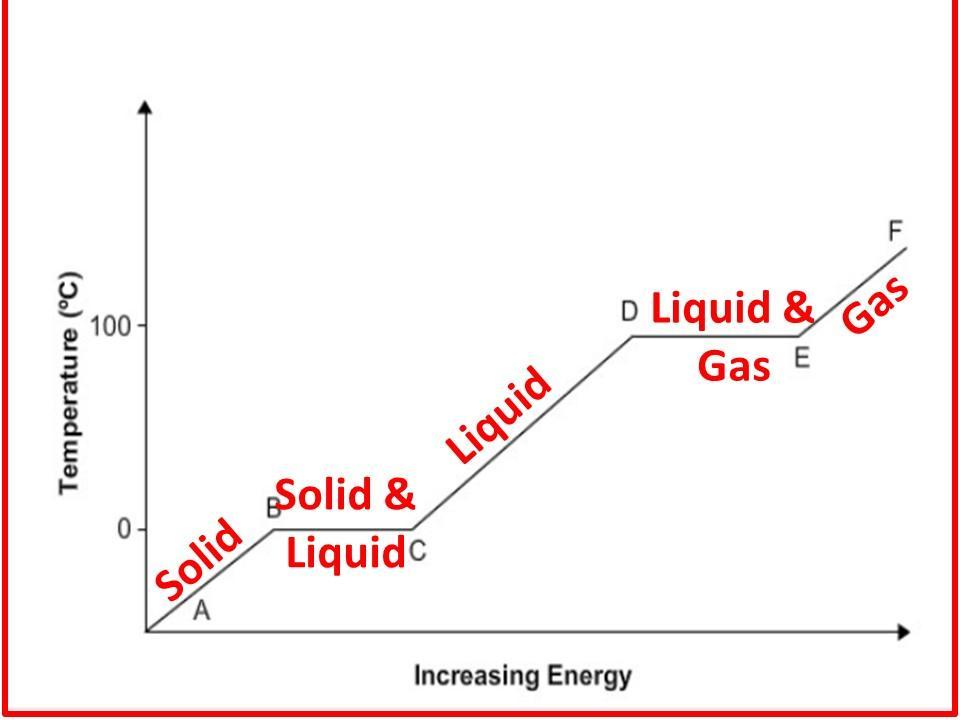
A heating curve has two flat lines, or plateaus. What does the plateau at the lower temperature represent?

Chemistry
2 answers:
masya89 [10]2 years ago
8 0

Answer:

B) Melting of a solid.

Explanation:

  • Kindly, see the attached image.

  • It is known that the substance has different 3 phases (solid, liquid, and gas).

  • By heating, the substance converted from solid phase to liquid phase passing by a plateau that represents equilibrium between the two phases.

  • By further heating, the solid completely converted into liquid phase, then converted to gaseous phase passing by a plateau that represents an equilibrium between the liquid an gaseous phase.

<em>The plateau at the lower temperature represent: B) Melting of a solid.</em>

Vitek1552 [10]2 years ago
3 0

Answer:

B. Melting of a Solid

You might be interested in
Given these reactions, where X represents a generic metal or metalloid 1) H2(g)+12O2(g)⟶H2O(g)ΔH1=−241.8 kJ 1) H2(g)+12O2(g)⟶H2O
Bond [772]

Answer:

ΔH = -793,6 kJ

Explanation:

It is possible to obtain ΔH of this reaction using Hess's law that says you can sum the half-reactions ΔH to obtain the ΔH of the global reaction:

If half-reactions are:

1) H₂(g) + ¹/₂O₂(g) ⟶ H₂O(g) ΔH₁ = −241.8 kJ

2) X(s) + 2Cl₂(g) ⟶ XCl₄(s) ΔH₂ = +356.9 kJ  

3) ¹/₂H₂(g) + ¹/₂Cl₂(g) ⟶ HCl(g) ΔH₃ = −92.3 kJ

4) X(s) + O₂(g) ⟶ XO₂(s) ΔH₄ = −639.1 kJ

5) H₂O(g) ⟶ H₂O(l) ΔH₅ = −44.0 kJ

The sum of (4) + 4×(3) - (2) - 2×(1) - 2×(5) is:

(4) X(s) + O₂(g) ⟶ XO₂(s) ΔH = −639.1 kJ

+4×(3) 2H₂(g) + 2Cl₂(g) ⟶ 4HCl(g) ΔH = −369,2 kJ

-(2) XCl₄(s) ⟶ X(s) + 2Cl₂(g) ΔH = -356,9 kJ

-2×(1) 2H₂O(g) ⟶ 2H₂(g) + O₂(g) ΔH = +483,6 kJ

-2×(5) 2H₂O(l) ⟶ 2H₂O(g) ΔH = +88.0 kJ

= <em>XCl₄(s) + 2H₂O(l) ⟶ XO₂(s) + 4HCl(g)</em>

Where ΔH is:

ΔH = -639,1 kJ -369,2 kJ -356,9 kJ +483,6 kJ +88,0 kJ

<em>ΔH = -793,6 kJ</em>

I hope it helps!
5 0
2 years ago
Which of the following correctly describes a compound? (4 points)
wariber [46]

Explanation:

The atoms are chemically bonded together, and they retain their individual physical and chemical properties.

8 0
2 years ago
Franklin was performing an experiment by combining hydrochloric acid and sodium hydroxide. He measured the mass of his reactant
VARVARA [1.3K]

Answer:

B

Explanation:

took the test

4 0
1 year ago
Read 2 more answers
What volume of a 0.716 m kbr solution is needed to provide 30.5 g of kbr?
Jlenok [28]
Answer is: volume of KBr is 357 mL.
c(KBr) = 0,716 M = 0,716 mol/L.
m(KBr) = 30,5 g.
n(KBr) = m(KBr) ÷ M(KBr).
n(KBr) = 30,5 g ÷ 119 g/mol.
n(KBr) = 0,256 mol.
V(KBr) = n(KBr) ÷ c(KBr).
V(KBr) = 0,256 mol ÷ 0,716 mol/L.
V(KBr) = 0,357 L · 1000 mL/L = 357 mL.
7 0
2 years ago
Read 2 more answers
Jill is doing an experiment on the movement of pill bugs. She will place the pill bugs on flat surfaces covered with diffirent m
Ostrovityanka [42]

Answer:D

Explanation:

6 0
2 years ago
Other questions:
  • The mass of a solid copper penny is 3.46 g. how many copper atoms are in the penny?
    9·2 answers
  • Describe the sequence of adding ingredients to make the recipe for condensed tomato soup. To mix the ingredients, you have an in
    7·1 answer
  • The [H3O+] in a solution is increased to twice the original concentration. Which change could occur in the pH? 2.0 to 4.0 1.7 to
    14·2 answers
  • A person is standing on ice. He throws a snowball with a force of 4 N to the right, while the snowball pushes the person with a
    14·2 answers
  • A plot of velocity versus substrate concentration for a simple enzyme-catalyzed reaction produces a _____. This indicates that a
    11·1 answer
  • An equimolar mixture of N2(g) and Ar(g) is kept inside a rigid container at a constant temperature of 300 K. The initial partial
    9·1 answer
  • Identify from the following list of molecules and ions which behave as Lewis acids: CO2, NH3, BCl3, Fe3+. (A) CO2 and NH3 (B) NH
    5·1 answer
  • Rubbing alcohol contains 615g of isopropanol (C3H7OH) per liter (aqueous solution). Calculate the molality of this solution. Giv
    12·1 answer
  • Interpret the following Arterial Blood Gases 1. pH 7.33 PaCO2 60 HCO3 34 A. Normal ABG values B. Respiratory acidosis without co
    15·1 answer
  • Determine the type of each chemical equation describing a precipitation reaction. C a 2 + ( a q ) + S O 4 2 − ( a q ) ⟶ C a S O
    7·1 answer
Add answer
Login
Not registered? Fast signup
Signup
Login Signup
Ask question!