answer.
Ask question
Login Signup
Ask question
All categories
  • English
  • Mathematics
  • Social Studies
  • Business
  • History
  • Health
  • Geography
  • Biology
  • Physics
  • Chemistry
  • Computers and Technology
  • Arts
  • World Languages
  • Spanish
  • French
  • German
  • Advanced Placement (AP)
  • SAT
  • Medicine
  • Law
  • Engineering
Arisa [49]
2 years ago
3

Having studied the data for patterns and trends, you should now be able to draw some conclusions about how knowing the half-life

of the element Lokium would help you determine the absolute age of rock in which this element is found. In a paragraph, create an imaginary example of finding a given amount of Lokium and DOL in a rock, and then determining the absolute age of that rock. Assume that each trial represents 1,000 years.​

Chemistry
1 answer:
zysi [14]2 years ago
8 0

The absolute age of that rock can be determined from the half-life of radioactive elements present in rocks such as Lokium

<h3>Further explanation</h3>

The core reaction is a reaction that causes changes in the core structure.

In the core reaction, the number of atomic numbers and mass numbers of the reactants is the same as the atomic number and mass number of the product

Radioactivity is the process of unstable isotopes towards stable isotopes by decay, by emitting certain particles, among others

• alpha α particles ₂He⁴

• beta β ₋₁e⁰ particles

• gamma particles γ

• positron particles ₁e⁰

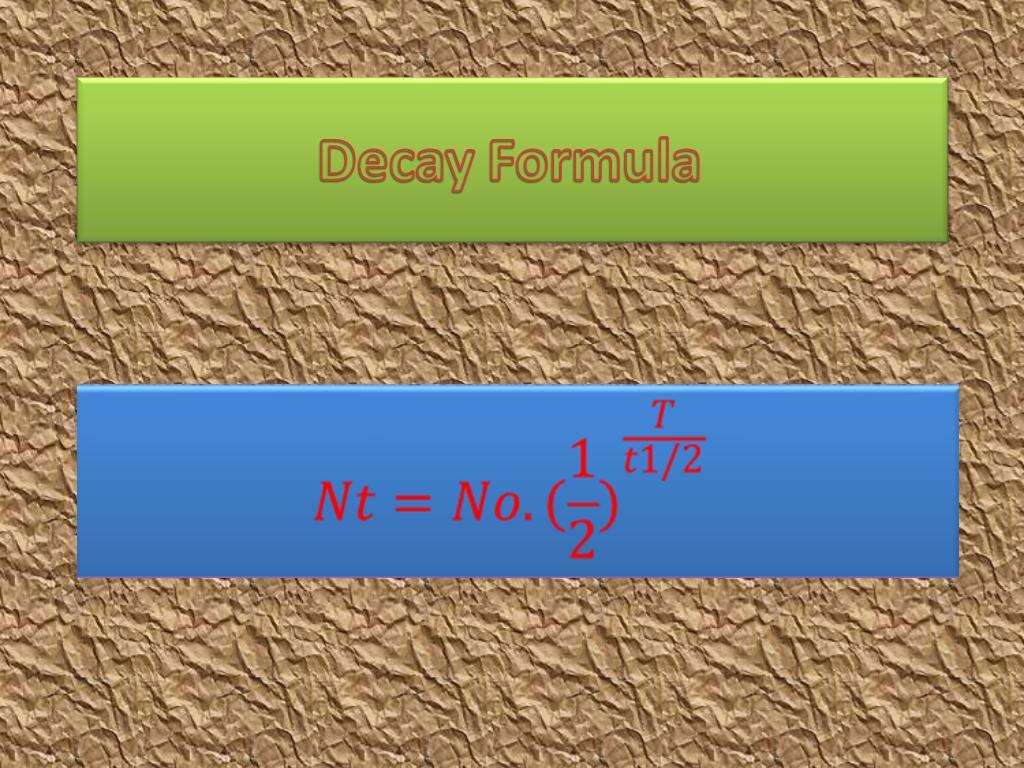
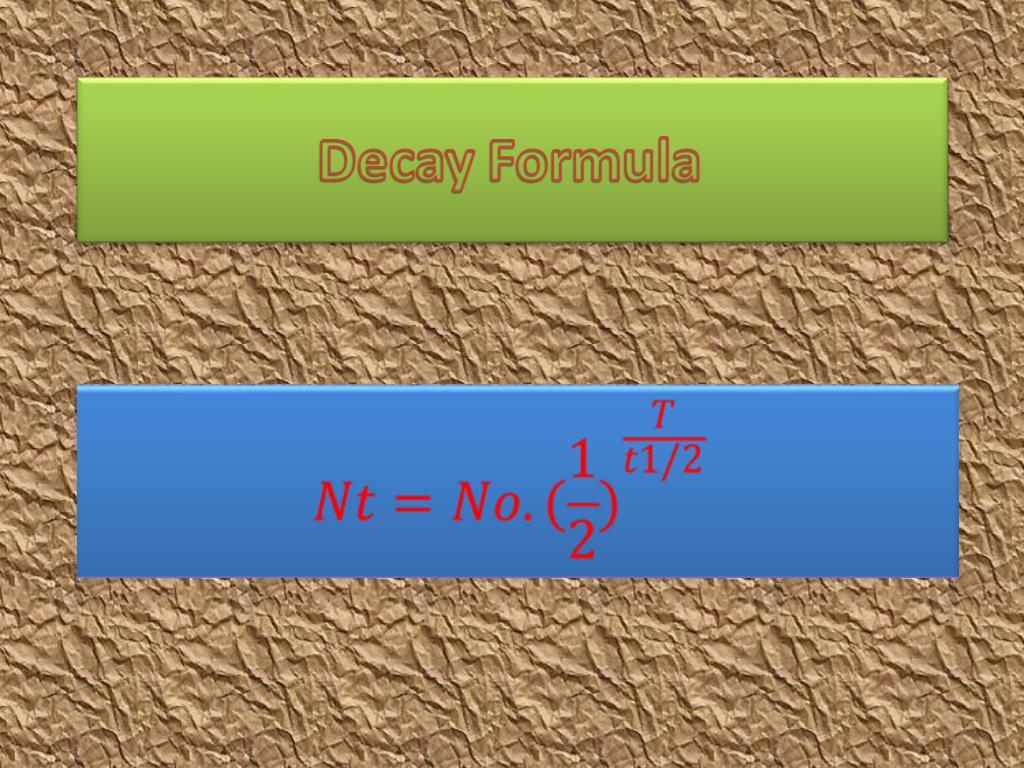
General formulas used in decay:

\large{\boxed{Nt=No.(\frac{1}{2}) ^{\frac{T}{t1/2} } }}

Information:

T = duration of decay

t 1/2 = elemental half-life

N₀ = the number of initial radioactive atoms

Nt = the number of radioactive atoms left after decaying during T time

Geologists can determine the age of rocks from the content of radioactive elements in it

The procedure that can be used is to calculate the half-life using the imaginary element of the Lokium and the decaying atom called DOL (daughter of Lokium)

The procedure :

  • This Lokium is expressed in the form of cubes such as dice, or homemade cubes
  • Use as many as + - 100 cubes, enter them in the box
  • Mark this cube with a specific mark using a marker, or if the dice mark on certain numbers such as the number 1
  • Shake the box and take the dice/cube that has been marked and facing up .This drawn dice represents DOL
  • Then do the shaking again until you get the amount of half of the initial dice that is the remaining 50 cubes. This is called half-time

The time needed to reach this half-life is calculated from the number of shaking times, which is determined at 1000 years per shaking

This procedure can be illustrated graphically so that we know the graph that occurs whether in exponential form or not

The shaking procedure can be carried out until the cube runs out to obtain data points on the graph.

On the x-axis = the remaining cube. On the y-axis = the value of trial / shaking

From this experiment, we can find out, at what number of shaking, the half-life of Lokium was achieved

<h3>Learn more</h3>

exponential decay

brainly.com/question/6565665

nuclear decay reaction

brainly.com/question/4207569

Plutonium − 239

brainly.com/question/10125168

Keywords: the half-life, Lokium, DOL, decay reaction
You might be interested in
What mass of ammonium thiocyanate (nh4scn) must be used if it is to react completely with 5.7 g barium hydroxide octahydrate?
bija089 [108]
The balanced chemical equation is represented as:

<span>Ba(OH)2·8 H2O + 2 NH4SCN = Ba(SCN)2 + 10 H2O + 2 NH3

To determine the mass of </span>ammonium thiocyanate needed completely react, we use the amount given of the other reactant. Then, convert to moles by the molar mass. And using the relations of the substances in the reaction, we can determine the amount of <span>ammonium thiocyanate.

moles </span>Ba(OH)2·8 H2O = 5.7 g Ba(OH)2·8 H2O ( 1 mol / 315.46 g ) = 0.0181 mol Ba(OH)2·8 H2O
moles NH4SCN  = 0.0181 mol Ba(OH)2·8 H2O ( 2 mol NH4SCN / 1 mol Ba(OH)2·8 H2O ) = 0.0361 mol NH4SCN
mass NH4SCN = 0.0361 mol NH4SCN ( 76.122 g / 1 mol ) = 2.75 g NH4SCN
8 0
2 years ago
A student obtained an unknown metal sample that weighed 65.3 g and at a temperature of 99.8oC, he placed it in a calorimeter con
lawyer [7]

Answer:

0.377 J/gºC

Explanation:

From the question given above, the following data were obtained:

Mass of metal (Mₘ) = 65.3 g

Initial temperature of metal (Tₘ) = 99.8 °C

Mass of water (Mᵥᵥ) = 43.7 g

Initial temperature of water (Tᵥᵥ) = 25.7 °C

Equilibrium temperature (Tₑ) = 34.5 °C

Specific heat capacity of water (Cᵥᵥ) = 4.18 J/gºC

Specific heat capacity of metal (Cₘ) =?

The specific heat capacity of metal can be obtained as illustrated below:

Heat lost by metal = heat gained by water.

MₘCₘ(Tₘ – Tₑ) = MᵥᵥCᵥᵥ(Tₑ – Cᵥᵥ)

65.3 × Cₘ (99.8 – 34.5) = 43.7 × 4.18 (34.5 – 25.7)

65.3Cₘ × 65.3 = 182.666 × 8.8

4264.09Cₘ = 1607.4608

Divide both side by 4264.09

Cₘ = 1607.4608 / 4264.09

Cₘ = 0.377 J/gºC

Therefore the specific heat capacity of the metal is 0.377 J/gºC

3 0
2 years ago
Ammonia gas is compressed from 21°C and 200 kPa to 1000 kPa in an adiabatic compressor with an efficiency of 0.82. Estimate the
Evgen [1.6K]

Explanation:

It is known that efficiency is denoted by \eta.

The given data is as follows.

     \eta = 0.82,       T_{1} = (21 + 273) K = 294 K

     P_{1} = 200 kPa,     P_{2} = 1000 kPa

Therefore, calculate the final temperature as follows.

         \eta = \frac{T_{2} - T_{1}}{T_{2}}    

         0.82 = \frac{T_{2} - 294 K}{T_{2}}    

          T_{2} = 1633 K

Final temperature in degree celsius = (1633 - 273)^{o}C

                                                            = 1360^{o}C

Now, we will calculate the entropy as follows.

       \Delta S = nC_{v} ln \frac{T_{2}}{T_{1}} + nR ln \frac{P_{1}}{P_{2}}

For 1 mole,  \Delta S = C_{v} ln \frac{T_{2}}{T_{1}} + R ln \frac{P_{1}}{P_{2}}

It is known that for NH_{3} the value of C_{v} = 0.028 kJ/mol.

Therefore, putting the given values into the above formula as follows.

     \Delta S = C_{v} ln \frac{T_{2}}{T_{1}} + R ln \frac{P_{1}}{P_{2}}

                = 0.028 kJ/mol \times ln \frac{1633}{294} + 8.314 \times 10^{-3} kJ \times ln \frac{200}{1000}

                = 0.0346 kJ/mol

or,             = 34.6 J/mol             (as 1 kJ = 1000 J)

Therefore, entropy change of ammonia is 34.6 J/mol.

3 0
2 years ago
Calculate ΔG o for the following reaction at 25°C: 3Mg(s) + 2Al3+(aq) ⇌ 3Mg2+(aq) + 2Al(s) Enter your answer in scientific notat
larisa [96]

Answer:

-3.7771 × 10² kJ/mol

Explanation:

Let's consider the following equation.

3 Mg(s) + 2 Al³⁺(aq) ⇌ 3 Mg²⁺(aq) + 2 Al(s)

We can calculate the standard Gibbs free energy (ΔG°) using the following expression.

ΔG° = ∑np . ΔG°f(p) - ∑nr . ΔG°f(r)

where,

n: moles

ΔG°f(): standard Gibbs free energy of formation

p: products

r: reactants

ΔG° = 3 mol × ΔG°f(Mg²⁺(aq)) + 2 mol × ΔG°f(Al(s)) - 3 mol × ΔG°f(Mg(s)) - 2 mol × ΔG°f(Al³⁺(aq))

ΔG° = 3 mol × (-456.35 kJ/mol) + 2 mol × 0 kJ/mol - 3 mol × 0 kJ/mol - 2 mol × (-495.67 kJ/mol)

ΔG° = -377.71 kJ = -3.7771 × 10² kJ

This is the standard Gibbs free energy per mole of reaction.

5 0
2 years ago
Water is sometimes removed from the products of a reaction by placing the products in a closed container with excess P4O10. Wate
Ganezh [65]

Answer : The correct answer for mole ratio of H₂O : H₃PO₄ = 6: 4 .

Mole ratio :

It is defined as mole of one substance to another substance in a balanced reaction . In the balanced reaction , the coefficient written before the substances are taken as moles of that substance.

The given balanced reaction between P₄H₁₀ and H₂O is :

P₄O₁₀ + 6 H₂O → 4 H₃PO₄

Mole of H₂O = 6

Mole of H₃PO₄ = 4

Hence mole ratio of Water : H₃PO₄ = 6 : 4


8 0
2 years ago
Read 2 more answers
Other questions:
  • Which statement explains why sulfur is classified as a Group 16 element?
    5·2 answers
  • What is the molar mass of 56.75 g of gas exerting a pressure of 2.87 atm on the walls of a 5.29 l container at 230 k?
    15·1 answer
  • Calculate the ph of a 0.20 m solution of iodic acid (hio3, ka = 0.17).
    6·1 answer
  • For which of the following reactions is ΔHrxn equal to ΔHf of the product? You do not need to look up any values to answer this
    10·1 answer
  • The sun shines with equal intensity on a farm field, an asphalt road, and the ocean. Which material will heat up most during the
    5·1 answer
  • A 0.1873 g sample of a pure, solid acid, H2X (a diprotic acid) was dissolved in water and titrated with 0.1052 M NaOH solution.
    9·1 answer
  • Suppose that 0.323 g of an unknown sulfate salt is dissolved in 50 mL of water. The solution is acidified with 6M HCl, heated, a
    6·1 answer
  • In two or more complete sentences, explain how to calculate the amount of energy that is transferred when 150 g of cooper cools
    13·1 answer
  • Calculate the moles of camphor dissolved in 1.32 L of phenol. The molar mass of camphor is 152 g/mol and the molarity of phenol
    11·1 answer
  • The equilibrium reaction below has the Kc = 4.00 at 25°C. If the temperature of the system at equilibrium is increased to 100°C,
    11·1 answer
Add answer
Login
Not registered? Fast signup
Signup
Login Signup
Ask question!