answer.
Ask question
Login Signup
Ask question
All categories
  • English
  • Mathematics
  • Social Studies
  • Business
  • History
  • Health
  • Geography
  • Biology
  • Physics
  • Chemistry
  • Computers and Technology
  • Arts
  • World Languages
  • Spanish
  • French
  • German
  • Advanced Placement (AP)
  • SAT
  • Medicine
  • Law
  • Engineering
Gwar [14]
2 years ago
8

Hexane is a common laboratory solvent and a component of petrol. Its combustion reaction is as follows: 2 C6H14 (9) + 19 02(9) +

12 CO2(g) + 14 H20(1) ArH=-8326 kJ mol-1 Use the reaction enthalpy value to calculate the heat in (kJ) released by combustion of 0.121 mol of hexane. (Give your answer as a positive number to at least THREE significant figures and do not include the units in the answer box)
Chemistry
1 answer:
Flauer [41]2 years ago
4 0

Answer : The heat released by the combustion of 1.121 mol of hexane (kJ) is, 1.01\times 10^3

Explanation :

The given balanced reaction is,

2C_6H_{14}(g)+19O_2(g)\rightarrow 12CO_2(g)+14H_2O(l)

Given:

Moles of hexane = 0.121 mol

\Delta H = -8326 kJ/mol

The negative sign indicate that the reaction exothermic or amount of heat released.

As, 1 mole of hexane released heat = 8326 kJ

So, 0.121 mole of hexane released heat = 8326 × 0.121 = 1007.446 ≈ 1.01\times 10^3kJ

Therefore, the heat released by the combustion of 1.121 mol of hexane is 1.01\times 10^3kJ.

You might be interested in
Jim collects a sample of beach sand during a class trip. After a close inspection of the sample he classifies it as a __________
Vesna [10]
Jim collects a sample of beach sand during a class trip. After a close inspection of the sample he classifies it as a ____________ mixture. A) heterogeneous
7 0
2 years ago
Read 2 more answers
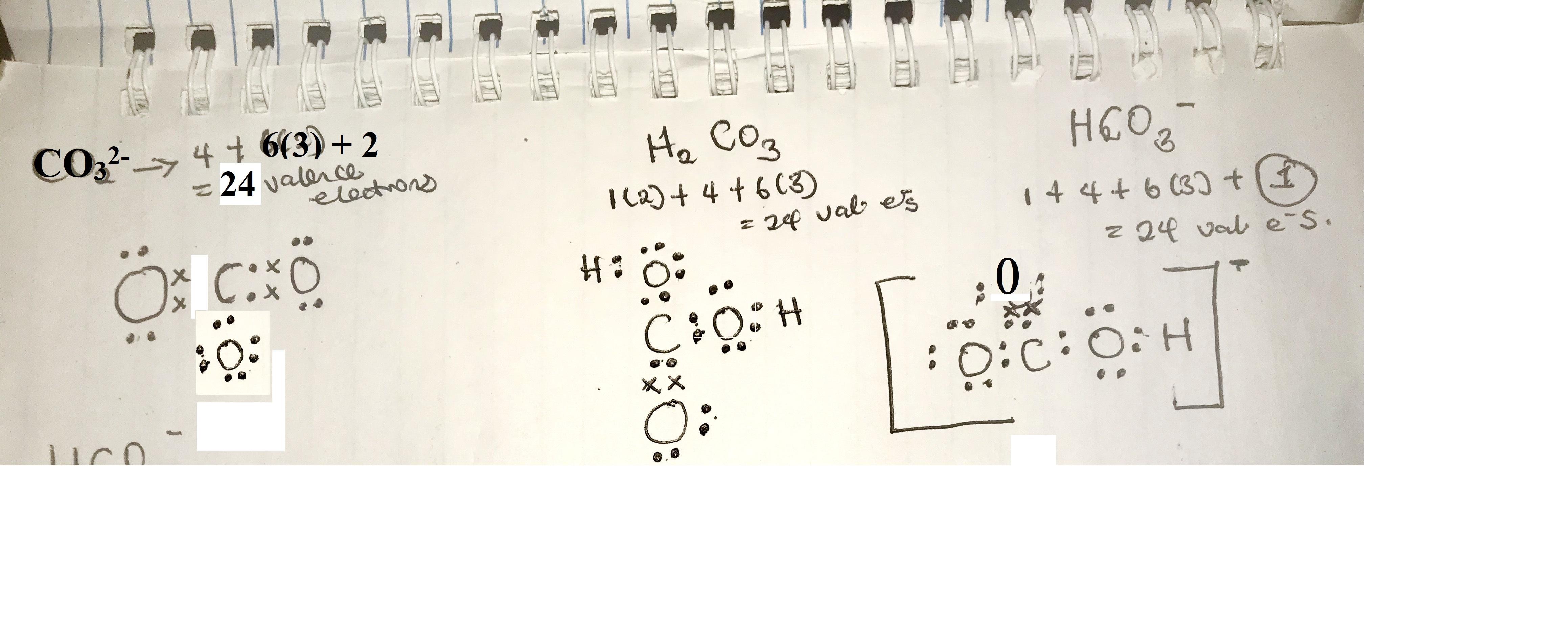
draw the lewis structure for CO2, H2CO3, HCO3-, and CO3 2-.Rank these in order of increasing attraction to water molecules. Expl
gavmur [86]

Answer:

The structures are attached in file.

Hydrogen bonding and intermolecular forces is the reason for ranks allotted.

Explanation:

In determining Lewis structure, we calculate the overall number of valence electrons available for bonding.  Making carbon (the least electronegative atom) the central atom in the structure, we allocate valence electrons until each atom has achieved stability.

In order of decreasing affinity to water molecules:

CO_{3}^{2-}  > HCO_{3} ^{2-} > H_{2} CO_{3}

This is due to the fact that the CO_{3}^{2-}will accept protons more readily than the bicarbonate ion, HCO_{3} ^{2-}. Carbonic acid, H_{2} CO_{3} will not accept any more protons, hence it is the least attractive to water molecule, even though soluble.

3 0
2 years ago
The decomposition of AB given here in this balanced equation 2AB (g)⟶ A2 (g) + B2 (g), has rate constants of 8.58 x 10⁻⁹ L/mol s
denis-greek [22]

Answer:

3.24 × 10^5 J/mol

Explanation:

The activation energy of this reaction can be calculated using the equation:

ln(k2/k1) = Ea/R x (1/T1 - 1/T2)

Where; Ea = the activation energy (J/mol)

R = the ideal gas constant = 8.3145 J/Kmol

T1 and T2 = absolute temperatures (K)

k1 and k2 = the reaction rate constants at respective temperature

First, we need to convert the temperatures in °C to K

T(K) = T(°C) + 273.15

T1 = 325°C + 273.15

T1 = 598.15K

T2 = 407°C + 273.15

T2 = 680.15K

Since, k1= 8.58 x 10⁻⁹ L/mol, k2= 2.16 x 10⁻⁵ L/mol, R= 8.3145 J/Kmol, we can now find Ea

ln(k2/k1) = Ea/R x (1/T1 - 1/T2)

ln(2.16 x 10⁻⁵/8.58 x 10-9) = Ea/8.3145 × (1/598.15 - 1/680.15)

ln(2517.4) = Ea/8.3145 × 2.01 × 10^-4

7.831 = Ea(2.417 × 10^-5)

Ea = 3.24 × 10^5 J/mol

8 0
2 years ago
BH+ClO4- is a salt formed from the base B (Kb = 1.00e-4) and perchloric acid. It dissociates into BH+, a weak acid, and ClO4-, w
Len [333]

Answer:

The pH of 0.1 M BH⁺ClO₄⁻ solution is <u>5.44</u>

Explanation:

Given: The base dissociation constant: K_{b} = 1 × 10⁻⁴, Concentration of salt: BH⁺ClO₄⁻ = 0.1 M

Also, water dissociation constant: K_{w} = 1 × 10⁻¹⁴

<em><u>The acid dissociation constant </u></em>(K_{a})<em><u> for the weak acid (BH⁺) can be calculated by the equation:</u></em>

K_{a}. K_{b} = K_{w}    

\Rightarrow K_{a} = \frac{K_{w}}{K_{b}}

\Rightarrow K_{a} = \frac{1\times 10^{-14}}{1\times 10^{-4}} = 1\times 10^{-10}

<em><u>Now, the acid dissociation reaction for the weak acid (BH⁺) and the initial concentration and concentration at equilibrium is given as:</u></em>

Reaction involved: BH⁺  +  H₂O  ⇌  B  +  H₃O+

Initial:                     0.1 M                    x         x            

Change:                   -x                      +x       +x

Equilibrium:           0.1 - x                    x         x

<u>The acid dissociation constant: </u>K_{a} = \frac{\left [B \right ] \left [H_{3}O^{+}\right ]}{\left [BH^{+} \right ]} = \frac{(x)(x)}{(0.1 - x)} = \frac{x^{2}}{0.1 - x}

\Rightarrow K_{a} = \frac{x^{2}}{0.1 - x}

\Rightarrow 1\times 10^{-10} = \frac{x^{2}}{0.1 - x}

As, x

\Rightarrow 0.1 - x = 0.1

\therefore 1\times 10^{-10} = \frac{x^{2}}{0.1 }

\Rightarrow x^{2} = (1\times 10^{-10})\times 0.1 = 1\times 10^{-11}

\Rightarrow x = \sqrt{1\times 10^{-11}} = 3.16 \times 10^{-6}

<u>Therefore, the concentration of hydrogen ion: x = 3.6 × 10⁻⁶ M</u>

Now, pH = - ㏒ [H⁺] = - ㏒ (3.6 × 10⁻⁶ M) = 5.44

<u>Therefore, the pH of 0.1 M BH⁺ClO₄⁻ solution is 5.44</u>

5 0
2 years ago
The molar concentration of a sugar solution in an open beaker has been determined to be 0.3M. Calculate the solute potential at
antoniya [11.8K]

Answer:

- 7.48

Explanation:

Given:

Concentration of the sugar solution, C = 0.3 M

Temperature, T = 27° C = 273 + 27 = 300 K

Now,

The solute potential is given as:

solute potential = - iCRT

where,

i is the number of particles the particular molecule will make in water

i = 1 for sugar

R is the universal gas constant = 0.0831 liter bar/mole-K

on substituting the respective values, we get

solute potential = - 1 × 0.3 × 0.0831 × 300

or

The solute potential = - 7.479 ≈ - 7.48

8 0
2 years ago
Other questions:
  • tekanan uap jenuh air murni pada suhu 20°C adalah 18 mmHg.apabila pada temperatur yang sama sebanyak 120 gram zat x dilarutkan d
    12·1 answer
  • Please Help Potassium sulfate has a solubility of 15g/100g water at 40 Celsius. A solution is prepared by adding 39.0g of potass
    10·1 answer
  • A compound is 2.00% H by mass, 32.7% S by mass, and 65.3% O by mass. What is its empirical formula? The second step is to calcul
    5·2 answers
  • Complete the chemical formula for each ionic compound. Consult the periodic table to help you answer the question. beryllium nit
    9·2 answers
  • Give an example of each of the following: (a) a monatomic cation, (b) a monatomic anion, (c) a polyatomic cation,(d) a polyatomi
    6·1 answer
  • A reaction produces a gas, which is collected in a glass cylinder. When a glowing splint is placed inside the container, it burn
    15·1 answer
  • Weak noncovalent interactions:__________ a. do not include ionic interactions b. always involve water. c. can have a large cumul
    13·1 answer
  • Observation: I am in the lab timing how long it takes to boil 100 mL of water in a beaker over a Bunsen burner. I observe it tak
    15·1 answer
  • Determine whether each description applies to electrophilic aromatic substitution or nucleophilic aromatic substitution.
    12·1 answer
  • What is the mass of a sample of metal that is heated from 58.8°C to 88.9°C with a
    12·1 answer
Add answer
Login
Not registered? Fast signup
Signup
Login Signup
Ask question!