answer.
Ask question
Login Signup
Ask question
All categories
  • English
  • Mathematics
  • Social Studies
  • Business
  • History
  • Health
  • Geography
  • Biology
  • Physics
  • Chemistry
  • Computers and Technology
  • Arts
  • World Languages
  • Spanish
  • French
  • German
  • Advanced Placement (AP)
  • SAT
  • Medicine
  • Law
  • Engineering
xeze [42]
2 years ago
3

How many mL of a 0.175 M FeCl3 solution are needed to make 250. mL of a solution that is 0.300 M in Cl- ion? Can ya'll explain h

ow to find the answer to this?

Chemistry
2 answers:
lukranit [14]2 years ago
5 0
 <span>FeCl3 ---> Fe3+ + 3Cl- 
AS
 1mol FeCl3 produces 3mol Cl- 
so
0.250LCl- * 0.300molCl-/1LCl- * 1molFeCl3/3molCl- * 1LFeCl3/0.175molFeCl3
 = 0.1428LFeCl3 =
 142.8mlFeCl3
hope it helps</span>
statuscvo [17]2 years ago
5 0

The volume of FeCl₃ needed to make 250 mL of 0.3 M in Cl⁻ ions was 142,857 ml

<h3><em>Further explanation</em></h3>

Dilution is the process of adding solvents (generally water) which aims to obtain a solution with a concentration that is smaller than the initial concentration of a more concentrated substance.

So the principle of dilution is to get a lower / dilute concentration.

At dilution the number of dissolved moles before and after dilution is the same

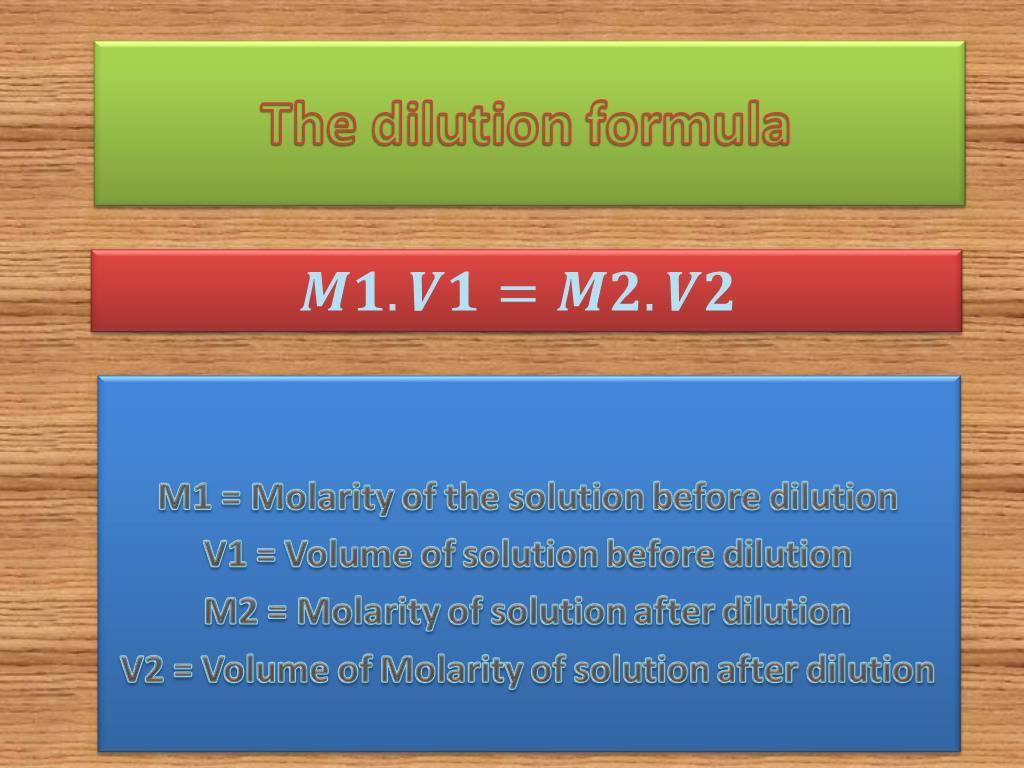
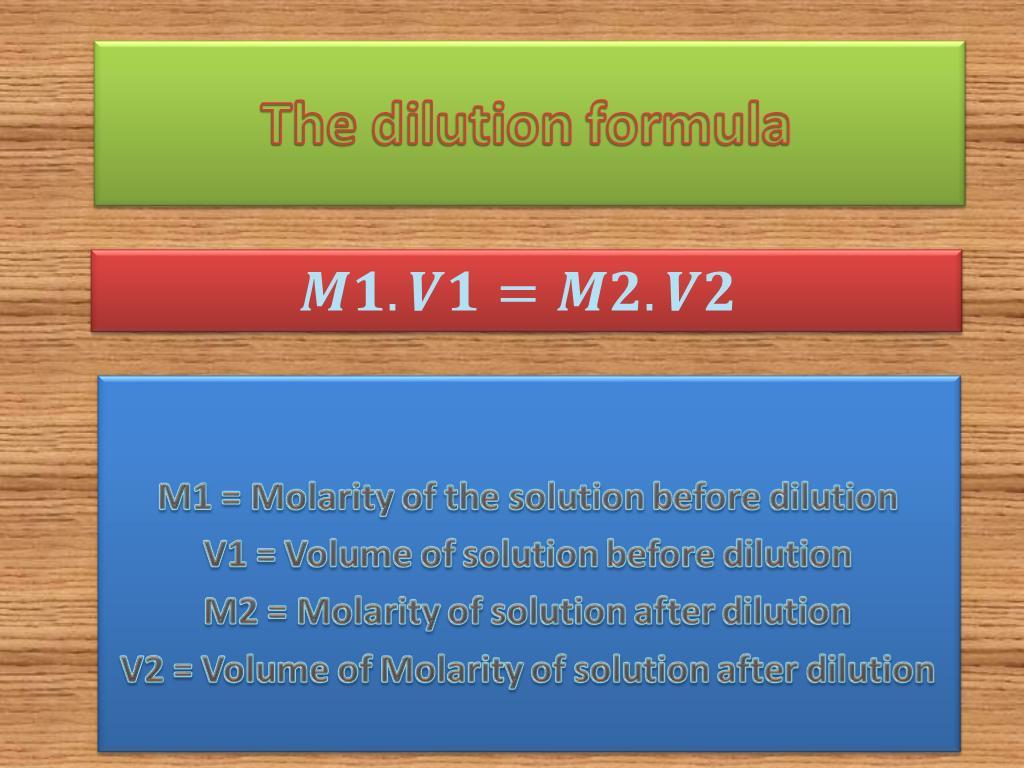
The dilution formula is as follows:

\large {\boxed {\bold{M_1 \: \times \: V_1 ~ = ~ M_2 \: \times \: V_2}}

M1 = Molarity of the solution before dilution

V1 = Volume of solution before dilution

M2 = Molarity of solution after dilution

V2 = Volume of Molarity of solution after dilution

Ionization reaction on FeCl₃

FeCl₃ -> Fe³⁺ + 3Cl⁻

For 0.175 M FeCl₃ there are 3.0,175 M Cl⁻ = 0.525 M Cl⁻

Because what is needed is a 250 ml 0.3 M Cl⁻ solution, then we use the dilution formula:

M1V1 = M2V2

0.525. V1 = 250. 0.3

V1 = 142,857 ml

<h3><em>Learn more</em></h3>

Moles of NaOH are present in 25.0 mL of a 0.1000 M NaOH solution

brainly.com/question/4283309

A 25.00 ml sample of h3po4 solution

brainly.com/question/9850829

hydrogen and excess oxygen

brainly.com/question/1405182

Keywords: Cl- ion, Molarity, FeCl3, solution
You might be interested in
An ideal gas contained in a piston which is compressed. The gas is insulated so that no heat flows into or out of it. 1) What ha
Goryan [66]

Answer:Temperature increases

Explanation: As the gas in the container is an ideal gas so it should follow the ideal gas equation, the equation of state.

We know ideal gas equation to be PV=nRT where

   P=pressure

   V=Volume

   T=Temperature

   R=Real gas constant

   n=Number of moles

since the gas is insulated such that no heat goes into or out of the system .

When we compress the ideal gas using a piston, Thermodynamically it means that work is done on the system by the surroundings.

Now as the ideal gas is been compressed so the volume of the gas would decrease and slowly a time will reach when no more gas can be compressed that is there cannot be any further decrease in volume of the gas.

From the equation PV=nRT

Once there is no further compression is possible hence volume becomes constant so pressure of the ideal gas becomes directly proportional to the temperature as n and R are constants. Also as the pressure and volume are inversely related so an decrease in volume would lead to an increase in pressure.

As the ideal  gas is compressed so the pressure of the gas would increase since the gas molecules have smaller volume available after compression hence the gas molecules would quite frequently have collisions with other gas molecules or piston and this collision would lead to increase in speed of the gas molecules and  so the pressure would increase .

The increase in pressure would lead to an increase in temperature as show by the above ideal gas equation because the pressure and temperature are directly related.

So here we can say that work done on the system by surroundings leads to increase in temperature of the system.

5 0
2 years ago
Which term names the metamorphic change to a rock that results mainly from the heat energy of nearby magma? A. local metamorphis
marshall27 [118]
The answer to this question would be: <span>thermal metamorphism
</span>
Metamorphism is a change in the mineral texture without causing the rock to become liquid/magma. In this case, the metamorphic change to the rock is caused by the heat energy or thermal energy of the magma. This kind of mechanism is also called contact mechanism as the thermal energy is transferred by contact so this question option is a bit ambiguous.
8 0
2 years ago
Read 2 more answers
A 0.1064 g sample of a pesticide was decomposed by the action of sodium biphenyl. The liberated Cl- was extracted with water and
Ilya [14]

Answer:

Percentage of an aldrin in the sample is 44.41%.

Explanation:

Cl^-+AgNO_3\rightarrow AgCl+NO_{3}^-

Molarity of the silver nitrate solution = 0.03337 M

Volume of the silver nitrate = 23.28 mL = 0.02328 L

Moles of silver nitrate = n

0.03337 M=\frac{n}{0.02328 L}

n = 0.03337 M\times 0.02328 L=0.0007768 mol

According to reaction 1 mole of silver nitrate recats with 1 moles of chloride ions.

Then 0.0007768 moles of silver nitrate will react with:

\frac{1}{1}\times 0.0007768 mol=0.0007768 mol chloride ions.

In one mole of aldrin there are 6  moles of chloride ions.

Then moles of aldrin containing 0.0007768 moles chloride ions are:

\frac{0.0007768 mol}{6}=0.0001295 mol

Moles of aldrin present in the sample = 0.0001295 mol

Mass of 0.0001295 moles of aldrin present in the sample :

0.0001295 mol × 364.92 g/mol =0.04726 g

Percentage of an aldrin in the sample:

\frac{0.04726 g}{0.1064 g}\times 100=44.41\%

8 0
2 years ago
Drinking water may contain a low concentration of lead ion (Pb2 ) due to corrosion of old lead pipes. The EPA has determined tha
Lynna [10]

Answer:

3.861x10⁻⁹ mol Pb⁺²

Explanation:

We can <u>define ppm as mg of Pb²⁺ per liter of water</u>.

We<u> calculate the mass of lead ion in 100 mL of water</u>:

  • 100.0 mL ⇒ 100.0 / 1000 = 0.100 L
  • 0.100 L * 0.0080 ppm = 8x10⁻⁴ mg Pb⁺²

Now we <u>convert mass of lead to moles</u>, using its molar mass:

  • 8x10⁻⁴ mg ⇒ 8x10⁻⁴ / 1000 = 8x10⁻⁷ g
  • 8x10⁻⁷ g Pb²⁺ ÷ 207.2 g/mol = 3.861x10⁻⁹ mol Pb⁺²
4 0
2 years ago
How many moles of koh are contained in 750. ml of 5.00 m koh solution?
Marat540 [252]
Molarity is one of  the method of expressing concentration of solution. Mathematically it is expressed as,
 Molarity = \frac{\text{number of moles of solute}}{\text{volume of solution (l)}}

Given: Molarity of solution = 5.00 M
Volume of solution = 750 ml = 0.750 l

∴ 5 = \frac{\text{number of moles}}{.750}
∴ number of moles = 3.75

Answer: Number of moles of KOH present in solution is 3.75.
4 0
2 years ago
Other questions:
  • How many moles of hydrogen gas are produced when 0.066 mole of sodium is completely reacted?
    14·2 answers
  • Which gas tank will empty first? acetylene (C2H2) oxygen (O2)
    13·2 answers
  • Write one scientific question about the organism in the photo
    8·2 answers
  • How can chemistry help you make wiser decisions and be a better consumer?
    6·1 answer
  • The lab procedure involves several factors, listed below. Some were variable and some were constant. Label each factor below V f
    8·2 answers
  • Write a balanced chemical equation for the reaction of copper(II) sulfate and concentrated ammonia to produce teramine copper(II
    5·1 answer
  • Thiamine (vitamin B1) deficiency diseases have a lower prevalence now than in the past. However, they are seen as beriberi in so
    12·1 answer
  • Calculate the pOH of a solution that contains 3.9 x 10⁻⁵ M H3O+ at 25°C.
    9·1 answer
  • A compound A (C22H27NO) is insoluble in acid and base but reacts with concentrated aqueous HCl and heat to give a clear aqueous
    9·1 answer
  • 1.00 g of a compound is combusted in oxygen and found to give 3.14g of CO2 and 1.29 g of H2O. From these data we can tell thatA.
    6·1 answer
Add answer
Login
Not registered? Fast signup
Signup
Login Signup
Ask question!