answer.
Ask question
Login Signup
Ask question
All categories
  • English
  • Mathematics
  • Social Studies
  • Business
  • History
  • Health
  • Geography
  • Biology
  • Physics
  • Chemistry
  • Computers and Technology
  • Arts
  • World Languages
  • Spanish
  • French
  • German
  • Advanced Placement (AP)
  • SAT
  • Medicine
  • Law
  • Engineering
Vikentia [17]
2 years ago
3

What keeps the electrons from leaving the atom in the thompson "raisin pudding" model of the atom?

Physics
2 answers:
grigory [225]2 years ago
6 0

E. the attractive force between the electrons and the nucleus

Anni [7]2 years ago
4 0

The electrons keep from leaving the atom in the Thompson "raisin pudding" model of the atom because

a. they are embedded in a spherical cloud of a positive charge.

<h3>Further explanation</h3>

John Dalton put forward the first theory about atoms which are particles that cannot be divided again

This is where research on atomic particles begins.

JJ Thomson conducted a cathode ray tube experiment

In this experiment, the cathode ray beam is deflected by a magnetic field. So it was concluded by JJ Thompson that the cathode ray has the same electric charge as the hydrogen atom in the electrolysis of water. And these negatively charged cathode ray particles are the basic particles that must be present in every atom

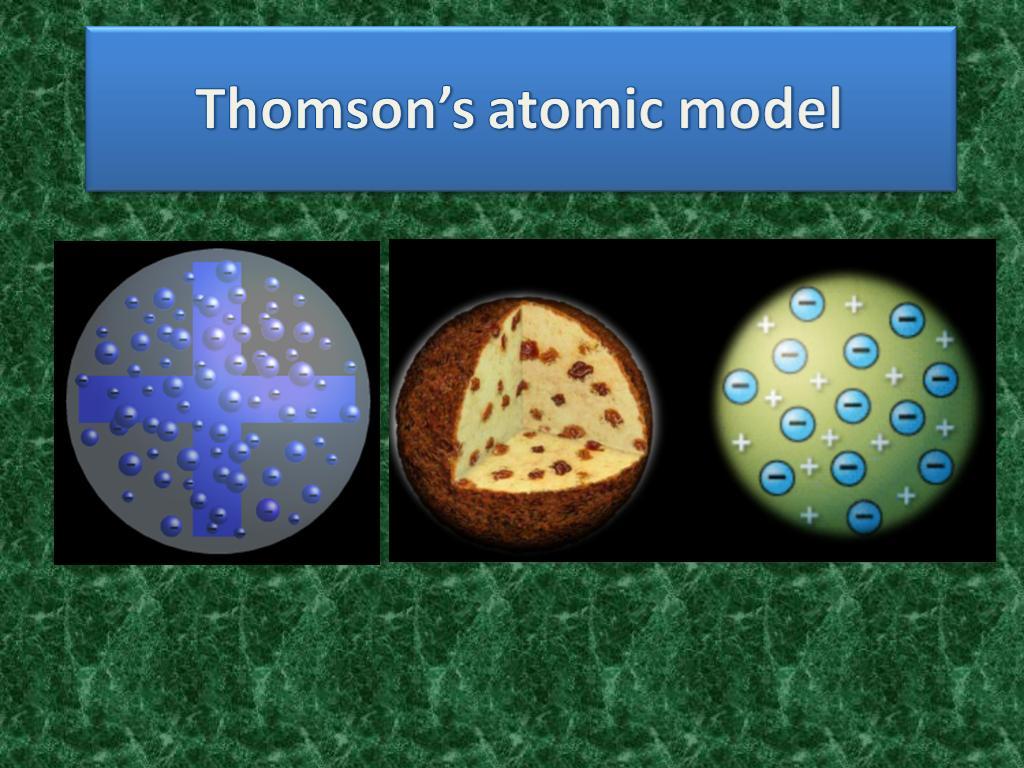
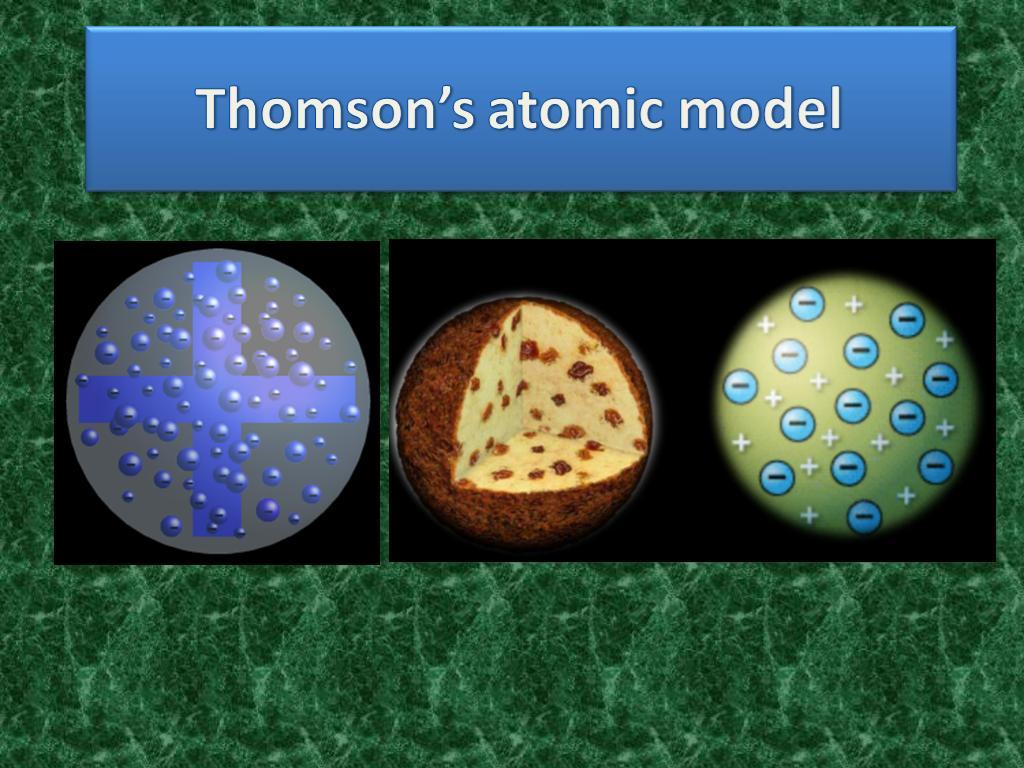
So JJ Thompson proposes an atomic model such as raisin bread or better known as JJ Thompson's raisin pudding model of the atom

JJ Thompson estimates that the atom consists of a cloud of negative charges in a sphere of positive charges

Atoms have neutral charges because positive and negative charges have the same amount

This atomic model can also be likened to a watermelon where the red edible part of a watermelon is part of a positive charge and black seeds filling the watermelon is a negative charge

Also described as a pudding because the model looks like dry fruits embedded in a sphere of positive charge

The existence of the nucleus in the next atom was discovered by Rutherford through experiments with firing alpha rays on a thin gold plate (gold foil)

And followed by the Bohr atomic model, which states that electrons circulate the nucleus on a particular path, so that electrons are not attracted to the nucleus

<h3>Learn more</h3>

Bohr's model of the atom

brainly.com/question/1625635

Bohr's and Rutherford's model of the atom

brainly.com/question/2965079

Rutherford performed the gold foil experiment

brainly.com/question/1859083

Keywords: "raisin pudding" model of the atom, the gold foil experiment, a watermelon, cathode ray
You might be interested in
Tyler stands at rest on a skateboard. He has a mass of 120 kg. His friend (m = 60 kg) jumps into his arms at a speed of 2 m/s. I
Andrews [41]
Momentum question. This is an inelastic collision, so 

m1v1+m2v2=Vf(m1+m2)
Vf=(m1v1+m2v2)/(m1+m2)=[(120kg)(0m/s)+(60kg)(2m/s)] / (120kg+60kg)
Vf=120kg m/s  /   180kg
Vf=0.67m/s

0.67m/s
5 0
2 years ago
B) Explain the method of preparing electromagnet. How do you test the
kap26 [50]

Answer:

An electromagnet is made by forming a coil around a soft iron bar (known here as the metal) such as a nail or  screw and connect with an insulated copper wire (known here as the electric current conductor) the ends of the wound copper is then connected separately to the positive and negative terminals of a battery (known here as the source of electric current)

The north seeking needle of the magnetic compass will move away when brought close to the north pole of the formed electromagnet which can then be labelled N

The magnetic compass needle will be attracted to the south pole of the electromagnet which can then be labelled S

Explanation:

An electromagnet is an electric powered magnet that is formed (temporarily) by the perpendicular movement of electric current with respect to a metal core

The magnitude and the poles of an electromagnet can be changed by changing the magnitude and the direction of flow of the electric current respectively.

5 0
2 years ago
The minute hand of a wall clock measures 16 cm from its tip to the axis about which it rotates. The magnitude and angle of the d
olya-2409 [2.1K]

Answer:

Explanation:

Given

Minute hand length =16 cm

Time at a quarter after the hour to half past i.e. 1 hr 45 min

Angle covered by minute hand in 1 hr is 360 and in 45 minutes 270

|r|=\frac{3\times 2\pi r}{4}=75.408 cm

Angle =270^{\circ}

(c)For the next half hour

Effectively it has covered 2 revolution and a quarter

|r|=\frac{2\pi r}{4}=25.136 cm

angle turned =90^{\circ}

(f)Hour after that

After an hour it again comes back to its original position thus displacement is same =25.136

Angle turned will also be same i.e. 90 ^{\circ}

7 0
2 years ago
A 50-n crate sits on a horizontal floor where the coefficient of static friction between the crate and the floor is 0.50 . A 20-
andreyandreev [35.5K]

The resultant static friction force is equal to 20 N to the left.

Why?

I'm assuming that you forgot to write the question of the exercise, so,  I will try to complete it:

"A 50-n crate sits on a horizontal floor where the coefficient of static friction between the crate and the floor is 0.50 . A 20-n force is applied to the crate acting to the right. What is the resulting static friction force acting on the crate?"

So, if we are going to calculate the resulting static friction force, it means that there is no movement, we must remember that the friction coefficient will give us the maximum force before the crate starts to move.

We can calculate the static friction force by using the following formula:

Fr=F(appliedforce)

Since the crate is not moving (static), the static friction force acting on the crate will be equal to the applied force.

Calculating we have:

Fr=F(appliedforce)

Fr=20N

Hence, the static friction force is equal to 20 N to the left (since the applied force is acting to the right)

So,

FrictionForce=AppliedForce

Since the static friction force is equal to the applied force, the crate does not start to move.

Have a nice day!

8 0
2 years ago
Under the Big Top elephant, Ella (2500 kg), is attracted to Phant, the 3,000 kg
Vladimir [108]

Under the Big Top elephant, Ella (2500 kg), is attracted to Phant, the 3,000 kg elephant. They are separated by 8

4 0
2 years ago
Other questions:
  • A motorcycle accelerates from 10. m/s to 25 m/s in 5.0 seconds. What is the average acceleration of the bike?
    10·2 answers
  • When you come within 100 ft of the uncontrolled railroad crossing and you cannot see the tracks for 400 ft in both directions, t
    8·1 answer
  • An object at rest is suddenly broken apart into two fragments by an explosion one fragment acquires twice the kinetic energy of
    14·1 answer
  • Describe the energy transformations that occur from the time a skydiver jumps out of a plane until landing on the ground.
    13·2 answers
  • Assume that the cart is free to roll without friction and that the coefficient of static friction between the block and the cart
    15·2 answers
  • A beam of unpolarized light shines on a stack of five ideal polarizers, set up so that the angles between the polarization axes
    12·1 answer
  • 3. A 75kg man sits at one end of a uniform seesaw pivoted at its center, and his 24kg son sits at the
    11·1 answer
  • A thug pushes some 100 kg punk with 300 N of force. How much is the punk accelerated?
    6·1 answer
  • The diagram shows a heater above a thermometer. The thermometer bulb is in the position shown. Which row shows how the heat ener
    8·1 answer
  • A policeman kicks in a door with a force of 4500 N. What force does the door apply to the policeman’s leg?
    5·1 answer
Add answer
Login
Not registered? Fast signup
Signup
Login Signup
Ask question!
