answer.
Ask question
Login Signup
Ask question
All categories
  • English
  • Mathematics
  • Social Studies
  • Business
  • History
  • Health
  • Geography
  • Biology
  • Physics
  • Chemistry
  • Computers and Technology
  • Arts
  • World Languages
  • Spanish
  • French
  • German
  • Advanced Placement (AP)
  • SAT
  • Medicine
  • Law
  • Engineering
Marrrta [24]
2 years ago
5

Identify which trends in the diagrams below describe atomic radius, ionization energy, electron affinity, and electronegativity.

Chemistry
1 answer:
mihalych1998 [28]2 years ago
8 0

a)  figure describe ionization energy , electron affinity & electron negativity

b) figure describe Atomic Radius

c) does represent anything

Electronegativity : An atom attracted the bond pair of electrons in a covalent bond is called electronegativity of an element.       H-->Cl

Ionization energy : The amount of energy is required to remove of an electron from an isolated gas atom is called Ionization energy.   M + IP-----> M+ + e-

Electron affinity: The amount of enery is released when an electron added to an isolated atom is called electron affinity.

   X + e- ------> X- =- EA

Atomic radius ; The distance between the center of neuclies and outer most shell is called atomic radius.

You might be interested in
A line in the Brackett series of hydrogen has a wavelength of 1945 nm. From what state did the electron originate?
fiasKO [112]
Rydberg Eqn is given as:
 1/λ = R [1/n1^2 - 1/n2^2] 
<span>Where λ is the wavelength of the light; 2626 nm = 2.626×10^-6 m </span>
<span>R is the Rydberg constant: R = 1.09737×10^7 m-1 </span>
<span>From Brackett series n1 = 4 </span>
<span>Hence 1/(2.626×10^-6 ) = 1.09737× 10^7 [1/4^2 – 1/n2^2] </span>
<span>Some rearranging and collecting up terms: </span>
<span>1 = (2.626×10^-6)×(1.09737× 10^7)[1/16 -1/n2^2] </span>
<span>1= 28.82[1/16 – 1/n2^2] </span>
<span>28.82/n^2 = 1.8011 – 1 = 0.8011 </span>
<span>n^2 = 28.82/0.8011 = 35.98 </span>
<span>n = √(35.98) = 6</span>
4 0
2 years ago
Read 2 more answers
A 103.8g sample of nitric acid solution that is 70.0% HNO3 contains by mass
soldi70 [24.7K]
w/w percentage <span>
               = mass of the pure compound / total mass of the sample x 100%

70% HNO₃ contains by mass means every 100 g of sample has 70 g of HNO₃.</span><span>

The mass of solution = 103.8 g
Hence the mass of HNO₃ = 103.8 g x 70%</span><span>
                                         = 103.8 g x (70 / 100)
<span>                                         = 72.66 g = 72.7 g.</span></span>
3 0
2 years ago
mixture or pure substance: 1.blood 2.dyes 3.self-raising flour 4.muesli 5.copper wire 6.distilled water 7.table salt 8.milk 9.br
jenyasd209 [6]

Answer: Mixture: Blood , Self raising flour,muesli ,dyes, milk, tea, air, bronze

Pure substance: Copper wire, distilled water, table salt, oxygen.

Explanation:

Mixture is a substance which is made up two or more number of compounds which chemically inactive and retain their distinct chemical properties.

Blood , Self raising flour,muesli ,dyes, milk, tea, air, bronze

Pure substance is defined as anything with uniform and unchanging composition is known s pure substance.

Copper wire, distilled water, table salt, oxygen.

5 0
2 years ago
How many grams o an ointment base must be added to 45 g o clobetasol (T EMOVAT E) ointment, 0.05% w/w, to change its strength to
saw5 [17]

Answer:

Drug calculation

If we have 45g of clobetasol  = 0.05%w/w

Then what mass in g of clobetasol is in 0.03%w/w = 45 x 0.03/0.05 =27g

It means that 27g of clobetasol must be added to change the drug strength to 0.03% w/w

3 0
2 years ago
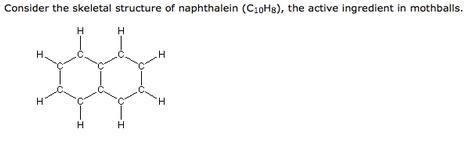
Consider the skeletal structure of naphthalein (C10H8), the active ingredient in mothballs. How many double bonds must be added
Greeley [361]

Answer:

four (4)

Explanation:

Naphthalein is an organic compound with formula C 10H 8. It is the simplest polycyclic aromatic hydrocarbon, and is a white crystalline solid with a characteristic odor that is detectable at concentrations as low as 0.08 ppm by mass. As an aromatic hydrocarbon, naphthalene's structure consists of a fused pair of benzene rings. It is best known as the main ingredient of traditional mothballs.

The molecule is planar, like benzene. Unlike benzene, the carbon–carbon bonds in naphthalene are not of the same length. The bonds C1−C2, C3−C4, C5−C6 and C7−C8 are about 1.37 Å (137 pm) in length, whereas the other carbon–carbon bonds are about 1.42 Å (142 pm) long. This difference, established by X-ray diffraction is consistent with the valence bond model in naphthalene and in particular, with the theorem of cross-conjugation. This theorem would describe naphthalene as an aromatic benzene unit bonded to a diene but not extensively conjugated to it (at least in the ground state), which is consistent with two of its three resonance structures.

Because of this resonance, the molecule has bilateral symmetry across the plane of the shared carbon pair, as well as across the plane that bisects bonds C2-C3 and C6-C7, and across the plane of the carbon atoms. Thus there are two sets of equivalent hydrogen atoms: the alpha positions, numbered 1, 4, 5, and 8, and the beta positions, 2, 3, 6, and 7. Two isomers are then possible for mono-substituted naphthalenes, corresponding to substitution at an alpha or beta position. Bicyclo[6.2.0]decapentaene is a structural isomer with a fused 4–8 ring system.

Therefore four (4) double bonds will be added to give each carbon atom an octet structure.

8 0
2 years ago
Other questions:
  • You are on a field trip to a nearby lake for biology class and want to perform a quick analysis of the water’s approximate pH le
    6·2 answers
  • How many molecules are in 13.5g of sulfur dioxide, SO2?
    6·2 answers
  • A 0.5 mol sample of he(g) of ne(g) are placed separately in two 10.0 l rigid containers at 25°c. each container has a pinhole op
    6·1 answer
  • Six moles of an ideal gas are in a cylinder fitted at one end with a movable piston. the initial temperature of the gas is 27.0c
    7·1 answer
  • If 8.00 g NH4NO3 is dissolved in 1000 g of water, the water decreases in temperature from 21.00 degrees Celsius to 20.39 degrees
    7·1 answer
  • How many moles of ions are in 1.45 mol of K2SO4 ?
    7·1 answer
  • According to the equation below, how many moles of Ca(OH)2 are required to react with 1.36 mol H3PO4 to produce Ca3(PO4)2? 3Ca(O
    10·1 answer
  • What is the lewis structure for C2H3OH?
    10·1 answer
  • The elements chlorine and iodine have similar chemical properties because they _____. Group of answer choices have the same numb
    7·1 answer
  • What is the mass of a sample of metal that is heated from 58.8°C to 88.9°C with a
    12·1 answer
Add answer
Login
Not registered? Fast signup
Signup
Login Signup
Ask question!