answer.
Ask question
Login Signup
Ask question
All categories
  • English
  • Mathematics
  • Social Studies
  • Business
  • History
  • Health
  • Geography
  • Biology
  • Physics
  • Chemistry
  • Computers and Technology
  • Arts
  • World Languages
  • Spanish
  • French
  • German
  • Advanced Placement (AP)
  • SAT
  • Medicine
  • Law
  • Engineering
s344n2d4d5 [400]
2 years ago
13

A patient is receiving 3000 mL/day of a solution that con-

Chemistry
1 answer:
frutty [35]2 years ago
5 0

Answer:

600 kCal/ day

Explanation:

You can solve this type of problems using proportions, with the rule of three.

Follow these steps:

1. Analyze the giving data

2. Organize it

3.Write the proportions  

4. Clear the value you are looking for

5. Solve the equations by multiplying or dividing

Now for the exercise:

You have the following data:

3000 mL Solution per 1 day ----> 3000 mL S

The concentration of the solution is  

5 g of dextrose per 100 mL  Solution ----> 5g D - 100 mL S

The glucose provides some specific energy

4 kCal per 1 g of dextrose ----> 4kCal - 1 g D

First find the total grams of  dextrose (glucose) given in one day.

3000 mL S - x g D?

 100 mL S - 5 g D

The grams of glucose given in one day

xg D? = 3000 mL S(5 g D)/100 mL S  

you also can cancel the units mL S

xg D? = 150 g D.

Answer: The grams given in one day of glucose are 150 g /day

Now find the total Energy in those grams:

4 kCal -      1 g D

x kCal?-150 g D

Clear x kCal?

x kCal? = 4kCal (150g D)/(1g D)

x kCal? = 600 kCal  remember is for one day!

so the answer is

The patient is receiving 600 kCal/day

You might be interested in
an element x has two naturally occurring isotopes: X-79 (abundance+50.69%, mass +78.918amu) and X-81 (abundance+49.31% mass+80.9
Lana71 [14]
The answer would be B. Brimone. I had the same question before, but let me know if it is not right. Cause certain schools have the same questions but different answers for them.
6 0
2 years ago
How many milliliters of 0.200 M NH4OH are needed to react with 12.0 mL of 0.550 M FeCl3?
trapecia [35]

Answer:

9.9 ml of 0.200M NH₄OH(aq)

Explanation:

3NH₄OH(Iaq) + FeCl₃(aq) => NH₄Cl(aq) + Fe(OH)₃(s)

?ml of 0.200M NH₄OH(aq) reacts completely with  12ml of 0.550M FeCl₃(aq)

1 x Molarity NH₄OH x Volume Am-OH Solution(L) = 2 x Molarity FeCl₃ x Volume FeCl₃ Solution

1(0.200M)(Vol Am-OH Soln) = 3(0.550M)(0.012L)

=> Vol Am-OH Soln = 3(0.550M)(0.012L)/1(0.200M) = 0.0099 Liter = 9.9 milliliters  

5 0
2 years ago
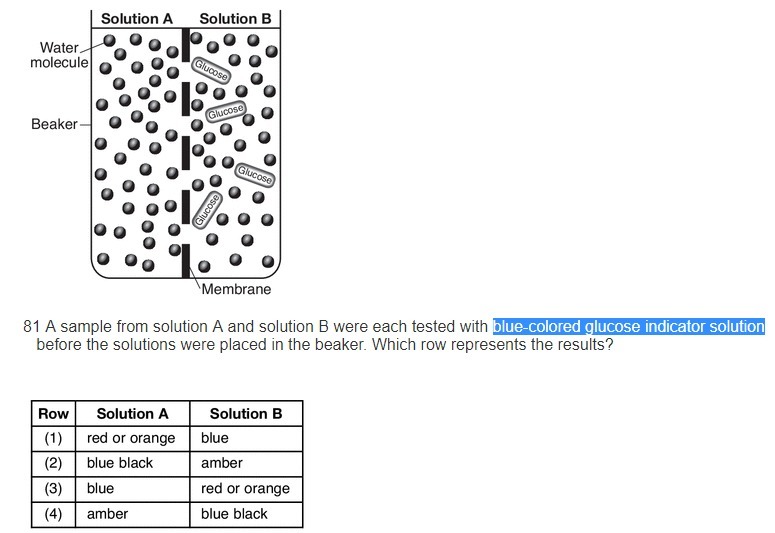
A sample from solution a and solution b were each tested with blue colored glucose indicator solution before the solutions were
vova2212 [387]
With the given problem you gave here, I can't answer the question because I need more details. Luckily, I found a similar problem that's provided with a diagram and a table shown in the attached picture.

This test is called the Benedict's test which is used as test for presence of sugars. If the solution contains sugar, like glucose, the solution would turn from blue to red. If not, it would stay blue. <em>Therefore, the correct results would be that in row 3.</em>

3 0
2 years ago
Suppose you wanted to make a buffer of exactly ph 7.00 using kh2po4 and na2hpo4. if the final solution was 0.10 m in kh2po4, wha
OleMash [197]

Answer:- 0.138 M

Solution:- The buffer pH is calculated using Handerson equation:

pH=pKa+log(\frac{base}{acid})

KH_2PO_4 acts as a weak acid and Na_2HPO_4 as a base which is pretty conjugate base of the weak acid we have.

The acid hase two protons(hydrogen) where as the base has only one proton. So, we could write the equation as:

H_2PO_4^-\rightleftharpoons H^++HPO_4^-^2

Phosphoric acid gives protons in three steps. So, the above equation is the second step as the acid has only two protons and the base has one proton.

So, we will use the second pKa value. The acid concentration is given as 0.10 M and we are asked to calculate the concentration of the base to make a buffer of exactly pH 7.00.

Let's plug in the values in the equation:

7.00=6.86+log(\frac{base}{0.10})

7.00-6.86=log(\frac{base}{0.10})

0.14=log(\frac{base}{0.10})

Taking antilog:

10^0^.^1^4=\frac{base}{0.10}

1.38=\frac{base}{0.10}

On cross multiply:

[base] = 1.38(0.10)

[base] = 0.138

So, the concentration of the base that is Na_2HPO_4 required to make the buffer is 0.138M.

5 0
2 years ago
Element stand in columns aligned by their
Maru [420]
Groups is the answer
7 0
2 years ago
Other questions:
  • Identify the functional groups attached to the benzene ring as either, being electron withdrawing, electron donating, or neither
    5·1 answer
  • What is the empirical formula of a compound containing 90 grams carbon, 11 grams hydrogen, and 35 grams nitrogen? A. C3H4N B. C2
    6·1 answer
  • The name "penicillin" is used for several closely-related antibiotics. A 1.2177 g sample of one of these compounds is burned, pr
    12·1 answer
  • A 1.803 g sample of gypsum, a hydrated salt of calcium sulfate, CaSO4 is heated at a temperature greater than 170 degree Celsius
    10·1 answer
  • Given the initial rate data for the reaction A + B –––&gt; C, determine the rate expression for the reaction.
    15·2 answers
  • At 298 K and 1 atm, bromine is a liquid with a high vapor pressure, whereas chlorine is a gas. This provides evidence that, unde
    13·1 answer
  • Which is an issue that governments must consider before passing conservation policies? urbanization implications cost to impleme
    12·2 answers
  • Trimix is a general name for a type of gas blend used by technical divers and contains nitrogen, oxygen and helium. In one Trimi
    6·1 answer
  • A glass cup of orange juice is found to have pOH of 11.40. Calculate the concentration of the hydrogen ions in the juice.​
    15·1 answer
  • When aqueous solutions of AgNO3 and KI are mixed, AgI precipitates. The balanced net ionic equation is ________. When aqueous so
    6·1 answer
Add answer
Login
Not registered? Fast signup
Signup
Login Signup
Ask question!