answer.
Ask question
Login Signup
Ask question
All categories
  • English
  • Mathematics
  • Social Studies
  • Business
  • History
  • Health
  • Geography
  • Biology
  • Physics
  • Chemistry
  • Computers and Technology
  • Arts
  • World Languages
  • Spanish
  • French
  • German
  • Advanced Placement (AP)
  • SAT
  • Medicine
  • Law
  • Engineering
sammy [17]
2 years ago
12

A speeding motorist traveling 120 km/h passes a stationary police officer. The officer immediately begins pursuit at a constant

acceleration of 10.8

Physics
2 answers:
Lelu [443]2 years ago
8 0
120 km/h = 33.33 m/s   10.8 km/h/s = 3 m/s/s     the motorist will cover a distance of 33.33 m x T(seconds)   the police officer will cover a distance of 1/2 (3) T^2   they will be at the same point when   33.33T = 1.5 T^2   33.33 = 1.5 T   3T = 66.66   T = 22.22 seconds   it will take the officer 22.22 seconds to catch the motorist.     the officer will be moving V=AT = 3m/s x 22.22 seconds = 66.66 m/s   almost 240 km/h (239.976 km/h)
VikaD [51]2 years ago
4 0

a. It will take 24.6 s for the police officer to reach the speeder

b. The police speed will be 66.42 m / s at this time

<h3>Further explanation</h3>

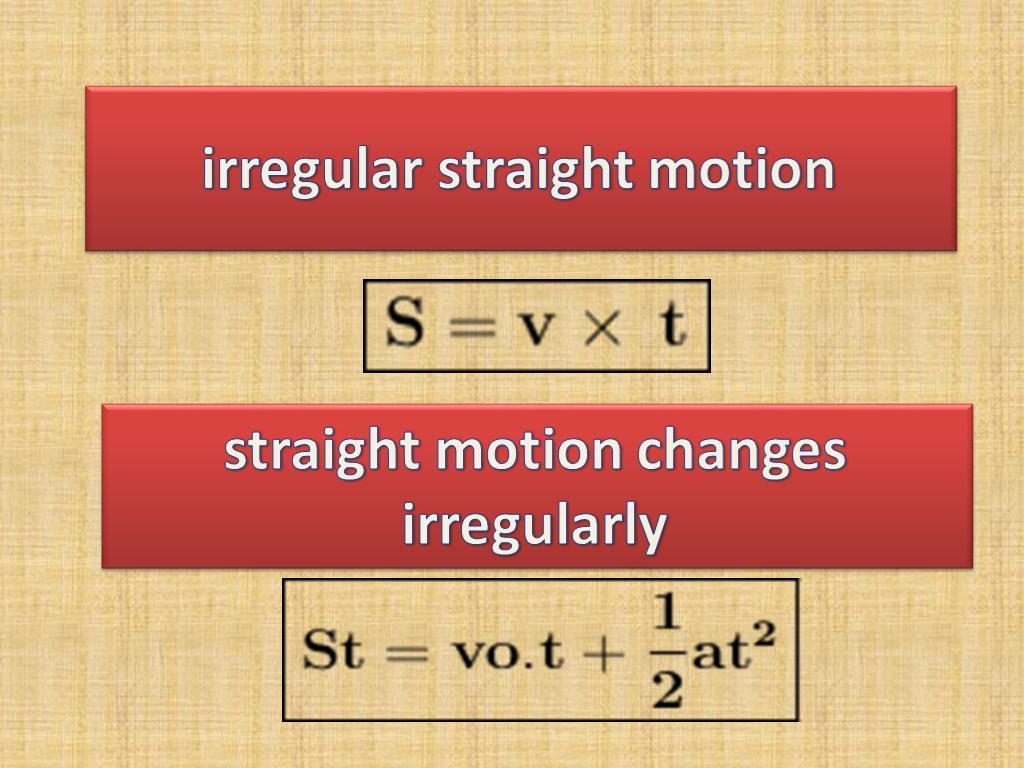
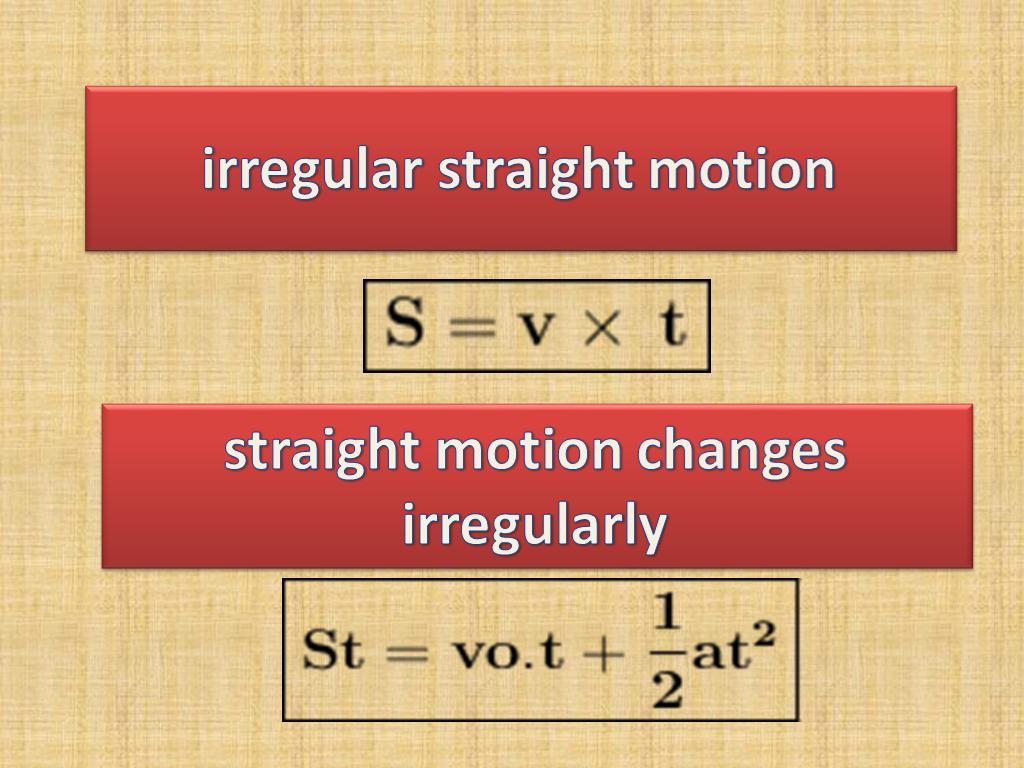
Regular straight motion is the motion of objects on a straight track that has a fixed speed

Formula used

\large{\boxed{\bold{S=v\times\:t}}}

S = distance = m

v = speed = m / s

t = time = seconds

Straight motion changes regularly are the straight motion of objects that have a fixed acceleration

Formula used

\large{\boxed{\bold{St=vot+\frac{1}{2}at^2}}}

V = vo + at

Vt² = vo² + 2as

St = distance on t

vo = initial speed

vt = speed on t

a = acceleration

The full version of the question might be like this:

A speeding motorist traveling 120 km / h passes a stationary police officer. The officer immediately begins pursuit at a constant acceleration of 10.8 km / h / s (note the mixed units).

(a) How much time will it take for the police officer to reach the speeder, assuming that the speeder maintains a constant speed?

(b) How fast will the police officer be traveling at this time?

A speeding motorist traveling 120 km/h (fixed speed) shows irregular straight motion

Whereas The officer immediately begins pursuit at a constant acceleration of 10.8 km/h/s showing that straight motion changes irregularly

So that the officer can catch A speeding motorist, the distance achieved by both of them is the same and also with the same time

  • 1. the distance achieved by the speeding motorist

v = 120 km / h = 33.3 m / s

S1 = v. t

S1 = 33.3t

  • 2. the distance reached by the officer

vo = 0

a = 10 km / h / s = 2.7 m / s²

S2 = vot + 1/2 at²

S2 = 0 + 1/2 .2.7t²

S2 = 1.35t²

  • a. The distance traveled when the two meets are the same, so the time of both can be determined

S1 = S2

33.3t = 1.35t²

t = 24.6 s

  • b. The officer speed

Vt = vo + at

Vt = 0 + 2.7.24.6

Vt = 66.42 m / s

<h3>Learn more</h3>

The distance of the elevator

brainly.com/question/8729508

resultant velocity

brainly.com/question/4945130

the average velocity

brainly.com/question/5248528

Keywords: the officer, a speeding motorist

, fixed acceleration, fixed speed
You might be interested in
A book rests on the shelf of a bookcase. The reaction force to the force of gravity acting on the book is 1. The force of the sh
Hoochie [10]

Answer:

1. The force of the shelf holding the book up.

Explanation:

The free body diagram of the book is as follows:

1 - The weight of the book towards downwards

2 - The normal force that the shelf exerts on the book towards upwards.

Since the book is at rest, these two forces are equal to each other and according to Newton's Third Law the reaction force to the force of gravity is equal but opposite to the weight of the book. This reaction force is the one that holds the book up on the shelf.

6 0
2 years ago
Read 2 more answers
A boy drags a suitcase along the ground with a force of 100 N. If the frictional force opposing the motion of the suitcase is 50
stira [4]
Fortunately, 'force' is a vector.  So if you know the strength and direction
of each force, you can easily addum up and find the 'resultant' (net) force.

When we talk in vectors, one newton forward is the negative of
one newton backward.   Hold that thought, while I slog through
the complete solution of the problem.


            (100 N forward) plus (50 N backward)

        =  (100 N forward) minus (50 N forward)

        =           50 N forward .

That's it.
Is there any part of the solution that's not clear ?

4 0
2 years ago
A small light cylinder and a large heavy cylinder are released at the same time and roll down a ramp without slipping. Which one
forsale [732]

Answer:

C. Both reach the bottom at the same time.

Explanation:

For a rolling object down an inclined plane , the acceleration is given below

a = g sinθ / (1 + k² / r² )

θ is angle of inclination , k is radius of gyration , r is radius of the cylinder

For cylindrical object

k² / r² = 1/2

acceleration =  g sinθ  /( 1 + 1/2 )

= 2 g sinθ / 3  

Since it does not depend upon either mass or radius , acceleration of both the cylinder will be equal . Hence they will reach the bottom simultaneously.

6 0
2 years ago
A child pushes her toy across a level floor at a steady velocity of 0.50 m/s using an applied force of 2.0 N. If the weight of t
choli [55]
Since toy is moving at constant speed that means that force that child is applying on toy is equal to force of friction.

Rate of speed that toy is moving is irelevant.

childs force is:
Fc = 2N
Fc = Ff  (Ff -friction force)

Ff = a*Q

where Q is weight of the toy and a is friction

if we express a we get
a = F/Q = 2/8 = 0.25
8 0
2 years ago
Read 2 more answers
Platinum has a density of 21.4 g/cm3. if thieves were to steal platinum from a bank using a small truck with a maximum payload o
slega [8]
We will convert the 1dm3 in terms of cm3 as follows:

1dm^3 = (10 cm)^3
= 1000 cm^3

The mass of platinum is equal to 900 lb. 
Then we will convert the mass in terms of grams as follows:
1 lb = 453.6 g
900 = 900 x 453.6 g
= 408240 g

Then density of platinum is equal to 21.4 g/cm^3 
We will calculate the volume of platinum in mass 408240 g as follows:
Volume of platinum = mass of platinum / density of platinum
= 408240 g / 21.4 g/cm^3 
= 19076.6 cm^3  

The total volume of platinum is 19076.6 cm^3
The volume of platinum in 1 L bar is 1000cm^3
So, to calculate the number of bars we will use the formula as follows;
Number of bars = volume of platinum available / volume of platinum required in 1 L bar
= 19076.6 cm^3 / 1000 cm^3
= 19
So, the number of bars are 19.
4 0
2 years ago
Other questions:
  • The cluster of decisions that managers make to assist the organization to achieve its goals is known as:
    7·1 answer
  • Which statement about electrons and atomic orbitals is NOT true?
    5·2 answers
  • A cue ball has a mass of 0.5 kg. During a game of pool, the cue ball is struck and now has a velocity of 3 . When it strikes a s
    13·2 answers
  • The heater element of a particular 120-V toaster is a 8.9-m length of nichrome wire, whose diameter is 0.86 mm. The resistivity
    5·1 answer
  • A 55-kg box is being pushed a distance of 7.0 m across the floor by a force whose magnitude is 160 N. The force is parallel to t
    9·1 answer
  • A car traveling at 70 mph70 mph down the interstate collides with a bug trying to cross the highway. Which of the following stat
    9·1 answer
  • A small ball is attached to the lower end of a 0.800-m-long string, and the other end of the string is tied to a horizontal rod.
    12·1 answer
  • Scotesia swims from the north end to the south end of a 50.0 m pool in 20.0 s. As she begins to make the return trip , Sean, who
    5·1 answer
  • Apollo 14 astronaut Alan B. Shepard Jr. used an improvised six-iron to strike two golf balls while on the Fra Mauro region of th
    7·1 answer
  • A construction worker accidentally drops a brick from a high scaffold. a. What is the brick's velocity after 4.0 s? b. How far d
    15·1 answer
Add answer
Login
Not registered? Fast signup
Signup
Login Signup
Ask question!