answer.
Ask question
Login Signup
Ask question
All categories
  • English
  • Mathematics
  • Social Studies
  • Business
  • History
  • Health
  • Geography
  • Biology
  • Physics
  • Chemistry
  • Computers and Technology
  • Arts
  • World Languages
  • Spanish
  • French
  • German
  • Advanced Placement (AP)
  • SAT
  • Medicine
  • Law
  • Engineering
ivolga24 [154]
2 years ago
4

Which measurement below represents the heaviest mass? which measurement below represents the heaviest mass? 1 mg 1 kg 1 pg 1 mg

1 dg?
Chemistry
1 answer:
frutty [35]2 years ago
5 0

Answer:

            1 Kg

Explanation:

Let us convert all given masses into Kg and compare it with 1 Kg.

1) 1 mg;

                   1 mg  =  1.0 × 10⁻⁶ Kg

Hence it is far more lighter than 1 Kg.

2) 1 pg;

                   1 pg  =  1.0 × 10⁻¹⁵ Kg

Hence it is also far more lighter than 1 Kg.

3) 1 dg;

                   1 dg  =  1.0 × 10⁻⁴ Kg

Hence it is also far more lighter than 1 Kg.

You might be interested in
Enter the net ionic equation representing solid chromium (iii) hydroxide reacting with nitrous acid. express your answer as a ba
Colt1911 [192]

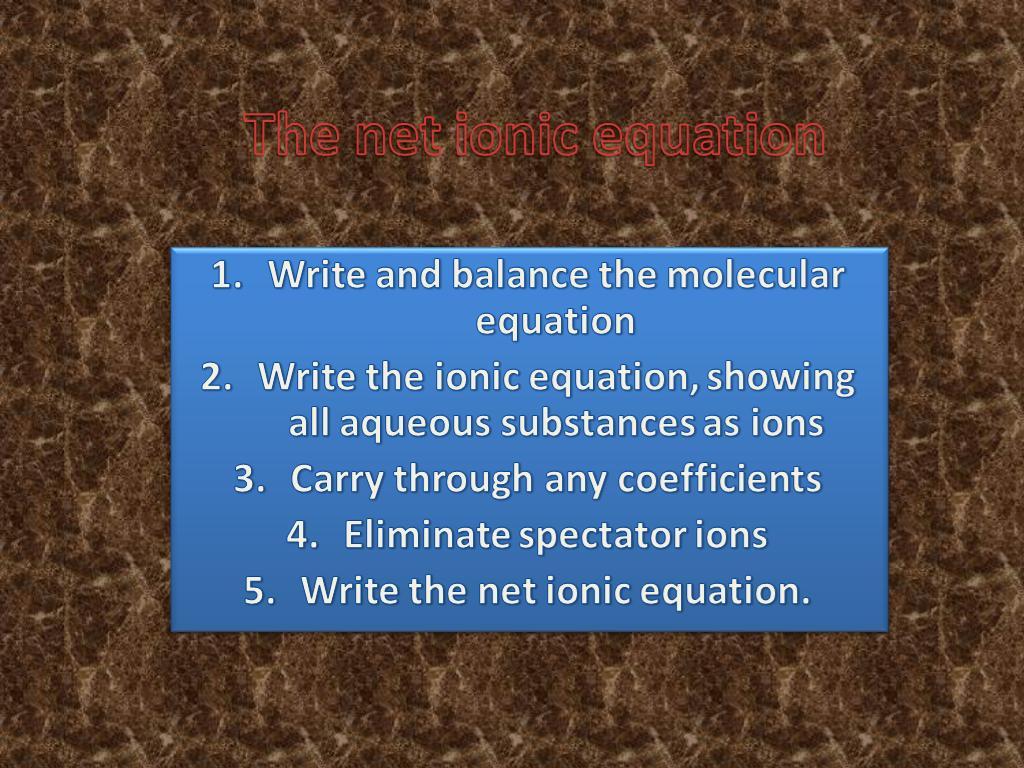
The net ionic equation of chromium (iii) hydroxide reacting with nitrous acid:

Cr(OH)₃ (s) + 3H⁺ (aq) ⇒ Cr³⁺ (aq) + 3H₂O (l)

<h3>Further explanation</h3>

The electrolyte in the solution produces ions.

The equation of a chemical reaction can be expressed in the equation of the ions

For strong electrolytes (the ionization rate = 1) is written in the form of separate ions, while the weak electrolyte (degree of ionization <1) is still written as an un-ionized molecule

In the ion equation, there is a spectator ion that is the ion which does not change (does not react) because it is present before and after the reaction

When these ions are removed, the ionic equation is called the net ionic equation

For gases and solids including water (H₂O) can be written as an ionized molecule

So only the dissolved compound is ionized ((expressed in symbol aq)

From the problem, it is stated that chromium (iii) hydroxide reacting with nitrous acid.

Reactions that occur:

Cr(OH)₃ (s) + 3HNO₂ (aq) ⇒ Cr(NO₂)₃ (aq) + 3H₂O (l)

Cr (OH)₃ solid form that does not decompose in the form of ions, as well as water (H₂O)

So the ionic equation becomes:

Cr(OH)₃ (s) + 3H⁺ (aq) + 3NO₂⁻ (aq) ⇒ Cr³⁺ (aq) + 3NO₂⁻ (aq) + 3H₂O (l)

There is an ion spectator that is 3NO₂⁻, so that if it is removed a net ionic equation will be formed:

Cr(OH)₃ (s) + 3H⁺ (aq) ⇒ Cr³⁺ (aq) + 3H₂O (l)

<h3>Learn more</h3>

the net ionic equation

brainly.com/question/11854070

brainly.com/question/10280219

brainly.com/question/9830467

Keywords: the net ionic equation, an ion spectator

5 0
2 years ago
Read 2 more answers
How many molecules of water are present in a 5.65 mole sample of water
BARSIC [14]

Answer:

5.65

Explanation:

3 0
2 years ago
A 0.580 g sample of a compound containing only carbon and hydrogen contains 0.480 g of carbon and 0.100 g of hydrogen. At STP, 3
Sati [7]

Answer:

Molecular formula for the gas is: C₄H₁₀

Explanation:

Let's propose the Ideal Gases Law to determine the moles of gas, that contains 0.087 g

At STP → 1 atm and 273.15K

1 atm . 0.0336 L = n . 0.082 . 273.15 K

n = (1 atm . 0.0336 L) / (0.082 . 273.15 K)

n = 1.500 × 10⁻³ moles

Molar mass of gas = 0.087 g / 1.500 × 10⁻³ moles = 58 g/m

Now we propose rules of three:

If 0.580 g of gas has ____ 0.480 g of C _____ 0.100 g of C

58 g of gas (1mol) would have:

(58 g . 0.480) / 0.580 = 48 g of C  

(58 g . 0.100) / 0.580 = 10 g of H

 48 g of C / 12 g/mol = 4 mol

 10 g of H / 1g/mol = 10 moles

7 0
2 years ago
Element x reacts with oxygen to produce x2o3 in an experiment it is found that 1.0000 g of x produces 1.1xxx g of x2o3 what is t
8_murik_8 [283]

Since X is 1 g, therefore O must be 0.1 g. Therefore:

moles O = 0.1 g / (16 g / mol) = 0.00625 mol


We can see that for every 3 moles of O, there are 2 moles of X, therefore:

moles X = 0.00625 mol O (3 moles X / 2 moles O) = 0.009375 mol


Molar mass X = 1 g / 0.009375 mol

<span>Molar mass X = 106.67 g/mol</span>

4 0
2 years ago
Which of the following elements have properties similar to those of strontium (Sr)
dalvyx [7]
D
because they are elements in the same group as strontium
8 0
2 years ago
Read 2 more answers
Other questions:
  • Write one scientific question about the organism in the photo
    8·2 answers
  • Among these processes, which is the slowest chemical reaction?
    13·2 answers
  • A column is filled with four different liquids of different densities. A red liquid, a blue liquid, a green liquid, and a purple
    7·2 answers
  • Suppose you wanted to make a buffer of exactly ph 7.00 using kh2po4 and na2hpo4. if the final solution was 0.10 m in kh2po4, wha
    5·1 answer
  • Iodine has a lower atomic weight than tellurium (126.90 for I, 127.60 for Te) even though it has a higher atomic number (53 for
    6·2 answers
  • Select the statement(s) that explain(s) the relationship between the arrangement of elements by size and first ionization energy
    11·2 answers
  • How many grams of lithium nitrate, LiNO3 (68.9 g/mol), are required to prepare 342.6 mL of a 0.783 M LiNO3 solution ? A) 0.00389
    11·1 answer
  • A gas balloon has a volume of 80.0 mL at 300K , and a pressure of 50.0 kPa. if the pressure changes to 80.0 kPa and the temperat
    14·1 answer
  • Be sure to answer all parts. provide stepwise mechanisms illustrating how each product is formed by choosing, in order, the step
    7·1 answer
  • Fill in the blanks with the word that best completes each statement. Scientists develop knowledge by making ------------about th
    7·1 answer
Add answer
Login
Not registered? Fast signup
Signup
Login Signup
Ask question!